
Flowers
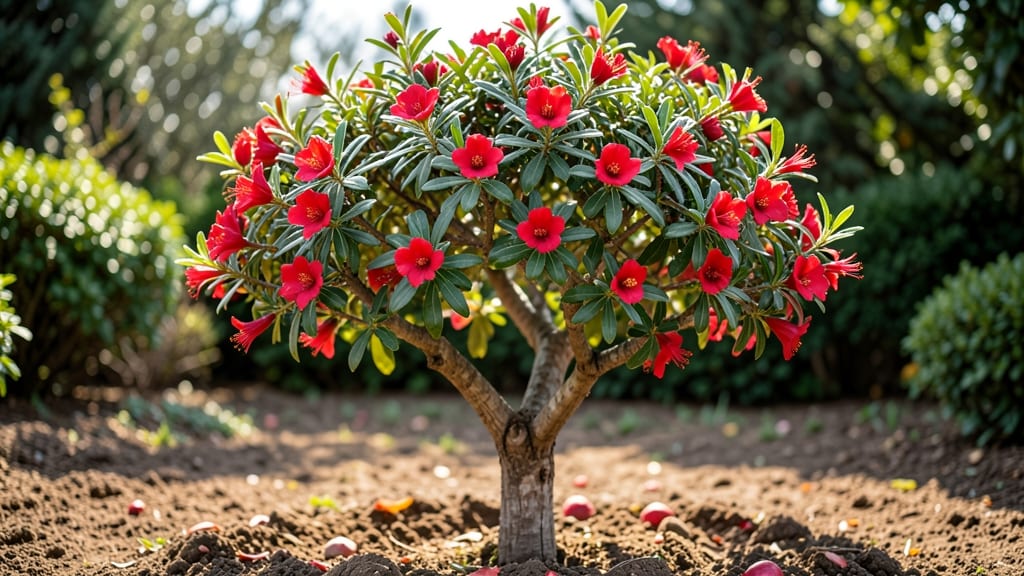
Pomegranates flower when temperatures warm and days lengthen—typically between late spring and early summer, depending on your climate zone.
If you’ve ever waited patiently for those showstopping red blooms, only to be met with silence, you’re not alone. Timing is everything, and a pomegranate’s flowering window can shift dramatically from the mild coastal regions of California to the sweltering heat of Arizona.
In most USDA Zone 6a areas, expect blooms to appear in May or June, while tropical climates may see flowers as early as March. Understanding these variations—and how sunlight and temperature play a role—can mean the difference between a lush harvest and a barren branch.
Below, I’ll break down the exact flowering months by zone, share tips to encourage blooms, and reveal why your tree might be playing hide-and-seek with its flowers. Ready to turn that wait into a plan?
Pomegranate flowering months by USDA climate zones
Pomegranates (Punica granatum) burst into vibrant red blooms during specific windows, but the exact timing depends heavily on your USDA climate zone.
In cooler zones like Zone 7, flowers typically appear in late spring, while warmer regions like Zone 11 may see blooms year-round or in early spring. Understanding these patterns helps you anticipate fruit production and adjust care routines accordingly.
Temperature plays a critical role in triggering pomegranate flowering. Most varieties require chilling hours (300–600 hours below 45°F) to break dormancy, but excessive cold can delay blooms. Meanwhile, heat spikes above 90°F can stress flowers, reducing their lifespan.
Regional variations also matter—California’s Mediterranean climate often advances blooms by 2–4 weeks compared to Florida’s humid subtropical zones.
Here’s how flowering timing shifts across USDA Zones 7–11, including early vs. late bloomers and key regional differences:
In California’s coastal regions (e.g., Los Angeles, Zone 10), pomegranates often flower as early as December due to mild winters. However, inland areas like Central Valley may see delayed blooms until March due to colder nights.
Meanwhile, Florida’s Zone 10–11 gardens can expect year-round blooms, with peaks in winter months when humidity drops.
Arizona’s desert climate (Zone 9–10) creates unique conditions: pomegranates may bloom twice yearly—once in winter (triggered by cooler temps) and again in summer (spurred by monsoon rains). This bimodal flowering is rare but possible with varieties like 'Herskovits,' which thrives in arid heat.
If you’re in Zone 7 or 8, watch for late spring frosts, which can damage emerging buds. Protect young trees with frost cloth or row covers if nighttime temps dip below 28°F.
In contrast, Zone 11 gardeners should focus on shade cloth during summer to prevent heat stress, which can cause buds to drop prematurely.
Pro tip: Prune in late winter (just before blooms appear) to remove dead wood and open the canopy for better air circulation. This
How to encourage early or delayed pomegranate blooms
Want to coax your pomegranate tree into blooming earlier or delay its flowers to avoid frost damage? You’re not powerless—small adjustments to pruning, watering, and sunlight exposure can shift that flowering window by weeks.
The key lies in understanding how your tree responds to environmental cues and using climate-specific hacks to nudge it along.
For gardeners in USDA Zone 7 (like parts of North Carolina or Tennessee), a late frost can devastate early blooms. Meanwhile, those in Zone 10 might struggle with heat stress if flowers appear too late.
By tweaking your care routine, you can align blooms with your local growing conditions—and maximize your harvest potential.
- 1 Prune strategically in late winter to remove old wood and encourage new growth. This tricks the tree into blooming 2-3 weeks earlier by promoting younger, more responsive branches.
- 2 Water deeply in late summer to build root strength. A well-hydrated tree in Zone 8-9 can delay blooms until June or July, avoiding early frost risks.
- 3 Provide afternoon shade in hot climates (like Zone 10) to reduce heat stress. This can delay blooming by 1-2 weeks, preventing flowers from wilting before they set fruit.
- 4 Use frost cloth in Zone 7 to protect early blooms. Cover flowers on cold nights (below 32°F) to extend the blooming window and ensure pollination success.
- 5 Fertilize lightly in early spring with a low-nitrogen formula (like 5-10-10). This encourages flowering over foliage growth, ensuring blooms appear on time.
If your pomegranate tree is skipping blooms entirely, the issue might stem from over-fertilizing with nitrogen or poor sunlight exposure. But even healthy trees benefit from a little timing manipulation.
For example, I once had a dwarf pomegranate in Zone 8 that refused to bloom until I moved it to a sunnier spot and pruned it back by 30%—suddenly, flowers appeared in May instead of June!
For container-grown pomegranates, limit watering in late summer to signal the tree that winter is coming. This triggers dormancy and often results in earlier spring blooms the following year. Just be sure to resume regular watering once temperatures rise above 60°F.
Remember, pomegranates are sensitive to temperature shifts. In Zone 7, a sudden cold snap can halt blooming entirely, while Zone 10 gardeners might see delayed flowers due to consistent heat. By monitoring your local microclimate and adjusting care accordingly, you can fine-tune blooming time like a pro.
🌷