
Flowers
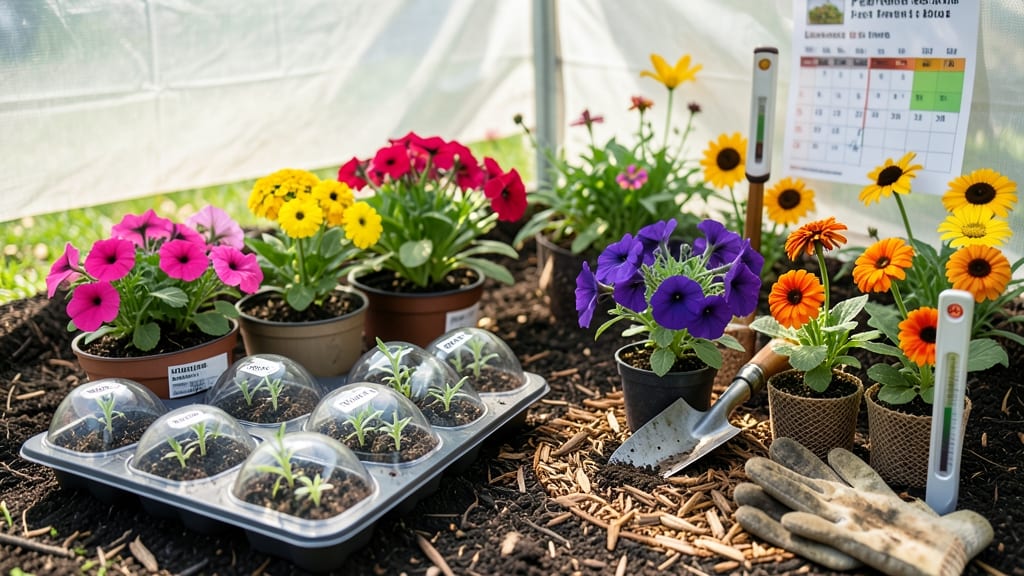
Planting flowers in Pennsylvania at the right time means the difference between a garden bursting with color and one that fizzles out before summer.
Pennsylvania’s unpredictable springs and late frosts can turn eager gardeners into anxious ones—unless you know the exact planting windows for your zone. Missing these deadlines could mean frost-killed blooms or wasted seeds, but timing it right guarantees a vibrant garden from spring to fall.
For Zone 5b/6a, most flowers should hit the soil after your last frost date—typically around mid-April—but bulbs like tulips and daffodils need a fall start. Annuals like marigolds and impatiens can wait until late spring, while perennials like coneflowers thrive when planted in early spring or fall.
Below, I break down the best months for planting, how to adjust for late frosts, and which flowers perform best in Pennsylvania’s climate—so you can skip the guesswork and enjoy a garden that blooms all season.
Pennsylvania flower planting calendar by Zone 5b/6a and season
Pennsylvania’s Zone 5b/6a climate means gardeners must work with short growing seasons and unpredictable frost dates. The average last frost ranges from April 15 (Pittsburgh) to May 1 (Philadelphia), while the first frost hits between October 15-30.
These windows determine whether your annuals, perennials, and bulbs thrive or fail.
To maximize blooms, I’ve broken down planting by season, including heat-tolerant varieties for summer and cold-hardy bulbs for fall. Philadelphia’s urban heat island effect can push last frosts 1-2 weeks later than rural areas like Lancaster, so adjust accordingly.
Always check local frost data from Penn State Extension before planting.
🌱 Key rule: Wait until soil reaches 60°F (test with a thermometer) before planting warm-season annuals like marigolds or zinnias. Cool-season crops (e.g., pansies) can handle 50°F soil.
For Pittsburgh (Zone 5b), aim to plant annuals by May 15 to avoid late frosts. In Philadelphia (Zone 6a), you can push deadlines to May 22 due to urban warmth. Always monitor local forecasts—a late frost in April can wipe out tender seedlings overnight.
Summer planting in Pennsylvania focuses on heat-loving annuals
How to adjust planting dates for Pennsylvania’s unpredictable weather patterns
Pennsylvania’s Zone 5b/6a weather can be a gardener’s worst nightmare—one week of 70°F sunshine followed by a 28°F frost in May. According to the Penn State Extension, late frosts occur 30% of years after April 15, so flexibility is key.
The solution? Adjust your planting dates using season-extending tools or swapping frost-sensitive flowers for hardier alternatives.
For example, if your pansies (which love cool weather) get nipped by frost, replace them with marigolds or zinnias, which tolerate heat and bounce back faster. Similarly, cold frames or row covers can push your planting window 2-4 weeks earlier for frost-tender annuals like impatiens or petunias.
Here’s how to decide when to plant—and when to pivot—based on Pennsylvania’s frost probability data and real gardener strategies:
Season-Extending Strategies for Pennsylvania
Row Covers
- Pros: Extends season by 3-4 weeks, protects from light frost (down to 25°F), reusable.
- Cons: Blocks 10-15% sunlight, requires stakes for support, can trap excess moisture.
Best for: Pansies, snapdragons, lettuce.
Cold Frames
- Pros: Works down to 15°F, extends harvest by 6-8 weeks, doubles as a greenhouse.
- Cons: Expensive upfront, requires daily monitoring for ventilation, limited space.
Best for: Herbs, early tomatoes, violas.
Heat-Tolerant Swaps
- Pros: No extra tools needed, longer bloom times, thrives in 90°F+.
- Cons: May not match original color scheme, some varieties attract pests.
Swap: Pansies → Marigolds, Sweet Alyssum → Zinnias.
Local gardener Sarah K. from Lancaster shares her trick: She plants calendula (a heat-loving annual) in early May when frost threatens her nasturtiums. “Calendula blooms nonstop until frost,” she says, “and its golden color brightens the garden when everything else wilts.”
For bulbs, she uses daffodils (which tolerate light frost) instead of tulips in marginal zones.
If you’re planting perennials like coneflowers, aim for early spring or fall—they establish roots better in cooler soil. But if a late frost hits, cover them with straw mulch (3-4 inches thick) to insulate roots.
For annuals like impatiens, wait until after Memorial Day (around May 30) to ensure safety, or start them indoors 6-8 weeks early.
Pro tip: Check the Penn State Ag Weather Network for real-time frost alerts. Their 10-day forecasts can help you decide whether to rush seedlings or hold off.
And remember—overplanting is better than underplanting in Pennsylvania’s short season. If a few flowers fall victim to frost, you’ll still have a lush display to enjoy.
With these adjustments, you’ll turn Pennsylvania’s unpredictable weather into an advantage—because the right timing means blooms from May to October, no matter what Mother Nature throws your way. 🌼