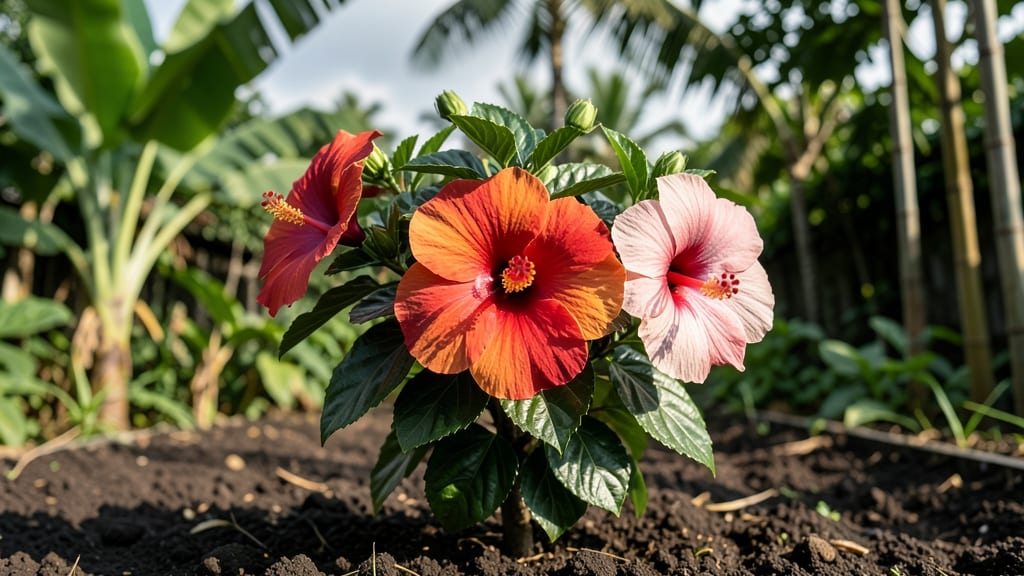
The size of hibiscus flowers 🌸 can transform your garden from a quiet corner to a showstopper—think dinner-plate blooms or towering tropical statements.
Did you know some varieties stay compact enough for containers while others reach 15 feet tall? That’s why picking the right hibiscus isn’t just about color—it’s about space, sunlight, and even how much pruning you’re willing to do.
If you’ve ever watched a hibiscus struggle to bloom or stretch awkwardly, you’re not alone. The secret lies in matching your plant’s natural growth habits to your garden’s conditions—whether that’s full sun, balanced fertilizer, or strategic trimming.
In this guide, I’ll break down how to choose hibiscus varieties by size, when to prune for bigger blooms (and when to stop), and the simple tweaks that make a difference between scraggly stems and lush, vibrant flowers.
Hibiscus Height Range
3 ftto15 ft
0 ft
3 ft
6 ft
9 ft
12 ft
🌱
Medium Flower
Hibiscus flower size by variety: from miniature to tropical giants
When I first started growing hibiscus, I was amazed by how much flower size and plant height can vary between species. Some hibiscus varieties produce tiny 2-inch blooms perfect for fairy gardens, while others can grow 15-foot-tall tropical giants with dinner-plate flowers.
This diversity means you can choose a hibiscus that fits your garden's size, climate, and design goals.
The most common hibiscus for gardens is Hibiscus rosa-sinensis, known as the tropical hibiscus, which typically produces 6-10 inch blooms on plants reaching 10-15 feet tall.
But did you know there are hardy hibiscus varieties like Hibiscus syriacus (rose of Sharon) that grow 8-12 feet tall with 3-5 inch flowers? These differences aren't just about aesthetics—they affect how you'll need to care for your plants.
Here's where things get interesting: some hibiscus varieties stay compact, making them ideal for containers or small gardens. For example, Hibiscus microphyllus (dwarf hibiscus) grows just 2-3 feet tall with 1-2 inch flowers, while Hibiscus 'Lil' Darryl' reaches 3-4 feet with 4-5 inch blooms.
Understanding these variations helps you select the perfect hibiscus for your space and climate zone.
Let's explore the key differences between popular hibiscus varieties, focusing on flower diameter, plant height, and growth habits. This comparison will help you visualize which hibiscus will thrive in your garden and how much space to allocate for their mature size.
Below is a detailed comparison of hibiscus varieties by size, including their ideal growing conditions and unique characteristics. This visual guide makes it easy to compare tropical hibiscus, hardy hibiscus, and dwarf varieties at a glance.
| Variety |
Flower Size (inches) |
Plant Height (feet) |
Growth Habit |
Hardiness Zone |
Best For |
| Hibiscus rosa-sinensis (Tropical) |
6-10 |
10-15 |
Shrub or small tree |
10-12 |
Tropical gardens, containers, borders |
| Hibiscus syriacus (Rose of Sharon) |
3-5 |
8-12 |
Multi-stemmed shrub |
4-9 |
Perennial borders, hedges, wildlife gardens |
| Hibiscus 'Lil' Darryl' |
4-5 |
3-4 |
Compact shrub |
9-11 |
Containers, small gardens, fairy gardens |
| Hibiscus microphyllus (Dwarf Hibiscus) |
1-2 |
2-3 |
Bushy shrub |
9-11 |
Rock gardens, borders, bonsai |
| Hibiscus moscheutos (Swamp Hibiscus) |
6-8 |
5-8 |
Clumping perennial |
5-9 |
Ponds, bog gardens, cottage gardens |
| Hibiscus 'Disco Belle' |
8-10 |
6-8 |
Bushy shrub |
9-11 |
Containers, tropical landscapes, patio gardens |
| Hibiscus 'Anneke' |
5-6 |
How to control hibiscus size: pruning and growth hacks for compact blooms
If your hibiscus is growing taller than your fence or blooming smaller than a quarter, it’s time to take control. The key to managing hibiscus size lies in strategic pruning and understanding how seasonal care impacts growth.
Unlike many plants, hibiscus respond dramatically to trimming—when done right, you’ll get bushier blooms and a more manageable shape.
I’ve learned the hard way that over-pruning in winter can kill new growth, while under-pruning leads to leggy stems. The solution? A balanced approach that combines seasonal trims, root management, and smart fertilizing.
Let’s break it down into actionable steps so you can shape your hibiscus without sacrificing those stunning flowers.
Step-by-Step Pruning Guide for Compact Hibiscus
-
Step 1: Prune in Late Winter
Cut back 1/3 of the plant to encourage new growth. Focus on removing dead or weak branches first.
-
Step 2: Shape in Early Spring
Trim just above a leaf node to promote branching. Avoid cutting into old wood—hibiscus bloom on new growth.
-
Step 3: Light Trimming After Blooming
Remove spent flowers and any leggy stems to redirect energy to new blooms.
-
Step 4: Root Prune for Containers
Gently trim roots when repotting to prevent overgrowth. Use well-draining soil to avoid root-bound stress.
-
Step 5: Fertilize Strategically
Use a balanced 10-10-10 fertilizer in spring/summer. Avoid high-nitrogen feeds—it promotes leafy growth over flowers.
Timing is everything when it comes to hibiscus pruning. I once pruned my tropical hibiscus in mid-winter and nearly killed it—new growth froze before it could harden off. Instead, wait until late winter (just before new shoots appear) to avoid shocking the plant.
For hardy varieties like Hibiscus syriacus, you can prune slightly earlier, but always avoid cutting into old wood.
Root pruning is a game-changer for container-grown hibiscus. If your plant looks root-bound (roots circling the pot), gently tease them apart and trim the outermost roots by 10-20%. This encourages a fuller, bushier shape and prevents the plant from becoming top-heavy.
Pair this with a larger pot (just 1-2 inches wider) to give roots room to spread without overcrowding.
Don’t forget about seasonal adjustments—hibiscus in USDA Zone 7 or colder need extra care. In fall, reduce watering and stop fertilizing to harden off the plant. For tropical varieties, move them indoors before 50°F temperatures or cover them with burlap to protect from frost.
Even a single cold snap can stunt growth for the entire season.
Pro tip: If your hibiscus is bolting (shooting up tall and leggy), it’s often a sign of too much shade or under-fertilizing. Move it to a sunnier spot and switch to a low-nitrogen, high-phosphorus fertilizer (like 5-10-10) to encourage blooming over foliage.
With these growth hacks, you’ll transform a wild, unruly hibiscus into a compact, blooming powerhouse—no matter your garden’s size. Start small, observe how your plant responds, and adjust as needed. Happy pruning! ✂️🌿
★★★★★4.9(14 reviews)