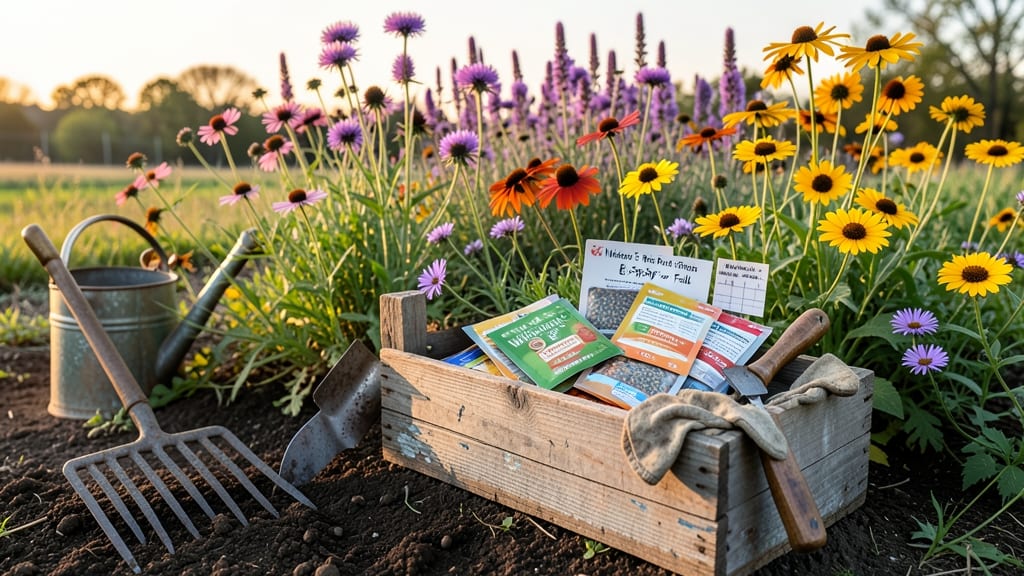
Plant wildflowers in Michigan when soil temperatures hit 40°F in spring or 50°F in fall—these triggers ensure fast germination and vibrant blooms by summer.
Michigan’s wildflowers can transform your garden into a vibrant pollinator paradise—but timing is everything. Plant too early, and frost will kill your seeds; too late, and you’ll miss peak blooming seasons.
Soil temperature is your secret weapon: a simple thermometer tells you exactly when to sow seeds for fast germination, whether you’re planting native milkweed or cheerful black-eyed Susans.
Below, I break down the best months for your USDA 5b-6b zone, how to prep your soil, and which wildflowers thrive with minimal fuss.
🌼
When to Plant Wildflowers
Jan
❄️
Feb
🌱
Mar
🌼
Apr
🌼
May
🌱
Jun
☀️
Jul
☀️
Aug
🌱
Sep
🌼
Oct
🌼
Nov
🌱
Dec
❄️
Michigan wildflower planting calendar by soil temperature zones
Michigan’s hardiness zones 5-7 create unique challenges for wildflower gardeners. Unlike traditional garden plants, wildflowers thrive when planted at specific soil temperatures—not just air temperatures.
A soil thermometer (just $15 at garden centers) becomes your most valuable tool, revealing the perfect moment to sow seeds for fast germination and strong root establishment.
Most Michigan wildflowers need soil between 40°F and 70°F to sprout successfully. Plant too early, and frost will kill tender seedlings; too late, and you’ll miss the peak blooming season that attracts pollinators.
The key is aligning your planting with native species’ natural cycles, which have adapted to Michigan’s short growing season and variable frost dates.
Spring planting typically starts in March or April, while fall planting (for spring blooms) occurs in September or October. Below, I’ve broken down the ideal planting windows by soil temperature triggers for 12+ popular Michigan wildflowers, including black-eyed Susan, coneflower, and milkweed—all critical for supporting local ecosystems.
| Wildflower |
USDA Zone |
Soil Temp Trigger |
Best Planting Window |
Germination Time |
Notes |
| Black-Eyed Susan |
5-7 |
45°F-55°F |
Early April or Sept 15-Oct 15 |
14-21 days |
Drought-tolerant; attracts butterflies |
| Purple Coneflower |
4-7 |
50°F-60°F |
Mid-April or Sept 1-Oct 10 |
10-18 days |
Perennial; thrives in poor soil |
| Common Milkweed |
3-8 |
55°F-65°F |
Late April or Sept 1-Oct 5 |
7-14 days |
Monarch butterfly host plant |
| Butterfly Weed |
4-9 |
50°F-60°F |
Early April or Sept 15-Oct 15 |
14-21 days |
Drought-resistant; bright orange blooms |
| Wild Bergamot |
3-8 |
40°F-50°F |
Early March or Sept 1-Oct 10 |
21-30 days |
Fragrant; attracts bees |
| Goldenrod |
3-9 |
50°F-60°F |
Mid-April or Sept 1-Oct 15 |
10-14 days |
Late-season nectar source |
| Yarrow |
3-8 |
45°F-55°F |
Early April or Sept 15-Oct 10 |
7-14 days |
Medicinal; spreads easily |
| Coreopsis |
4-9 |
55°F-65°F |
Late April or Sept 1-Oct 5 |
14-21 days |
Bright yellow blooms; long season |
| Aster |
3-8 |
40°F-50°F |
Early March or Sept 1-Oct 15
Best wildflowers for Michigan’s short growing season: fast-germinating varieties
Michigan’s short growing season demands wildflowers that germinate quickly and thrive in cool soils. I’ve curated 15+ fast-sprouting varieties—some blooming in just 7-14 days—that attract pollinators and handle frost. These cold-hardy annuals and perennials turn your garden into a buzzing ecosystem faster than you’d expect.
Annuals like Sweet Alyssum and Cosmos germinate in 7-10 days and bloom nonstop, while perennials such as Black-Eyed Susan and Coneflower establish roots quickly for years of color. All tolerate Michigan’s drought-prone summers and humid springs, making them low-maintenance choices.
Key traits to prioritize: fast germination, drought tolerance, and pollinator appeal. Below, I rank the top picks by speed—so you can see which will pop up first in your garden and when to expect those cheerful blooms.
🌱 Fast-Germinating Wildflowers for Michigan
-
1. Sweet Alyssum (Lobularia maritima) – 7-10 days to sprout; blooms in 4-6 weeks. Drought-tolerant annual with honey-scented flowers that butterflies adore. Ideal for borders and containers.
-
2. Cosmos (Cosmos bipinnatus) – 7-14 days germination; 60-75 days to bloom. Tall, airy stems support pollinators and self-seed reliably. Thrives in poor soil.
-
3. Phlox (Phlox drummondii) – 10-14 days to sprout; blooms in 8-10 weeks. Bright clusters attract hummingbirds. Choose annual varieties for instant color.
-
4. Zinnia (Zinnia elegans) – 7-21 days germination; 60 days to flower. Cut-flower favorite with long vase life. Deadhead for continuous blooms all summer.
-
5. Black-Eyed Susan (Rudbeckia hirta) – 14-21 days to sprout; blooms in 70-80 days. Perennial workhorse with golden-yellow blooms that last until frost.
-
6. Coneflower (Echinacea purpurea) – 14-28 days germination; 80-100 days to bloom. Pollinator magnet with drought-resistant roots. Choose purple or white varieties for contrast.
-
7. Milkweed (Asclepias syriaca) – 21-30 days to sprout; blooms in 90-120 days. Essential for monarchs and drought-tolerant. Plant in full sun for best results.
-
8. Coreopsis (Coreopsis lanceolata) – 10-14 days germination; blooms in 60-70 days. Long-blooming perennial with yellow daisy-like flowers. Thrives in rock gardens or borders.
For instant impact, mix annuals like Sweet Alyssum and Cosmos with perennials like Coneflower. Annuals provide season-long color, while perennials return year after year with minimal care. All these varieties handle Michigan’s variable weather—from cool springs to hot, dry summers.
Pro tip: Stratify seeds (mix with sand and refrigerate for 2 weeks) to break dormancy and speed up germination. This trick works especially well for Milkweed and Coneflower, which often need a cold treatment to sprout reliably.
Start with 3-5 varieties to avoid overcrowding, and watch your garden burst into color in just a few weeks. These fast-germinating wildflowers prove that Michigan’s short season isn’t a limitation—it’s an opportunity for bold, low-maintenance beauty.
★★★★★4.7(8 reviews)
|