
Fertilization
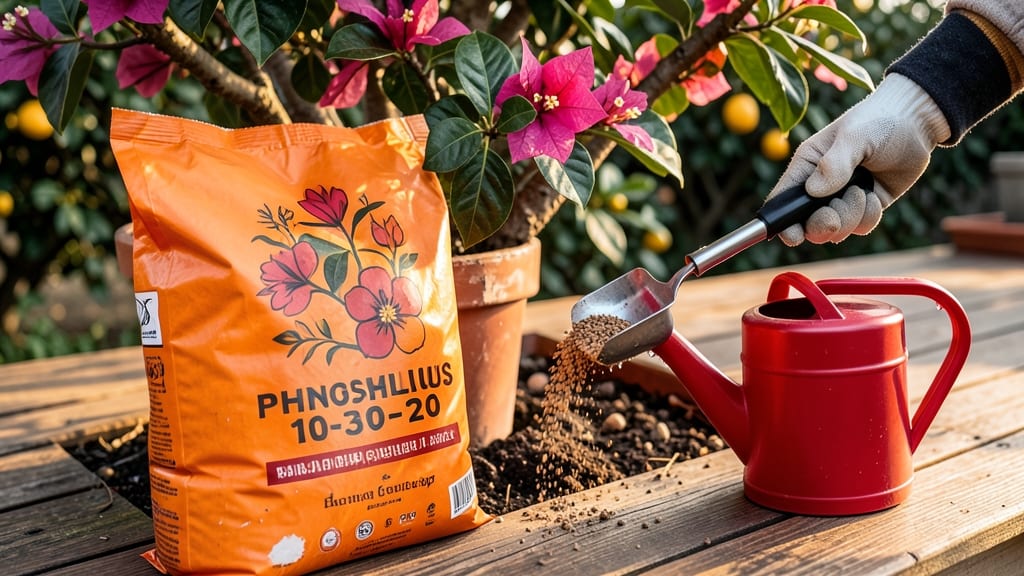
To get your bougainvillea 🌸 flowering at its brightest, you need a fertilizer with the right balance of nutrients — especially phosphorus — applied at the right time.
Picture this: your bougainvillea thrives in the heat, but those vibrant blooms refuse to appear. The issue isn’t just sunlight or water—it’s the fertilizer. Too much nitrogen? You’ll get lush leaves but no flowers. Too little phosphorus? Your plant will struggle to produce the blooms you love.
Bougainvillea loves a balanced feed with a slight phosphorus boost, like a 7-7-7 or 10-10-10 ratio, but timing matters just as much. Feed lightly in spring, ramp up during the blooming season, and taper off in fall to avoid overloading the roots.
In this guide, I’ll break down the exact fertilizer types, application schedules, and seasonal adjustments to turn your bougainvillea into a non-stop floral show—without burning the leaves or wasting money on the wrong mix.
Optimal N-P-K ratios for bougainvillea flowering: the science behind the bloom
Bougainvillea thrives on precise N-P-K ratios that shift with its growth stages. Unlike many plants, bougainvillea demands phosphorus to trigger those iconic paper-like bracts. Too much nitrogen? You’ll get lush leaves but fewer blooms. The key is understanding how these three nutrients interact to create your dream floral display.
Phosphorus (P) is the flowering catalyst for bougainvillea. It encourages root development and energy transfer for blooms. Potassium (K) strengthens stems and enhances color vibrancy, while nitrogen (N) fuels foliage growth.
The magic happens when you balance these in season-specific ratios—not just a one-size-fits-all approach.
| Growth Stage | Recommended N-P-K Ratio | Phosphorus Focus | Application Frequency |
|---|---|---|---|
| Vegetative (Spring) | 5-10-10 | Moderate (root growth) | Every 6 weeks |
| Flowering (Summer) | 3-12-6 | High (bloom trigger) | Every 4 weeks |
| Transition (Fall) | 4-8-8 | Moderate (maintenance) | Every 8 weeks |
| Dormancy (Winter) | 0-0-0 | None (rest period) | Skip |
During vegetative growth (spring), bougainvillea benefits from a 5-10-10 ratio to build strong roots and foliage. This higher phosphorus content (second number) primes the plant for future blooming. In summer’s flowering phase, switch to a 3-12-6 ratio—this phosphorus spike directly signals your bougainvillea to produce those vibrant bracts.
Potassium’s role (K) often gets overlooked, but it’s crucial for stress resistance and color intensity. A ratio like 3-12-6 ensures your bougainvillea’s blooms stay vibrant and long-lasting.
Too little potassium? You’ll notice pale, weak blooms that fade quickly. Think of potassium as the color enhancer in your bougainvillea’s floral palette.
For commercial fertilizers, look for products labeled "bloom booster" or with high phosphorus percentages. My top recommendations include Miracle-Gro Bloom Booster (12-40-16) for intense flowering and Jobe’s Flowering Shrub Food (10-30-20) for balanced growth.
Always follow label instructions—bougainvillea is drought-tolerant but hates over-fertilization, which can burn roots.
DIY enthusiasts can create a phosphorus-rich fertilizer using bone meal (3-15-0) mixed with kelp meal (0-0-1.5) for potassium. Combine 1 part bone meal with 1 part kelp meal and 2 parts compost.
Work this blend into the soil 2-3 inches deep around your bougainvillea’s base in early spring. This organic approach mimics the slow-release nutrition bougainvillea craves.
Adjusting ratios isn’t just about numbers—it’s about reading your plant. If your bougainvillea produces lush leaves but few blooms, cut nitrogen by half and increase phosphorus. For weak stems or poor color, boost potassium while maintaining phosphorus levels.
The goal is harmony between growth and flowering, not just pushing one nutrient over another.
Remember: bougainvillea hates soggy roots. Always apply fertilizer to moist (not wet) soil and water thoroughly afterward. This prevents nutrient burn while ensuring your plant absorbs the optimal N-P-K blend you’ve carefully selected.
Think of each feeding as a conversation with your plant—listening to its needs and responding with precision.
With the right ratios and timing, your bougainvillea will reward you with season-long blooms that turn heads. The science is simple: phosphorus for flowers, potassium for color, and nitrogen in moderation.
Master this trio, and you’ll have a bougainvillea that outperforms its drought-tolerant reputation with stunning floral displays year after year. 🌸
Step-by-step fertilizer schedule: when and how to feed for maximum blooms
Your bougainvillea’s flowering power depends on a seasonal fertilizer schedule that matches its growth cycle. Unlike many plants, bougainvillea needs more phosphorus (P) than nitrogen (N) to trigger blooms. In spring, focus on root development with a light feed, then shift to bloom-boosting fertilizers in summer.
Fall is for tapering off, and winter? Skip it entirely unless you’re in a frost-free zone.
For best results, I recommend a two-phase approach: start with a balanced 7-7-7 in spring, then switch to a high-phosphorus 10-10-10 or 5-10-5 during peak blooming months.
Granular fertilizers are easy for in-ground plants, while liquid feeds work better for potted bougainvillea. Always water deeply after applying to prevent root burn.
| Season | Fertilizer Type | NPK Ratio | Frequency | Application Notes |
|---|---|---|---|---|
| Spring (Mar-May) | Granular or Liquid | 7-7-7 | Every 6 weeks | Light feed; encourage root growth |
| Summer (Jun-Aug) | Liquid or Slow-Release | 10-10-10 or 5-10-5 | Every 4-6 weeks | High phosphorus for blooms; avoid nitrogen overload |
| Fall (Sep-Nov) | Granular (reduced) | 5-10-10 | Every 8 weeks | Light feeding; prepare for dormancy |
| Winter (Dec-Feb) | None | N/A | Skip | Rest period; no fertilizer in frost-prone areas |
For organic options, try a fish emulsion (5-5-5) in spring and a bone meal (3-15-0) in summer to boost phosphorus naturally. Synthetic fertilizers like Miracle-Gro Bloom Booster (12-4-6) work well too, but dilute to half-strength to avoid leaf burn.
Always follow package instructions for dilution ratios—overdoing it leads to yellowing leaves or sparse blooms.
Watch for signs of over-fertilization, like crispy leaf edges or white crust on soil. Under-fertilized plants show pale leaves or fewer flowers. If you see these, flush the soil with water and adjust your schedule.
Potted bougainvillea need more frequent feeding—every 3-4 weeks in summer—because nutrients leach out faster.
Pro tip: Mix compost or worm castings into the soil in spring to improve nutrient retention. This reduces the need for synthetic fertilizers while keeping your bougainvillea thriving. With this schedule, you’ll see vibrant blooms within 6-8 weeks of consistent feeding.