
Watering
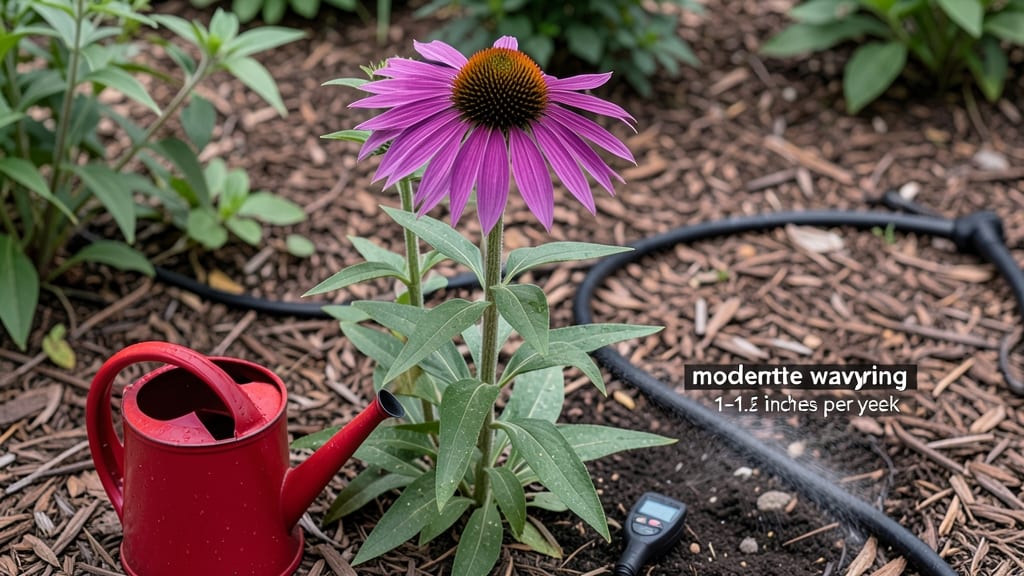
Understanding the coneflower water requirements is the key to those bold blooms you love—these hardy perennials need surprisingly little once established, about 1 inch per week, but timing and soil conditions make all the difference.
Struggling to keep your 🌼 coneflowers blooming despite dry spells? These hardy perennials thrive with surprisingly little water—but get it wrong, and you’ll end up with wilted stems and sparse flowers. The trick lies in balancing drought tolerance with proper hydration, especially during their first year and peak blooming season.
Most gardeners overcomplicate watering, but coneflowers actually prefer deep, infrequent drinks over shallow, frequent ones. Too much water leads to root rot, while too little stresses the plant—both can cut back those vibrant blooms you planted for.
I’ll break down the exact watering schedule, soil tricks, and seasonal adjustments to keep your coneflowers thriving with minimal effort.
You’ll learn how to read your soil, adjust for heatwaves, and spot the early signs of over- or under-watering—so you can enjoy months of effortless color instead of wilting disappointment.
How much water do coneflowers need per week?
Coneflowers (Echinacea) are one of the most drought-tolerant perennials in your garden, but they still need the right amount of water to produce those vibrant purple blooms you love.
As a rule, aim for 1 to 2 inches of water per week, including rainfall. This guideline keeps their roots hydrated without drowning them—especially critical during their first growing season.
Newly planted coneflowers are the most sensitive to water stress because their root systems haven’t fully established. During the first year after planting, water them deeply once a week to encourage strong root growth.
Once established (after year one), they’ll only need supplemental watering during prolonged dry spells—typically every 7 to 10 days.
Seasonal changes play a huge role in watering needs. In spring and fall, when temperatures are milder, coneflowers may only need water every 10 to 14 days. But during hot summer months, you might need to water every 5 to 7 days to prevent wilting.
Always check the soil first—stick your finger about 1 inch deep; if it feels dry, it’s time to water.
Overwatering is just as harmful as underwatering. Soggy soil can lead to root rot and fungal diseases like powdery mildew, which can ruin your plants. If your coneflowers develop yellow leaves or mushy stems, they’re likely getting too much water.
On the flip side, wilting leaves or drooping flower heads signal a need for more hydration.
Here’s a quick breakdown of their water needs by season to keep your coneflowers thriving:
| Season | Water Frequency | Amount per Watering | Key Notes |
|---|---|---|---|
| Spring (March-May) | Every 10-14 days | 1 inch | Encourage root growth; reduce as soil warms |
| Summer (June-August) | Every 5-7 days | 1.5-2 inches | Critical for blooms; water early morning |
| Fall (September-November) | Every 10-14 days | 1 inch | Taper off as temps drop; avoid wet foliage |
| Winter (December-February) | Monthly (if no snow) | 0.5 inch | Dormant; only water if soil is bone-dry |
| Established Plants (Year 2+) | Every 7-10 days (dry spells) | 1 inch | Deep watering; rely on rainfall |
Your soil type also affects how often you need to water. Sandy soil drains quickly, so you may need to water more frequently, while clay soil holds moisture longer. If you’re unsure, do the finger test: push your finger into the soil near the base of the plant.
If it’s dry past 1 inch deep, it’s time to water.
Mulching is a game-changer for coneflowers. A 2- to 3-inch layer of mulch (like straw or shredded leaves) helps retain moisture, regulates soil temperature, and reduces evaporation.
Just keep the mulch a few inches away from the stems to prevent rot. This simple step can cut your watering needs by 30-50% during hot summers.
One of the biggest mistakes gardeners make is watering coneflowers late in the day. Wet foliage at night creates the perfect conditions for fungal diseases like powdery mildew. Always water early in the morning so leaves have time to dry before evening.
If you must water in the evening, aim for the base of the plant and avoid wetting the leaves.
If your coneflowers start looking stressed, don’t panic. A quick check of the soil and a deep watering can often revive them. For severe wilting, soak the soil thoroughly and monitor for improvement within 24 to 48 hours.
Remember, coneflowers are tough—they’ll bounce back as long as their roots stay hydrated but not waterlogged.
With the right watering routine, your coneflowers will reward you with bold, long-lasting blooms from mid-summer through fall. Stick to these guidelines, and you’ll enjoy a low-maintenance, drought-resistant garden staple that thrives with minimal fuss. 🌼
Best watering practices for coneflower health and longevity
Coneflowers (Echinacea) are famously drought-resistant, but their watering habits still play a critical role in producing those vibrant blooms you love. Unlike thirsty annuals, these perennials prefer deep but infrequent watering—a technique that strengthens roots and prevents fungal issues.
I’ve learned through trial (and a few wilted stems) that timing and technique matter just as much as how much water you give them.
Watering at the wrong time can turn your coneflower garden into a fungal breeding ground. Wet foliage sitting overnight invites powdery mildew and other diseases, while shallow watering encourages weak roots.
The key is consistency without excess, especially during their first growing season when roots establish. Let’s dive into the best practices to keep your coneflowers thriving for years.
Coneflowers hate soggy soil. Their roots need oxygen to thrive, and standing water suffocates them. Signs of overwatering include yellowing leaves, mushy stems, and drooping blooms. If your soil drains poorly, amend it with compost or sand to improve aeration. Always water at the base of the plant, not the leaves.
Morning watering is my gold standard for coneflowers. Why? Because it gives foliage time to dry before evening humidity sets in, reducing fungal risks. Aim to water before 10 AM so leaves have the whole day to evaporate excess moisture.
If you must water in the evening, do it early—never when night is falling. Pro tip: Use a soaker hose or drip irrigation to deliver water directly to the roots without wetting the leaves.
Mulching is a game-changer for coneflower care. A 2-3 inch layer of organic mulch (like straw or shredded leaves) locks in moisture, regulates soil temperature, and suppresses weeds. I apply mulch in early spring, keeping it a few inches away from the plant stem to prevent rot.
For established plants, mulch reduces watering needs by up to 30%, which is perfect for those hot, dry summers when every drop counts.
Testing soil moisture is easier than you think. Stick your finger 1-2 inches deep into the soil near the plant’s base. If it feels dry, it’s time to water. If it’s damp, wait another day.
For container-grown coneflowers, check the soil daily—containers dry out much faster. A simple moisture meter can save you guesswork, especially during peak summer heat when evaporation speeds up dramatically.
Adjust your watering schedule by season. In spring and fall, water once a week with 1-2 inches of water. During summer heatwaves, increase to every 5-7 days and water deeply to encourage deep root growth.
In winter, cut back to monthly watering or less, unless you’re in a region with freezing temperatures. Remember, coneflowers store water in their roots—don’t drown them just because they’re tough.
With these watering practices, your coneflowers will reward you with bold blooms and healthy foliage for years. The secret? Less is more—consistent, deep watering at the right time, with mulch and soil checks to guide you. Now go enjoy your low-maintenance, high-impact garden! 🌼