
Flowers
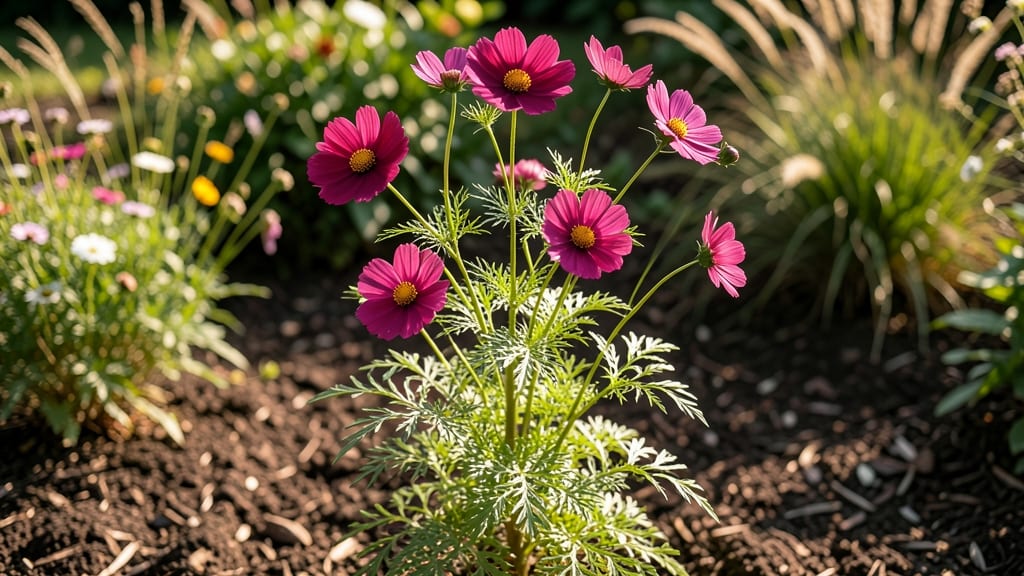
The cosmos flower height you choose determines whether your garden gets a delicate border or a dramatic, airy backdrop 🌼 — and the difference between those two looks starts with the right variety.
If you’re dreaming of vibrant cosmos blooms but struggling to choose between compact garden borders and towering backyard statements, understanding their height variations is your first step to a showstopping display.
Cosmos varieties range from dwarf types at just 12 inches to giants that reach 6 feet or taller, with everything in between. The key? Selecting the right type for your space and learning how to guide their growth naturally.
In this guide, I’ll break down the height spectrum, share spacing and staking secrets, and show you how to keep your cosmos thriving—no matter how tall (or short) you want them to grow.

Cosmos flower height by variety: dwarf vs giant types explained
Choosing cosmos flowers for your garden means deciding between delicate dwarf varieties that spill over containers and towering giants that reach for the sky. The height range spans from just 6 inches to an impressive 6 feet, giving you endless design possibilities.
Whether you're creating a pollinator-friendly border or a dramatic backyard focal point, understanding these height variations helps you plan with precision.
Dwarf cosmos varieties like 'Purity' and 'Sensation' stay between 12 to 18 inches tall, making them perfect for window boxes and container gardens. Meanwhile, standard varieties such as 'Bright Lights' and 'Double Click' typically grow 3 to 5 feet, ideal for mixed borders and cut flower arrangements.
The tallest cosmos, like 'Cosmos bipinnatus' and 'Seashells', can soar up to 6 feet, creating stunning vertical accents in perennial gardens.
Height isn't just about aesthetics—it also affects planting spacing, sunlight exposure, and even pruning needs. For example, dwarf varieties need 6 to 12 inches between plants, while tall cosmos require 18 to 24 inches to prevent overcrowding. Let’s break down the key varieties and their ideal growing conditions in the comparison table below.
When selecting cosmos varieties, consider your garden layout and sunlight conditions. Dwarf cosmos thrive in partial shade or full sun but are less likely to flop in hot afternoons. In contrast, taller varieties need full sun exposure to reach their maximum height and produce abundant blooms.
If you're growing cosmos in containers, opt for dwarf or semi-dwarf varieties to avoid overcrowding and ensure proper airflow.
For tall cosmos varieties, consider using stakes or cages to support their height, especially in windy locations. This not only keeps them upright but also prevents them from flopping over and blocking sunlight from reaching lower-growing plants.
Pruning is another key strategy: deadheading spent blooms encourages continuous flowering and can help control height in some varieties.
If you're aiming for a pollinator-friendly garden, taller cosmos varieties attract more butterflies and bees due to their height and abundant nectar. Plant them near low-growing herbs like thyme or lavender to create a layered effect that supports a diverse ecosystem.
For cut flower arrangements, medium-height varieties like 'Bright Lights'
How cosmos height affects planting and care strategies
Your cosmos flower height isn't just about aesthetics—it dictates everything from plant spacing to staking needs and even sunlight exposure. Tall varieties like 'Seashells' need well-draining soil and strong support, while dwarf types like 'Purity' thrive in tight borders with minimal care.
The right approach ensures your cosmos grow healthy and sturdy, not leggy or floppy.
For tall cosmos varieties, focus on deep soil preparation with compost to encourage strong root systems. Mix in perlite or sand for drainage, especially in clay-heavy soils.
This prevents root rot and helps plants reach their full 6-foot potential without toppling over. I’ve found that amending the soil before planting saves time on staking later.
5 Pro Tips for Growing Cosmos at Any Height
- 🌱 Soil Prep: Loosen soil 12 inches deep for tall cosmos to prevent wind damage.
- ☀️ Sunlight: Dwarf cosmos need 4-6 hours of sun; tall types require full sun (6+ hours).
- ✂️ Pruning: Pinch back 1/3 of growth at 6 inches tall to encourage bushiness.
- 🪴 Staking: Use soft ties for tall stems to avoid stem damage.
- 💧 Watering: Deep water once weekly; reduce in humid climates.
Sunlight requirements shift dramatically based on cosmos height. Dwarf varieties like 'Sensation' (12-18 inches) can handle partial shade in hot climates, but tall cosmos like 'Cosmos bipinnatus' demand full sun exposure to prevent weak stems.
I’ve noticed that even medium-height cosmos (2-4 feet) benefit from morning sun to avoid afternoon wilting. Place them where they’ll get 6+ hours of direct light daily.
Pruning isn’t just for shaping—it’s a growth control tool. For tall cosmos, I deadhead spent blooms weekly to redirect energy to stem strength. For dwarf varieties, a light trim after flowering keeps them compact.
My trick? Use clean, sharp bypass pruners to avoid crushing stems. This simple step extends the blooming season by 30-40%.
Staking tall cosmos isn’t just about aesthetics—it’s about preventing wind damage. I use bamboo stakes or cattle panels for varieties over 4 feet, securing them with soft garden twine.
For windy areas, add a second stake at a 45-degree angle. This support system lets cosmos grow vertically without bending, even in storms.
Remember, cosmos height is flexible. With the right soil prep, sunlight, and pruning, you can coax even dwarf varieties to grow taller—or keep giants in check.
Start with the right variety for your space, then adjust care based on their mature height. Your garden will thank you with bold, healthy blooms all season! 🌻