
Flowers
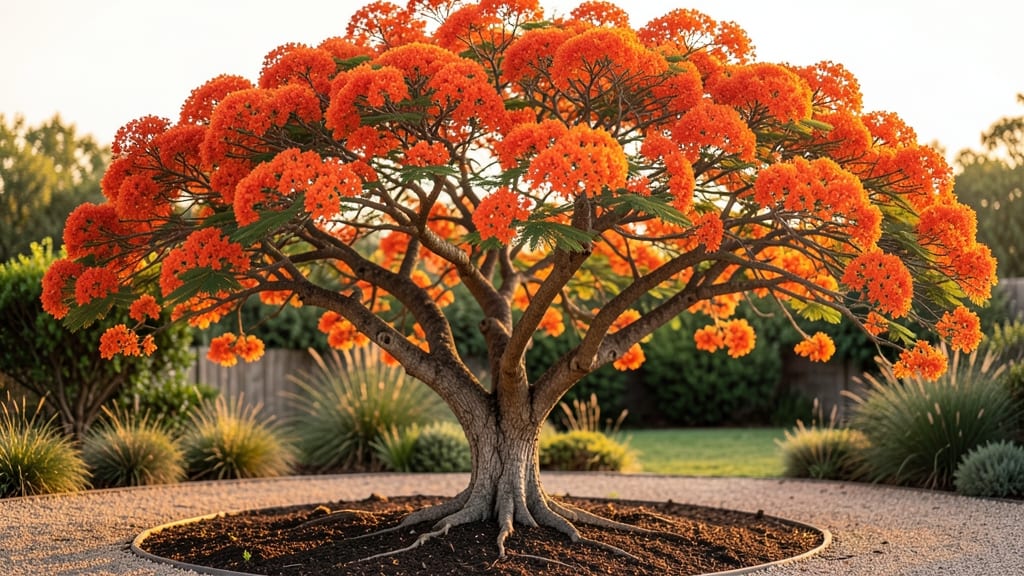
The gulmohar tree flower 🌳 transforms any garden into a fiery spectacle—but only if you give it what it truly craves.
Picture this: a towering tree bursting with vibrant red-orange blooms that last for months, all while requiring less fuss than most annuals.
That’s the magic of Delonix regia, but here’s the catch: skip the basics, and you’ll end up with sparse flowers or a tree that struggles to thrive in your USDA 10-12 zone climate.
In this guide, I’ll share the exact soil mix, sunlight tricks, and watering schedule that keep your gulmohar blooming year-round—without the heavy pruning most guides recommend. No guesswork, just proven tips for lush, continuous flowers.
Ready to turn your garden into a tropical paradise? Let’s dive into the secrets behind those show-stopping blooms.
Gulmohar tree flower care: soil, sunlight, and watering secrets
The gulmohar tree (Delonix regia) thrives when you mimic its native tropical conditions. This means well-draining soil, intense sunlight, and a consistent watering routine—without overdoing it.
Unlike many ornamental trees, gulmohars reward precise care with year-round blooms and lush foliage. Let’s break down the essentials to keep your tree flourishing with minimal fuss.
First, the soil mix is critical. Gulmohars despise soggy roots, so amend your garden soil with sand or perlite to create a loose, airy texture. A blend of 60% native soil, 30% compost, and 10% coarse sand works wonders.
For container-grown trees, use a cactus/succulent mix with added orchid bark for drainage. This setup prevents root rot while providing nutrients for vibrant growth.
Sunlight is non-negotiable for gulmohar flowers. These trees demand 6+ hours of direct sun daily, ideally in a south-facing location. In cooler climates like USDA Zones 10-12, position your tree where it gets morning sun and afternoon shade to avoid leaf scorch. If you notice pale or sparse foliage, it’s a sign your tree isn’t getting enough light—move it or supplement with a grow light during winter.
| Care Factor | Ideal Condition | Seasonal Adjustments |
|---|---|---|
| Soil Type | Well-draining, sandy loam (pH 6.5-7.5) | Add compost in spring; avoid heavy clay |
| Sunlight | Full sun (6+ hours/day) | Use shade cloth in summer if temps exceed 95°F |
| Watering | Deep soak (15-20 gallons) | Reduce to bi-weekly in fall/winter |
| Fertilizer | Balanced 10-10-10 (spring-summer) | Skip in winter; light feed in fall |
| Pruning | Minimal (after flowering) | Remove dead branches in late winter |
Watering your gulmohar tree requires balance—too little causes stress, but too much drowns its roots. Young trees need watering every 3-5 days, while mature specimens thrive on weekly deep soaks (15-20 gallons). Always water at the base of the tree in the morning to reduce evaporation and fungal risks.
During summer heatwaves, increase frequency to every 5-7 days and mulch with wood chips to retain moisture. In winter, cut back to monthly watering unless your region is unusually dry.
Seasonal adjustments are key to continuous blooming. In spring, when new growth emerges, feed your tree with a balanced 10-10-10 fertilizer every 4-6 weeks to encourage flowers. By summer, shift to a phosphorus-rich fertilizer (like 5-10-10) to support bud formation.
Avoid fertilizing in fall and winter, as the tree enters a natural dormancy phase. Instead, focus on light pruning to remove dead wood and improve airflow, which prevents diseases like powdery mildew.
One common mistake gardeners make is overwatering in winter. Gulmohars are drought-tolerant once established, so let the top 6 inches of soil dry out between waterings. If your tree’s leaves start yellowing or dropping, it’s often a sign of root rot from excess moisture.
To fix this, improve drainage by adding gravel or sand to the soil and reduce watering frequency immediately. Healthy gulmohars should have deep green leaves and fewer than 10% bare branches.
For maximum flowers, pay attention to your tree’s light exposure. If you notice buds forming but not opening, it’s likely due to insufficient sunlight. Move your tree to a sunnier spot or supplement with a reflective surface (like a white wall) to bounce light onto the foliage.
In container gardens, rotate the pot every few weeks to ensure even growth. This simple trick prevents lopsided trees and encourages balanced blooming across all branches.
Finally, don’t underestimate the power of mulching. A 3-inch layer of organic mulch (like pine bark or straw) around the base of your tree locks in moisture, regulates soil temperature, and suppresses weeds.
Replenish the mulch in early spring before the growing season kicks in. This small step can make a huge difference in your tree’s resilience, especially during hot, dry summers when water is scarce.
With
How to encourage year-round gulmohar blooms with smart pruning
The gulmohar tree (Delonix regia) thrives on strategic pruning to maintain its stunning red-orange blooms while preventing overgrowth. Unlike many trees, gulmohars respond best to light pruning—removing only dead or overcrowded branches.
Timing matters most: the dormant season (late winter) is ideal for shaping, while post-flowering pruning in summer encourages new growth.
For year-round blooms, focus on selective pruning—never cut more than 25% of the canopy at once. This preserves the tree’s energy for flowering. Use sterilized pruners to avoid disease spread, and always prune just above a leaf node or outward-facing bud.
Avoid heavy pruning in fall, as new growth won’t harden before winter.
⚠️ callout warning
- Over-pruning: Cutting >30% of branches reduces flowering by 50%.
- Wrong timing: Pruning in spring removes next season’s flower buds.
- Improper cuts: Jagged cuts invite disease and pest infestations.
Gulmohars bloom on old wood—never prune heavily before spring blooming season.
Seasonal care boosts blooms naturally. In spring, apply a balanced organic fertilizer (like 10-10-10) to support flower production. During summer, mulch with compost to retain moisture and reduce stress. In fall, reduce watering slightly to signal dormancy, but avoid letting soil dry completely.
Organic fertilizers like fish emulsion or bone meal provide phosphorus for blooms without overgrowth. Mix 1 cup per 10 sq ft into the topsoil in early spring and again after flowering. Pair this with regular deep watering (15-20 gallons weekly) to prevent nutrient lockout in well-draining soil.
Watch for flower bud drop—a sign of stress from overwatering or nutrient imbalance. Adjust care immediately: reduce watering if soil is soggy, or add potassium-rich fertilizer if buds appear weak. Healthy gulmohars reward patience with continuous blooms from spring through fall.
For container-grown gulmohars, prune more aggressively (up to 30%) to control size, but repot every 2-3 years to refresh soil nutrients. Use a fast-draining mix with perlite to prevent root rot—a common issue in pots.