
Flowers
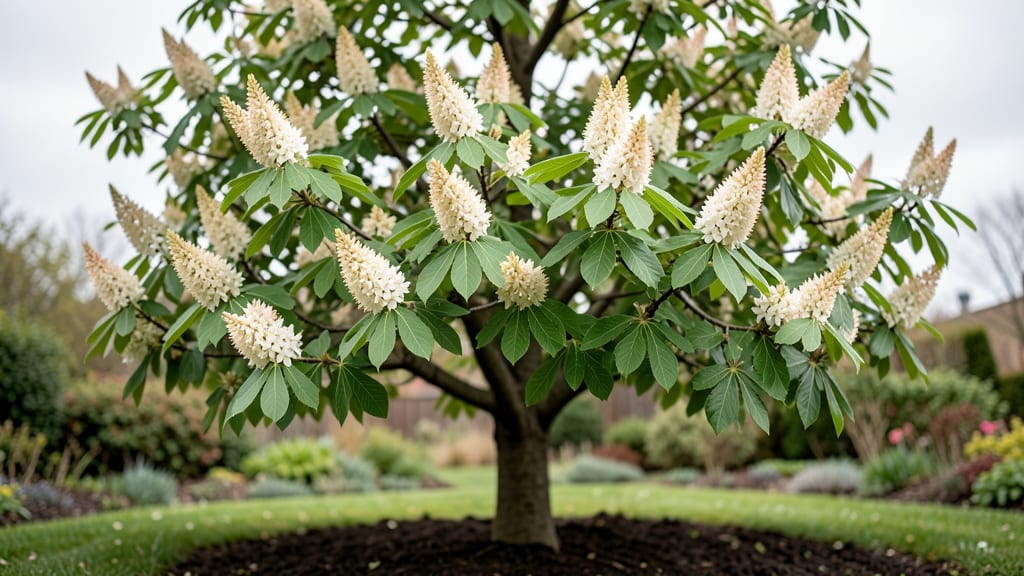
The sight of a horse chestnut in flower transforms any garden into a dreamy spring tableau 🌸—but getting that show-stopping display year after year takes more than just planting one.
Picture this: candles of white blossoms lighting up your yard, only to fade into summer with no repeat performance. That’s the frustration many gardeners face when they overlook the timing of pruning or ignore soil needs.
The good news? A few strategic tweaks—like knowing when to trim and how to pair it with complementary plants—can turn your tree into a decades-long star of your landscape.
Here’s the secret: horse chestnuts thrive when you work with their natural rhythm, not against it.
We’ll cover the exact pruning window to boost next year’s blooms, the best companion plants to extend the season, and how to keep your tree healthy through every season—so you’re the one everyone envies at neighborhood gatherings.
Ready to turn your yard into a floral masterpiece? Let’s dive into the care strategies that’ll have your horse chestnut flowering like clockwork, year after year.
When and why horse chestnut trees flower: seasonal timing & bloom predictors
The horse chestnut tree (Aesculus hippocastanum) transforms your garden with its showy white candle-like flowers in late spring, creating a stunning focal point. Understanding the flowering window helps you anticipate this spectacle and plan your garden layout accordingly.
These blooms appear before the iconic spiky green seed pods, marking the tree’s annual renewal cycle.
Flowering typically occurs between late May and early July, but exact timing depends on your USDA hardiness zone and local climate. Warmer regions like Zone 7-9 may see blooms as early as mid-April, while colder areas in Zone 5-6 might delay flowering until June.
This variation makes predicting bloom times a mix of science and observation.
| Region | Typical Bloom Window | Leaf Emergence | Predictor |
|---|---|---|---|
| North America (Zone 5-6) | Late May - Early June | Mid-May | Frost-free nights |
| North America (Zone 7-9) | Mid-April - May | Early April | Warm spells |
| Europe (UK, France) | Late May - June | Early May | Rainfall patterns |
| Southern Europe (Spain, Italy) | March - April | February | Mild winters |
Your horse chestnut’s flowering time isn’t just about the calendar—it’s also tied to leaf emergence. Buds typically swell in early spring, and flowers appear 2-3 weeks after leaves unfurl.
This means if you spot fresh green foliage in May, expect blooms within 3 weeks. Pay attention to bud color changes from brown to pinkish-green for an early warning.
Weather plays a crucial role too. Cool springs can delay blooms, while warm, sunny spells in late winter often trigger earlier flowering. In Zone 6, for example, a 50°F (10°C) night after a warm day can kickstart the process.
Conversely, late frosts after buds form may damage flowers, reducing their impact.
To predict peak bloom times, monitor three key indicators: leaf color, bud size, and local minimum nighttime temperatures. Once leaves turn lush green and buds are 1-inch long, flowering is just 7-10 days away.
Use a garden journal to track these patterns yearly—your notes will help refine predictions for future seasons.
Regional differences matter too. In Southern Europe, horse chestnuts often bloom in March-April, aligning with milder winters. Meanwhile, Northern European trees may wait until June due to cooler climates.
Even within the U.S., a Zone 7 tree in Georgia might flower 3 weeks earlier than one in Pennsylvania.
If you’re designing a garden to showcase horse chestnut flowers, pair them with late-spring bloomers like magnolias or azaleas to extend your seasonal color palette. Their white flower clusters contrast beautifully with purple foliage or blue hydrangeas, creating a cohesive look.
Just ensure they receive full sun to maximize bloom production.
For optimal flowering, maintain well-draining soil with a slightly acidic pH (6.0-7.0). Overly alkaline soil can stress the tree, while compacted clay may stunt root growth—both factors reduce flower counts. Amend heavy soil with compost or organic matter in early spring to support robust growth.
Finally, avoid over-pruning in late winter, as this can delay flowering. Light structural pruning after blooms fade (summer) encourages next year’s flower buds. With the right care, your horse chestnut will reward you with abundant blooms for decades, becoming a garden centerpiece you’ll cherish.
🌸
Pruning horse chestnut trees in flower: step-by-step guide to enhance blooms
Pruning your horse chestnut tree at the right time can transform its flowering display from ordinary to spectacular. The key lies in understanding when to intervene—post-flowering rather than during—to preserve next year’s candles of blooms while maintaining structural health.
Timing matters because pruning during the flowering season risks removing flower buds that form in the previous year.
Most gardeners mistakenly prune in early spring or late winter, but this is the worst time for horse chestnuts. Instead, focus on late summer to early autumn, after the flowers have faded but before new growth hardens.
This window allows the tree to recover before winter while ensuring optimal sunlight exposure for next season’s blooms.
⚠️ CRITICAL STEP LIST FOR PRUNING HORSE CHESTNUTS
- Pruning saw for thick branches (1.5" or larger)
- Loppers for medium branches (0.5"-1.5")
- Hand pruners for small branches (<0.5")
- Disinfectant (70% isopropyl alcohol) to sterilize tools between cuts
- Remove dead, diseased, or crossing branches first
- Identify water sprouts (vertical shoots) for removal
- Look for suckers at the base—cut these aggressively
- Note branches blocking sunlight to the canopy
- Cut just outside the branch collar at a 45° angle
- Avoid leaving stubs—they invite disease
- For thick branches, make a notch cut first to prevent tearing
- Seal cuts larger than 2" with pruning sealant
- Thin the canopy to allow light to reach inner branches
- Remove branches growing inward or downward
- Maintain an open vase shape for airflow and bloom visibility
- Never remove more than 25% of foliage in one session
- Apply mulch around the base (3-4" thick)
- Water deeply after pruning to reduce stress
- Monitor for pests or fungal signs in new cuts
- Plan light fertilization in early spring
One of the biggest mistakes gardeners make is over-pruning to encourage more flowers. Horse chestnuts produce blooms on second-year wood, meaning aggressive cuts now reduce next year’s candle-shaped flower clusters. Instead, focus on selective thinning to improve air circulation and sunlight penetration.
For mature trees, prioritize structural branches that support the canopy. Remove any branches that rub against each other or grow at sharp angles, as these are prone to splitting or disease.
Always step back after pruning to visualize the tree’s balanced silhouette—this ensures a natural, aesthetically pleasing shape that enhances its flowering display.
After pruning, keep an eye out for new shoots emerging from old cuts. These are the tree’s way of compensating for lost branches. While they’re a sign of vitality, redirect their energy by pruning them back by one-third in the following dormant season to maintain the desired shape.