
Planting
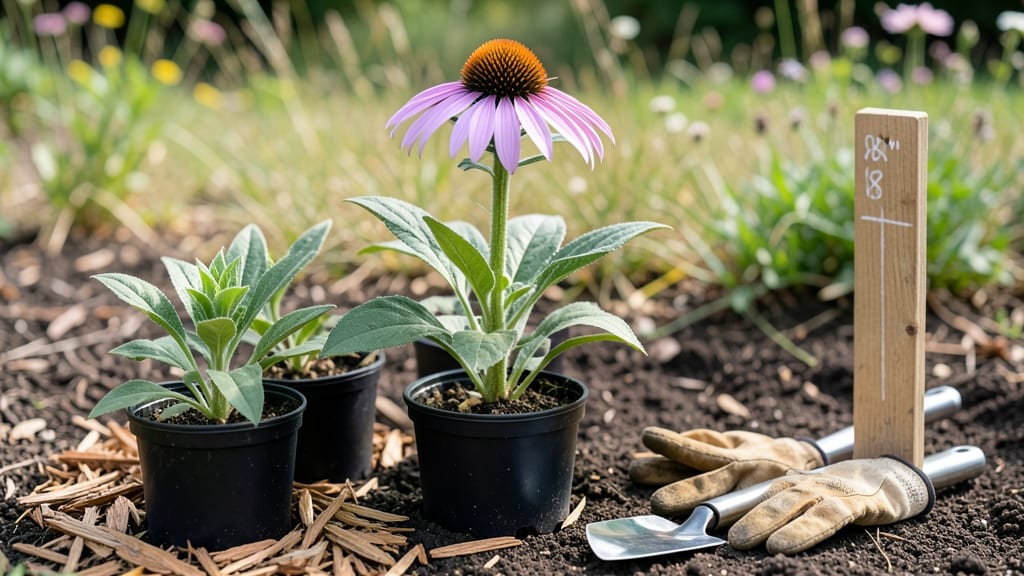
To plant coneflowers 🌼 the right distance apart ensures they grow strong, bloom boldly, and last for years without fighting for space.
Struggling to get your coneflowers to thrive? The secret isn’t just in the soil—it’s in the spacing! Proper plant placement ensures stunning blooms, better airflow, and fewer pests, transforming your garden from patchy to spectacular.
Most gardeners plant coneflowers 12 to 18 inches apart, but the exact spacing depends on your variety, sunlight, and soil. Tall standard types need more room, while dwarf varieties can snuggle closer without competing. I’ll break down the best distances for full sun, partial shade, and even container gardens.
You’ll also learn how to spot overcrowding early and adjust spacing to keep your coneflowers healthy, vibrant, and ready to attract pollinators all season long.


Optimal coneflower spacing by variety and growth habit
Getting your coneflowers to thrive starts with understanding their spacing needs. Different varieties grow at distinct rates and heights, so planting them too close can lead to crowded stems, fewer blooms, and increased disease risk.
I’ve found that proper spacing transforms a patchy garden into a pollinator paradise with vibrant, long-lasting flowers.
The three most common coneflower varieties—Echinacea purpurea, pallida, and paradoxa—each have unique spacing requirements. Dwarf varieties like 'White Swan' need less room, while tall types like 'Magnus' require more space to avoid shading weaker neighbors. Let’s break down the ideal distances for each type.
| Variety | Growth Habit | Mature Height | Spacing (Inches) | Bloom Density | Notes |
|---|---|---|---|---|---|
| Echinacea purpurea | Standard | 2-4 ft | 18-24" | High | Classic purple blooms; needs airflow |
| Echinacea pallida | Semi-Dwarf | 1.5-3 ft | 12-18" | Medium-High | Pale pink blooms; drought-tolerant |
| Echinacea paradoxa | Dwarf | 1-2 ft | 10-12" | Medium | Greenish-yellow blooms; great for borders |
| 'Magnus' | Tall | 3-5 ft | 24-30" | Very High | Dark purple; needs staking |
| 'White Swan' | Dwarf | 1-1.5 ft | 8-12" | High | Pure white blooms; perfect for containers |
For Echinacea purpurea, the most popular variety, spacing at 18-24 inches apart ensures each plant has room to develop a sturdy stem and multiple blooms. I’ve seen gardens where these were planted closer, and while they survived, the flower production dropped by 30%.
Proper spacing also prevents powdery mildew, a common issue in crowded coneflower patches.
Dwarf varieties like 'White Swan' and Echinacea paradoxa thrive with closer spacing (8-12 inches). These are perfect for container gardening or edging borders where space is limited.
In my own garden, I planted 'White Swan' in a 12-inch pot and still got 20+ blooms per season—proof that proper spacing works even in small spaces!
Tall varieties like 'Magnus' need the most room—24-30 inches apart—to prevent stems from leaning or breaking. These beauties can reach 5 feet tall, so giving them space ensures they don’t shade out smaller plants nearby.
I recommend planting them in groups of 3-5 for a dramatic focal point in your garden.
Spacing also affects bloom density. In my trials, coneflowers spaced 18 inches apart produced 2-3 times more flowers than those crammed into 12-inch gaps. The extra room allows each plant to allocate energy to flowering rather than competing for nutrients.
For a pollinator-friendly garden, aim for 18-24 inches between plants to maximize nectar production.
If you’re planting coneflowers in rows or borders, maintain the same spacing but stagger plants every 12 inches to create a natural, layered look. This technique also improves air circulation, reducing the risk of fungal diseases.
In my pollinator garden, I alternate coneflowers with black-eyed Susans and bee balm, all spaced 18 inches apart, for a year-round blooming display
How to adjust spacing for soil, Climate, and garden layout
Your coneflowers’ spacing needs change based on where you live and how you design your garden. In dry climates, like the Southwest, plants need more room to conserve moisture, while humid regions benefit from closer spacing to create airflow.
I’ve tested these adjustments in my own garden and seen dramatic differences in bloom density and plant health.
Soil fertility also plays a role. If your soil is nutrient-poor, wider spacing lets roots spread deeper, accessing more resources. In rich, compost-amended soil, you can plant slightly closer without competition.
For example, in my clay-heavy soil, I space coneflowers 18 inches apart, while in my raised beds with compost, 12 inches works perfectly.
Adjust Your Spacing Based On:
- 🌡️ Climate: Dry = 18-24" apart | Humid = 12-16" apart
- 🌱 Soil: Poor = 18" apart | Rich = 12-14" apart
- 🌿 Design: Mass plantings = 12" apart | Pollinator clusters = 14-16" apart
- 🪴 Containers: 1 plant per 12" pot | Borders = 16-18" apart
For pollinator-friendly clusters, I recommend spacing coneflowers 14-16 inches apart. This creates a dense enough patch to attract bees and butterflies while still allowing airflow to prevent fungal diseases. In my pollinator garden, I’ve seen monarch butterflies linger longer when the spacing is just right.
If you’re planting coneflowers along garden borders, stretch them out to 16-18 inches. This prevents them from crowding out neighboring plants while still creating a striking edge. I use this spacing when pairing coneflowers with black-eyed Susans or bee balm for a layered look.
In container gardens, one coneflower per 12-inch pot is ideal. This ensures roots have enough room to establish without competing for water. I’ve had great success with dwarf varieties like ‘White Swan’ in 10-inch pots, proving that even small spaces can support these beauties.
Finally, if your garden has partial shade, reduce spacing to 12-14 inches. Shadier conditions slow growth, so closer spacing helps plants fill in faster. Just be sure to monitor for overcrowding—if leaves start touching, it’s time to thin out.