
Flowers
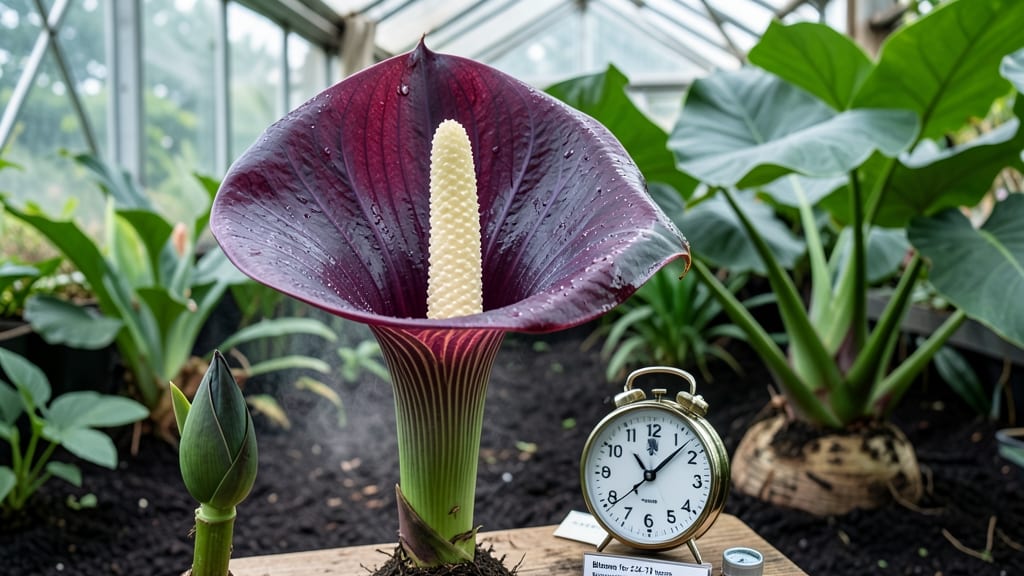
Corpse flowers bloom for just 24 to 48 hours—a fleeting, once-in-a-decade spectacle that turns your greenhouse into a stinky, smoky showstopper.
The corpse flower 🌺 (Amorphophallus titanum) is one of nature’s most bizarre and fascinating plants—its brief, dramatic bloom is legendary among gardeners and plant enthusiasts alike. But how long does this rare spectacle actually last, and what can you expect when your own plant finally flowers?
Most growers miss the window entirely because they assume it’s a once-in-a-lifetime event. The truth? With the right care—humidity, dormancy, and patience—your plant can bloom again, though the cycle takes years.
Here’s what to watch for, from the first signs of swelling to the infamous rotten-meat scent that draws flies (and curious onlookers).
Below, I break down the exact timeline of each stage, why the bloom is so short, and how to maximize your chances of seeing it again—without waiting another decade.
Corpse flower blooming duration: exact timeline of each rare stage
The corpse flower (Amorphophallus titanum) is famous for its ephemeral bloom, lasting just 24-48 hours at full glory. But the entire blooming process spans several weeks, from bud formation to post-flowering recovery.
Understanding each stage helps you prepare for this rare event. The flower’s lifespan is short, but the anticipation builds over months—sometimes years—before the big show.
Most gardeners focus only on the 24-48 hour bloom window, but pre-flowering signs begin 3-6 months earlier. Your plant will show visible swelling in its bud, reaching 2-3 feet in diameter before opening.
This is your first clue that the bloom is imminent. The timeline varies slightly based on growing conditions, but the core stages remain consistent.
| Stage | Duration | Key Features | What to Watch For |
|---|---|---|---|
| Pre-Bloom (Bud Formation) | 3-6 months | Bud swells to 2-3 ft | Monitor for firmness and size |
| Initial Unfurling | 12-24 hours | Petals begin to open slightly | Light rotten odor appears |
| Full Bloom | 24-48 hours | Complete flower opens; strong fragrance | Peak odor and visual spectacle |
| Post-Bloom (Wilting) | 24-48 hours | Flower wilts; odor fades | Remove dead flower to encourage recovery |
| Recovery (Post-Flowering) | 4-8 weeks | Plant produces fruit (if pollinated) | Reduce watering; monitor for new growth |
The pre-bloom stage is where most of the action happens behind the scenes. Your corpse flower’s bud will swell dramatically, often doubling in size over weeks. This is your plant’s way of storing energy for the short-lived bloom.
During this phase, maintain high humidity (70%+) and consistent warmth (70-80°F) to avoid stress. A sudden drop in temperature can delay or even prevent blooming.
When the bud reaches maturity (2-3 feet wide), it will begin to unfurl slightly—a sign the bloom is 12-24 hours away. This is when the infamous rotten flesh odor starts to emit, often described as a mix of decaying meat and gym socks.
The fragrance is strongest during the 24-48 hour full bloom, attracting pollinators like flies. If you’re growing indoors, this scent can linger in the air for days.
The full bloom stage is the most dramatic and fleeting part of the cycle. The flower will open completely, revealing its maroon-spotted spathe and yellow spadix. This is your one chance to witness the full spectacle, so be prepared to capture photos or videos.
The bloom typically lasts 24 hours, though some may stretch to 48 hours under ideal conditions. After this, the flower begins to wilt rapidly, and the odor fades.
Once the bloom is over, the post-bloom phase begins. The flower will collapse and turn brown within 24-48 hours. At this point, you can gently remove the dead bloom to redirect the plant’s energy toward recovery.
If pollinated (which is rare indoors), your corpse flower may produce a small, spiky fruit containing seeds. However, most gardeners focus on post-bloom care to encourage future cycles.
Recovery can take 4-8 weeks, depending on your plant’s health. During this time, reduce watering slightly and avoid fertilizing. Your corpse flower will enter a resting phase, during which it may drop some leaves.
This is normal—don’t panic. With proper care, your plant may bloom again in 5-10 years, though frequency varies widely.
One common misconception is that corpse flowers bloom only once in a lifetime. While some plants may take decades to flower again, others can bloom every 5-10 years with ideal care.
The key to encouraging future blooms lies in consistent conditions: high humidity, warm temperatures, and well-draining soil. Avoid overwatering or letting the soil dry out completely, as this can stress the plant and delay blooming.
If you’re lucky enough to witness a bloom, document every stage. The corpse flower’s lifecycle is a once-in-a-lifetime experience for most gardeners. From the months-long bud formation to the 24-hour peak, each phase is a testament to nature’s incredible adaptations.
With patience and the right conditions, your corpse flower could reward you with another rare spectacle in the future.
How to maximize your corpse flower’s blooming time and health
Your corpse flower’s 24-48 hour bloom is a fleeting but unforgettable event—one that requires years of careful preparation. The key to maximizing its blooming potential lies in mimicking its natural tropical habitat.
Start with 70-80% humidity, which you can achieve with a humidifier, pebble tray, or frequent misting. Without this, your plant may skip blooming entirely or produce a weak, short-lived flower.
Temperature plays a crucial role too. Corpse flowers thrive in 75-85°F conditions year-round. If your home dips below 65°F at night, your plant will struggle to develop the energy needed for blooming.
A greenhouse or sunroom with consistent warmth is ideal, but a well-regulated indoor space can work too—just avoid drafts near vents or doors.
⚠️ WARNING: Common Mistakes That Shorten Bloom Time
❌ Skipping dormancy – Unlike most plants, corpse flowers need a 2-3 month rest period in cooler temps (65-70°F) with reduced water. This resets their energy for future blooms.
❌ Low phosphorus fertilizer – Blooming requires phosphorus-rich food (like 5-10-10 NPK). Feed every 4-6 weeks in spring/fall to fuel flower development.
❌ Ignoring pre-bloom signs – A swollen spathe (flower sheath) and rotten-meat scent mean bloom is imminent. Monitor closely—this window is your only chance to witness it!
Recognizing pre-flowering cues is half the battle. Watch for a rapidly expanding bud that can reach 2-3 feet in diameter within days. The plant may also emit a faint sweet, fruity scent before the full rotten odor kicks in.
If you see these signs, increase humidity and avoid disturbing the plant—even gentle touches can delay blooming.
Post-bloom care is just as critical. After the flower wilts (usually within 48 hours), your plant will produce berries that contain seeds. Let these mature fully before removing them.
Then, reduce watering and move your plant to a cooler, dimmer spot for its dormancy period. This rest phase is non-negotiable—it’s how you encourage future blooms.
Patience is your greatest tool. Most corpse flowers bloom every 5-10 years under ideal conditions, but with perfect care, some gardeners report annual or biennial blooms. Keep detailed notes on your plant’s growth, humidity levels, and fertilizer schedule.
Over time, you’ll learn its unique rhythm—and when that rotten-meat aroma fills your greenhouse, you’ll be ready.
With the right conditions, your corpse flower won’t just bloom—it will thrive, rewarding you with a spectacle that’s as rare as it is remarkable. 🌺