
Watering
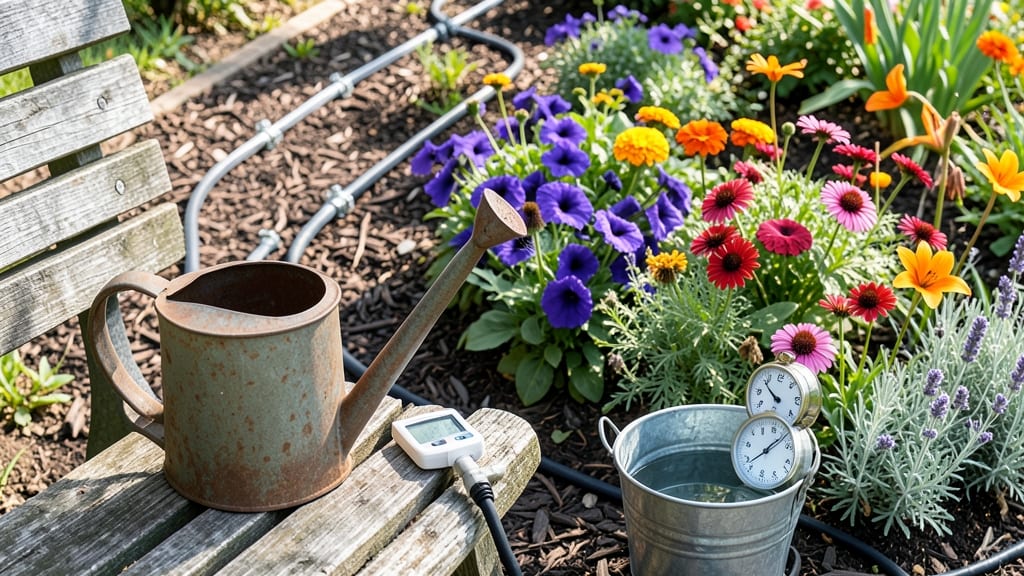
Watering your flower garden the right way means knowing how often to water flower garden—because too much or too little can turn your blooms into a sad, wilted mess.
Struggling to keep your flower garden vibrant? Overwatering or underwatering can both kill your blooms—so timing your watering schedule is everything.
Most flower gardens need 1-2 inches of water per week, but that changes with the season, soil type, and even the kind of flowers you’re growing.
In Zone 6a, summer heat can dry out soil in just 2-3 days, while winter might mean cutting back to once every 10 days.
Below, I’ll break down the exact schedule for spring, summer, fall, and winter—plus smart tricks like deep watering and mulching to keep your 🌸 flower garden thriving with minimal effort.
How often to water flower gardens by plant type and season
Watering your flower garden isn't a one-size-fits-all task—it depends on whether you're growing annuals or perennials, drought-resistant varieties like lavender versus thirsty petunias, and the current season. I've learned the hard way that skipping this step leads to wilted blooms, while overdoing it causes root rot.
Let's break down the perfect watering schedule to keep your garden thriving all year round.
First, understand that seasonal changes dramatically affect water needs. In summer, my impatiens demand daily watering, while in winter, even my roses only need water every two weeks.
The key is checking soil moisture 1-2 inches below the surface before watering—this tells you more than just looking at the top layer.
Annual flowers like marigolds and zinnias need consistent moisture to keep blooming, while perennials like coneflowers and black-eyed Susans establish deeper roots that make them more drought-tolerant once established. Even within these categories, water needs vary—thirsty flowers like geraniums need frequent watering, while drought-tolerant varieties like yarrow or sedum can go weeks without water once established.
| Plant Type | Water Needs | Spring | Summer | Fall | Winter |
|---|---|---|---|---|---|
| Annuals (e.g., Petunias, Impatiens) | High | Every 1-2 days | Daily (deep watering) | Every 2-3 days | Every 2 weeks (or none) |
| Perennials (Established, e.g., Coneflowers, Daylilies) | Medium | Every 2-3 days | Every 2-3 days (deep) | Every 3-4 days | Every 3-4 weeks |
| Drought-Tolerant (e.g., Lavender, Sedum, Yarrow) | Low | Every 3-5 days | Every 4-7 days | Every 5-7 days | Every 4-6 weeks |
| Thirsty Flowers (e.g., Roses, Hydrangeas, Geraniums) | Very High | Every 1-2 days | Daily (deep watering) | Every 2 days | Every 2-3 weeks |
| Bulbs (e.g., Tulips, Dahlias) | Medium | Every 2-3 days (after sprouting) | Every 2-3 days (deep) | Every 3-4 days | None (dormant) |
In spring, focus on deep watering to encourage root growth. My tulips and daffodils need consistent moisture as they emerge, but once they're established, they become more drought-resistant. I water them every 2-3 days until the foliage yellows, then let them rest for the summer.
When summer hits, most flowers need daily watering—especially in hot climates. I've found that watering early morning (before 9 AM) reduces evaporation and prevents fungal diseases. For potted flowers, I water them every 1-2 days since containers dry out faster than in-ground soil. Always check
Smart watering techniques to maximize bloom health and save time
Watering your flower garden isn't just about keeping soil moist—it's about strategic hydration that encourages vibrant blooms while saving you time. I’ve learned the hard way that light, frequent watering can waste water and invite pests, while deep, infrequent watering helps roots grow stronger.
The key is understanding your soil type and adjusting your approach accordingly.
For example, clay soil holds moisture longer but drains poorly, while sandy soil dries out quickly. Both require different watering strategies to keep your flowers thriving without over- or underwatering. Let’s break down the best methods to water efficiently and keep your garden flourishing.
Watering Flower Gardens: Pros & Cons
Deep Watering
- Pros: Encourages deep root growth
- Pros: Reduces surface evaporation
- Pros: Saves time and water
- Cons: Requires proper soil drainage
- Cons: Overwatering risks if soil is compacted
Frequent Light Watering
- Pros: Keeps soil surface moist
- Pros: Good for seedlings and delicate blooms
- Cons: Encourages shallow roots
- Cons: Wastes water and time
Drip Irrigation
- Pros: Delivers water directly to roots
- Pros: Reduces weed growth
- Pros: Saves water and time
- Cons: Initial setup cost
- Cons: Clogging risks with debris
Sprinklers
- Pros: Quick coverage for large areas
- Pros: Mimics natural rainfall
- Cons: Wastes water through evaporation
- Cons: Can spread fungal diseases
Timing matters just as much as technique. Watering in the early morning (between 6-10 AM) is ideal because it allows foliage to dry before evening, reducing the risk of fungal diseases like powdery mildew.
Avoid watering in the evening, as damp leaves overnight create a breeding ground for pests and pathogens.
Mulching is another game-changer for efficient watering. A 2-3 inch layer of mulch (like shredded bark or straw) helps retain moisture, suppresses weeds, and regulates soil temperature.
For clay soil, mulch prevents cracking, while for sandy soil, it slows moisture loss. Just avoid piling mulch directly against stems to prevent rot.
Adjust your watering based on your soil type. In clay soil, water deeply but less frequently—every 3-4 days—since it retains moisture. In sandy soil, water more often—every 1-2 days—because it drains quickly.
Always check soil moisture by sticking your finger 1-2 inches deep; if it’s dry, it’s time to water.
Finally, invest in the right tools. A soaker hose or drip irrigation system delivers water efficiently, while a moisture meter helps you track soil conditions without guesswork. With these techniques, you’ll save time, water, and keep your flower garden looking its best all season long.