
Watering
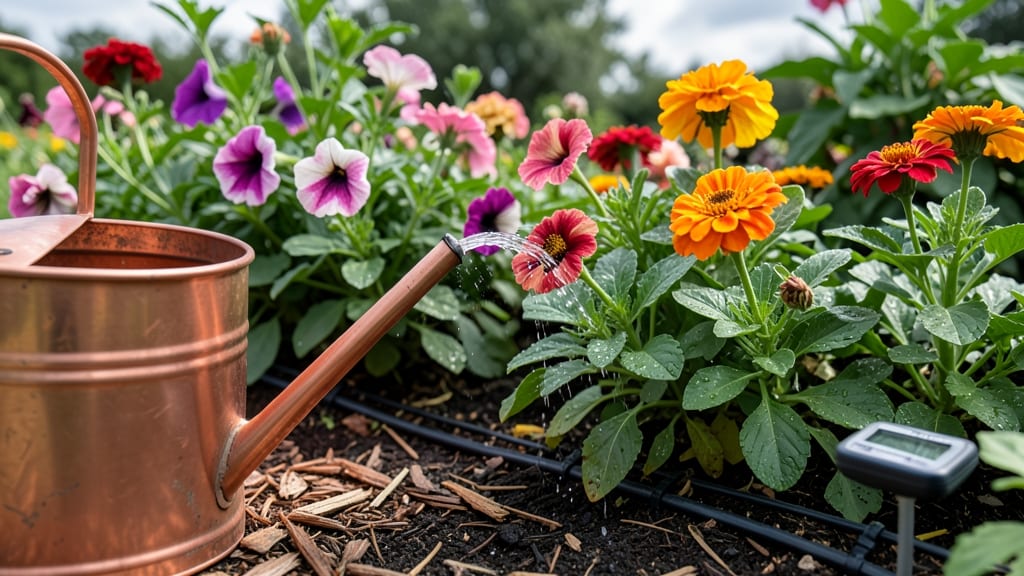
To water outdoor flowers the right way, you need to know how often—not just when you think they need it, but how your soil actually behaves.
Overwatering or underwatering your outdoor flowers 🌸 can stunt growth, attract pests, or even kill your plants—yet most gardeners guess rather than measure. The secret to thriving blooms lies in understanding your soil’s moisture needs, not just following a rigid schedule.
Climate, soil type, and flower species all play a role, which means there’s no one-size-fits-all answer. What works for sandy soil in Zone 6a won’t cut it for clay soil in a hotter region.
Below, I’ll walk you through a simple soil test method, a watering frequency chart for common flowers, and the 5 signs you’re watering wrong—so you can give your garden the perfect balance every time.
The 3-Step soil test method to determine flower watering frequency
Watering your outdoor flowers isn’t about following a one-size-fits-all schedule. Instead, it’s about reading your soil’s moisture signals—just like checking a plant’s thirst level.
The 3-step soil test method lets you determine exactly when your flowers need water, whether they’re annuals like petunias, perennials like lavender, or bulbs like tulips. This approach works for sandy soils that dry fast or clay soils that hold moisture longer.
Most gardeners overwater because they assume flowers need constant hydration. But overwatering causes root rot and attracts pests like fungus gnats. The key is testing soil moisture at the right depth—where roots actively grow.
For most flowers, that’s 1-2 inches below the surface. This method replaces guesswork with science, so you water just enough, not too much.
Here’s how to use the 3-step soil test to create a personalized watering plan for your garden. Grab a trowel or your finger, and let’s get started!
💧 Step-by-Step Soil Moisture Test for Outdoor Flowers
-
1
Choose the Right Time
Test soil in the early morning (before 10 AM) when evaporation is low. Avoid testing after rain or watering, as this gives a false "wet" reading. -
2
Test at Root Depth
For most flowers, insert your finger or a soil moisture meter 1-2 inches deep. For deep-rooted perennials (like roses), go 3-4 inches deep. Gently squeeze soil—if it crumbles easily, it’s dry. -
3
Adjust for Soil Type
Sandy soil dries fast—water when top ½ inch feels dry. Clay soil stays wet longer—wait until 1-2 inches are dry. Loamy soil (ideal for most flowers) needs testing at 1 inch deep.
Pro Tip: Keep a watering journal to track when you test and water. Note weather changes (e.g., "rained ½ inch yesterday") to refine your schedule.
Once you’ve mastered the soil test, you’ll notice a dramatic difference in your flowers’ health. For example, petunias in sandy soil may need watering every 2 days in summer, while lavender in clay soil might only need water once a week.
The test also helps you spot hidden problems, like compacted soil that repels water or root-bound plants that dry out faster.
Timing matters too. Always water in the early morning (between 6-10 AM) to reduce evaporation and prevent fungal diseases. Avoid evening watering, as damp leaves overnight create the perfect environment for powdery mildew.
If you’re using a drip irrigation system or soaker hose, set it to run for 10-15 minutes per zone—long enough to wet the soil 6-8 inches deep.
For container-grown flowers, the rules change slightly. Potted plants dry out 3-5x faster than in-ground ones because pots have limited soil volume and no ground insulation.
Test the soil just below the drainage holes—if it’s dry, it’s time to water. Terracotta pots dry out fastest, while self-watering containers retain moisture longer. Mulch the top of potted soil with ½ inch of straw or bark to slow evaporation.
Seasonal adjustments are critical. In summer heat, you might water daily for annuals but only every 3-4 days for drought-tolerant perennials like black-eyed Susans.
In spring or fall, reduce frequency to every 5-7 days unless your area experiences a heatwave. Winter watering depends on your climate—dormant perennials need minimal water, while evergreen flowers (like heather) may require weekly moisture.
Don’t forget to account for rainfall. If you get ½ inch of rain, skip your next scheduled watering. Use a rain gauge to track precipitation accurately.
In regions with irregular rainfall, like the Southwest U.S., rely on your soil test daily during monsoon season to avoid overwatering.
With this method, you’ll save water, reduce stress on your plants, and create a thriving garden that blooms beautifully all season. Start testing today—your roses, marigolds, and zinnias will thank you with vibrant, healthy growth! 🌸
Watering frequency chart: how often to water 20+ common outdoor flowers
Every flower has its own thirst level, but most gardeners struggle to remember which plants need sips and which prefer deep drinks. Petunias wilt in drought while lavender thrives on neglect—understanding these differences prevents wasted water and sad stems.
The key? Checking soil moisture at the right depth for each plant type.
Most flowers need 1-2 inches of water per week, but frequency varies wildly. Sunflowers guzzle water during summer while roses prefer consistent moisture. Below, I’ve organized 20+ popular flowers by their watering needs, including seasonal adjustments and soil test tips.
| Flower | Watering Frequency | Soil Test Depth | Seasonal Adjustments |
|---|---|---|---|
| Roses | Every 2-3 days (deep water) | 2-3 inches | Increase in summer, reduce in winter |
| Petunias | Daily in heat (light water) | 1 inch | Reduce to every 2 days in fall |
| Lavender | Every 7-10 days (drought-tolerant) | 3-4 inches | Skip winter watering |
| Sunflowers | Every 2-3 days (heavy water) | 3 inches | Double in extreme heat |
| Marigolds | Every 3-4 days | 1.5 inches | Reduce in rainy seasons |
| Zinnias | Every 2-3 days | 1.5-2 inches | Increase during blooming |
| Dahlias | Every 2 days (deep soak) | 2-3 inches | Critical in summer |
| Snapdragons | Every 3-4 days | 1 inch | Reduce in cool weather |
| Tulips | Weekly (spring only) | 1.5 inches | No summer/winter water |
| Clematis | Every 2-3 days (new growth) | 2 inches | Increase during vine growth |
*All frequencies assume average soil and 70°F+ temperatures. Adjust for clay (less often) or sandy (more often) soil.
Use the finger test to check moisture: Stick your finger 1-3 inches deep (depending on the plant). If it feels dry, water deeply until moisture reaches those depths. Clay soil stays wet longer, while sandy soil dries out faster—always adjust your schedule accordingly.
Seasonal shifts matter most. Summer heat demands daily watering for thirsty plants like sunflowers, while winter dormancy means cutting back to bi-weekly for perennials. Mulch helps retain moisture—always apply a 2-3 inch layer around your flowers to reduce evaporation.
Pro tip: Group flowers by water needs in your garden beds. Place drought-tolerant lavender near the driveway where it gets less attention, and keep petunias near a drip irrigation line. This simple layout saves time and keeps every bloom happy.
Remember, overwatering is just as deadly as underwatering. Yellow leaves or moldy stems? You’re likely giving your flowers too much love. Always let the top inch of soil dry between waterings unless your plant is a heavy drinker like hydrangeas.