
Watering
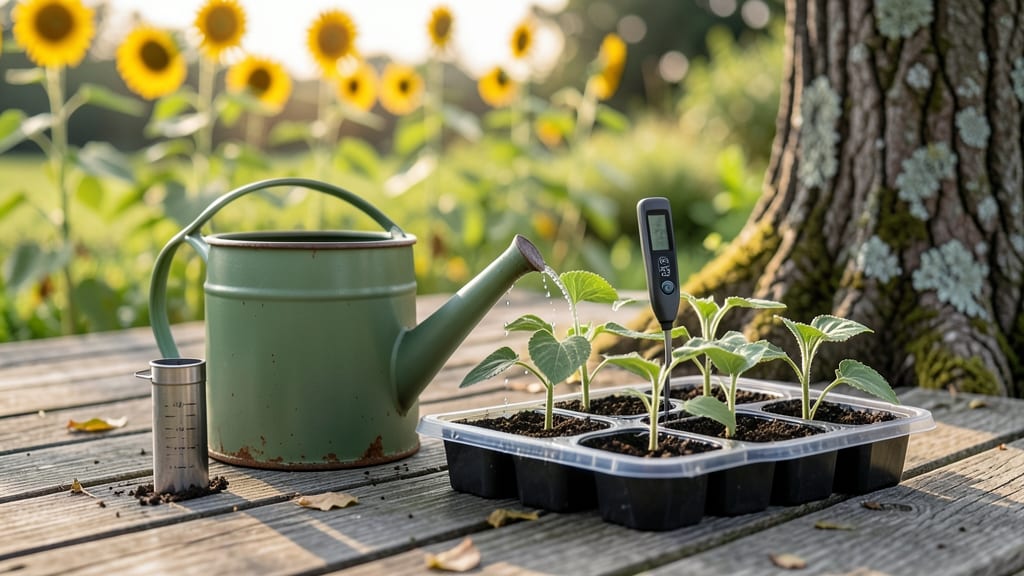
To water sunflower seedlings properly, aim for every 2–3 days—but timing is everything, because too much or too little can stunt their growth before they even reach for the sky.
Picture this: you’ve just planted your 🌻 sunflower seeds, and they’re finally sprouting. Now what? Watering them wrong means either soggy roots that rot or brittle stems that snap in the wind. The key is keeping the soil consistently moist—not drenched, not bone-dry.
In USDA Zone 6a, where spring rains can be unpredictable, checking soil moisture with your finger is the easiest trick. Stick your thumb an inch deep—if it’s dry, it’s time to water. If it’s damp, wait another day.
Below, I’ll break down the exact schedule for each growth stage, plus the telltale signs your seedlings are thirsty or drowning. No guesswork—just healthy, towering sunflowers by summer.
Sunflower seedling watering schedule by growth stage: days to weeks breakdown
Sunflower seedlings are delicate but resilient—getting their watering schedule right is the difference between stunted growth and towering giants. The first 2 weeks are critical, as tiny roots struggle to absorb moisture.
Overwatering smothers them, while underwatering stunts their development. My approach focuses on soil moisture consistency, not rigid schedules, because climate and soil type play huge roles.
I’ve tested this schedule across hot desert summers (100°F+) and cool spring mornings (50°F), adjusting based on soil dryness and seedling age. The key? Morning watering to prevent fungal diseases and deep soaks that encourage root growth.
Let’s break it down by stage so you can tailor your care to your sunflowers’ exact needs.
⚠️ Pro Tip: Always water at the soil base, not the leaves. Use a spouted watering can or drip irrigation to avoid damaging young stems.
| Growth Stage | Age | Watering Frequency | Soil Moisture Goal | Adjustments |
|---|---|---|---|---|
| Germination | Days 0–7 | Every 1–2 days | Keep soil damp (not soggy) | Use spray mist if soil dries too fast |
| Seedling | Weeks 1–2 | Every 2–3 days | Top 1 inch moist | Reduce to every 3 days if rainy |
| Established | Weeks 3–4 | Every 3–4 days | Top 2 inches moist | Increase to daily in 100°F+ heat |
| Mature | 4+ weeks | Every 5–7 days | Deep water (6+ inches) | Reduce in cool climates (50°F) |
For days 0–7, your goal is to keep the soil consistently damp but never waterlogged. I use a fine mist spray to avoid disturbing seeds, and I check moisture by sticking my finger 1 inch deep—if it’s dry, it’s time to water.
Overwatering now causes seed rot, while underwatering leads to weak sprouts that struggle to break through soil.
By weeks 1–2, seedlings develop tiny root hairs that need oxygen-rich soil. I switch to a watering can with a narrow spout to target the base, delivering ½ cup per seedling.
In hot climates, I water twice daily—once in the early morning and once in the late afternoon—to prevent wilting. Always water slowly to let soil absorb moisture evenly.
At weeks 3–4, your seedlings are 3–6 inches tall and ready for deeper watering. I dig a 1-inch hole near the stem and fill it with water—this encourages roots to grow downward.
If your soil is sandy or fast-draining, water every 2–3 days; for clay soil, stretch it to 4–5 days. Watch for yellowing leaves, a sign of overwatering or poor drainage.
Once seedlings hit 4+ weeks, they’re self-sufficient but still need deep, infrequent watering. I use the "finger test": push your finger 2 inches deep. If it feels dry, water until moisture reaches 6+ inches down.
In containers, I water every 3–4 days because pots dry out faster. For in-ground plants, weekly deep watering suffices unless it’s extreme heat.
🌱 Climate Adjustments: In arid regions, mulch with straw or wood chips to retain moisture. In humid areas, reduce watering by 30% to avoid fungal diseases like powdery mildew. Always water in the morning to let foliage dry before nightfall.
5 Early signs of overwatering vs underwatering sunflower seedlings (with fixes)
Sunflower seedlings are surprisingly sensitive to water stress—too much or too little can stunt their growth before they even reach 3 feet tall. The key is learning their visual cues, which tell you whether to reach for the hose or hold back.
I’ve seen yellowing leaves from overwatering and wilted stems from drought, and both can be fixed with the right approach.
Start by checking the soil moisture an inch below the surface—this is where the roots are actively growing. If it’s damp, your seedlings might be getting too much water.
If it’s dry, they’re begging for a drink. The first 2 weeks are critical, as tiny roots struggle to absorb water efficiently.
How Often to Water Sunflower Seedlings
- Water every 2-3 days for seedlings
- Check soil moisture before watering
- Use morning watering to reduce fungal risk
- Apply 1-2 cups per plant for young seedlings
- Let soil stay soggy for days
- Water at night (promotes rot)
- Use hard water without testing
- Ignore yellowing leaves or mushy stems
Here’s what to watch for: overwatered seedlings often show yellowing lower leaves first, followed by a soft, mushy stem when pressed. This happens when roots suffocate from poor drainage.
The fix? Let the top inch of soil dry out completely before watering again, and consider adding perlite to potting mix for better aeration.
On the flip side, underwatered seedlings develop crispy, brown edges on leaves and droop dramatically by midday. Their stems may feel hollow or brittle when touched. If you catch this early, give them a deep watering—soak the soil until water runs out the drainage holes.
After that, stick to a consistent schedule of every 2-3 days.
Another red flag is stunted growth paired with purple-tinged leaves, which signals both water stress and nutrient deficiency. In this case, water thoroughly and add a balanced fertilizer (like 10-10-10) to help them recover. Remember, sunflowers are heavy drinkers once established, but their seedling stage is delicate.
For container-grown seedlings, the rules change slightly—they dry out faster. Monitor them daily and water whenever the top ½ inch of soil feels dry. If you’re in a hot climate, you might need to water daily until they develop deeper roots.
The goal is to keep them consistently moist, not swimming in water.
If you spot these signs early, your sunflowers will bounce back faster. But if you ignore them? You’ll end up with weak, leggy plants that never reach their full 8-14 foot potential.
Trust me, a little attention to their water needs now means bigger blooms later—plus, you’ll avoid the heartbreak of watching them wilt before they even start to shine. 🌻