
Watering
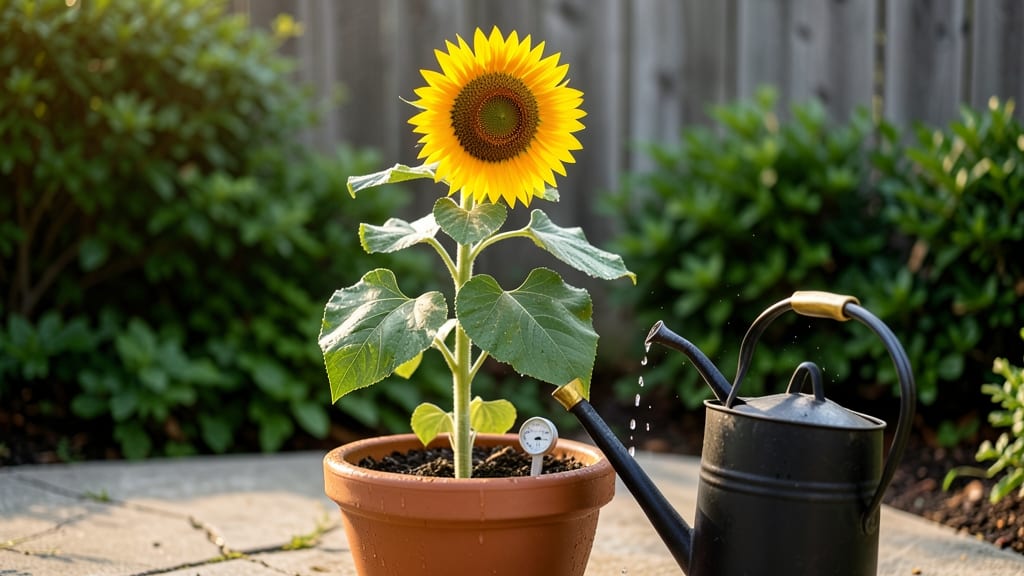
Watering sunflowers in pots how often to water sunflowers in pots keeps them thriving, but that rule changes with heat, pot size, and soil type.
Picture this: your 🌻 sunflowers planted in Zone 6a are wilting by midday, even though you watered them yesterday. That’s because pots dry out faster than garden beds, and summer heat accelerates evaporation.
The key is checking soil moisture before you water—stick your finger 2 inches deep, and if it’s dry, it’s time.
Small pots (like 5-gallon containers) need water more often than larger ones, while sandy soil drains quicker than loamy mixes. I’ll break down how to adjust your schedule for different pot sizes, climates, and even life stages—from seedlings to towering mature plants.
By the end, you’ll know exactly when to water, how much to give, and how to spot the signs of over- or under-watering before it’s too late. No more guesswork, just happy, healthy sunflowers reaching for the sky.
The 3-Day watering rule explained: when and how much to water sunflowers in pots
Sunflowers in pots need a consistent watering routine to thrive, and the 3-day rule is my go-to guideline. This means checking soil moisture every 3 days and watering only when the top 2 inches feel dry.
Pots dry out faster than garden beds, so this rule prevents both overwatering and underwatering—two common mistakes that stunt growth or invite pests.
Why 3 days? Sunflowers have deep taproots that need time to establish, but containers limit root expansion. The 3-day window balances moisture retention with oxygen flow to roots. For seedlings, I reduce this to 2 days since their roots are delicate and shallow.
The 3-day rule isn’t set in stone—it’s a starting point. Adjust based on your climate, pot size, and season. For example, summer heat might shrink this to 2 days, while cooler spring mornings could stretch it to 4 days.
Always prioritize deep watering over frequent shallow drinks.
Here’s how I test soil moisture to stay on track: Stick your finger 2 inches deep. If it feels dry, water until it runs out the drainage holes. Use a moisture meter for precision, especially in terracotta pots, which dry out quicker than plastic.
Pot size plays a huge role. A 5-gallon pot needs watering every 1-2 days in summer, while a 15-gallon pot might last 4-5 days. Larger pots hold moisture longer, but their root zones also expand deeper.
Always match your watering volume to the pot’s capacity—aim for 1 gallon per 5 gallons of soil.
Watch for wilting leaves or yellowing foliage, which signal overwatering or underwatering. Overwatered sunflowers develop mushy stems and fungal spots, while underwatered ones show crispy edges. Adjust your schedule based on these visual cues—your sunflower’s health is the best watering guide.
Seasonal shifts demand flexibility. In spring, focus on establishing roots with lighter, more frequent watering. By summer, increase volume and frequency to combat evaporation. Mulch with straw or wood chips to retain moisture and reduce stress on your plant.
Morning watering is ideal—it gives roots time to absorb moisture before the heat of the day. Avoid evening watering, which can promote fungal diseases like powdery mildew. If you’re away for a few days, group pots together and use a self-watering globe to maintain consistent moisture.
Remember, the <
Adjusting watering frequency for different sunflower pot sizes and climates
Sunflower pots come in all sizes, and each demands a unique watering approach. A 5-gallon container dries out faster than a 15-gallon pot because smaller pots have less soil to retain moisture.
In my experience, a 5-gallon pot may need watering every 1-2 days in summer, while a 15-gallon pot can stretch to 3-4 days between waterings. The key difference? Evaporation rates—smaller pots lose moisture quicker due to their higher surface area-to-volume ratio.
Climate plays an equally critical role. In desert regions, where temperatures soar above 90°F, I’ve found sunflowers in pots need watering daily during peak heat. Meanwhile, in coastal climates with high humidity, the same plants might only require water every 4-5 days.
Humidity slows evaporation, giving soil more time to retain moisture. Always check the top 2 inches of soil—if it’s dry, it’s time to water.
Here’s a quick-reference comparison to simplify your watering schedule based on pot size and climate:
Temperature extremes also demand adjustments. During heatwaves, even large pots may require daily watering, while cool spring mornings can stretch watering intervals to every 5-6 days.
I’ve learned to monitor my sunflowers closely during transitions—like when summer gives way to fall—and adjust accordingly. A simple soil moisture meter can be a game-changer for accuracy.
Don’t forget about mulching, which can reduce evaporation by up to 30%. I use organic mulch like straw around my sunflower pots to lock in moisture and keep roots cool.
This simple step can extend the time between waterings, especially in hot, dry climates. Pair mulch with a drip irrigation system for precision, and you’ll minimize stress on your plants.
Finally, watch for signs of overwatering (yellow leaves, mold) or underwatering (wilting, crispy edges). In my garden, a 5-gallon pot in full sun might show wilting by late afternoon if I’ve missed a watering day, while a 15-gallon pot in shade stays resilient longer.
Trust your observations—your sunflowers will thank you with vibrant blooms and robust stems.