
Flowers
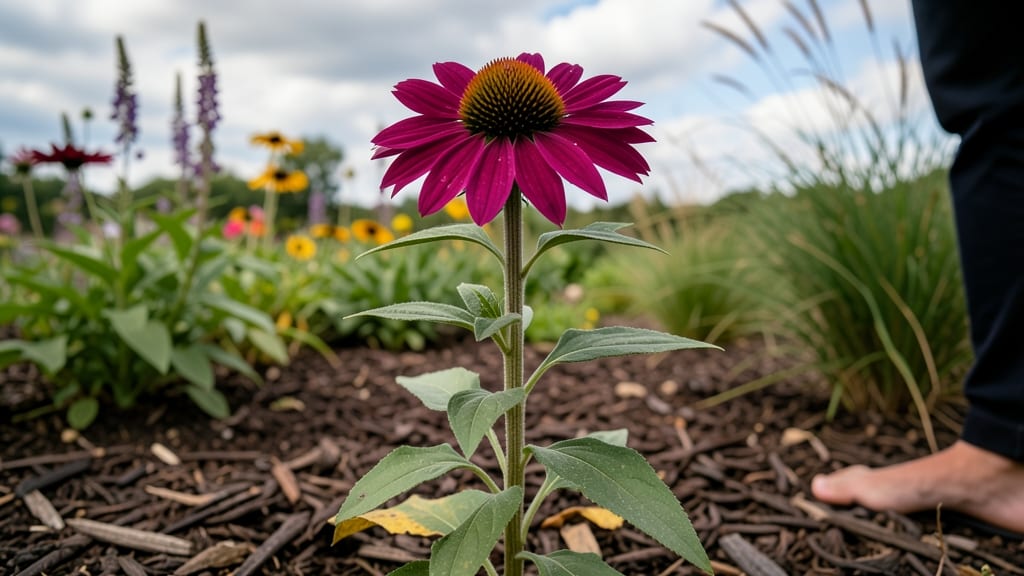
Coneflowers grow anywhere from 1 foot to over 5 feet tall, depending on the variety and growing conditions—so picking the right one for your garden can make all the difference.
If you're planning your garden layout or dreaming of vibrant pollinator-friendly blooms, knowing exactly how tall coneflowers grow is essential—because the wrong variety in the wrong spot can mean lost beauty or wasted space.
For example, the classic Echinacea purpurea (like 'Magnus') can reach 4 to 5 feet, making it perfect for the back of borders, while dwarf types like 'Green Envy' stay compact at just 1 to 2 feet, ideal for containers or front-row planting.
Below, we break down the height ranges by top varieties, plus the factors that influence growth—so you can choose the perfect 🌼 for your space and design goals.

Coneflower height guide: exact growth ranges by popular varieties
If you're planning a pollinator garden or designing a low-maintenance border, knowing the exact mature height of your coneflowers is crucial. These vibrant blooms come in stunning varieties that range from compact dwarf types to towering tall cultivars, each perfect for different garden spaces.
Let's explore the precise height ranges of the most popular coneflower varieties so you can choose the perfect fit for your landscape.
Coneflowers (Echinacea spp.) are prized for their long bloom season and pollinator appeal, but their mature height varies dramatically. Some varieties stay under 2 feet, making them ideal for containers or front borders, while others reach 5 feet or more, perfect for back-of-border drama.
Understanding these differences helps you avoid overcrowding or wasted space in your garden design.
| Variety | Mature Height | Best For | Notes |
|---|---|---|---|
| 'Magnus' | 3-5 ft | Back borders, cut flowers | Classic purple blooms, tallest variety |
| 'PowWow White' | 2.5-4 ft | Pollinator gardens, borders | Pure white blooms, drought-tolerant |
| 'Eclipse' | td style="padding: 10px; border: 1px solid #5a9b8c;">2-3 ftContainers, cottage gardens | Dark red-purple blooms, compact size | |
| 'Green Envy' | 1.5-2.5 ft | Front borders, pollinator pots | Green foliage, dwarf variety |
| 'White Swan' | 3-4 ft | Cut flower arrangements | Pure white blooms, long stems |
| 'Hot Papaya' | 2-3 ft | Pollinator gardens, borders | Orange-pink blooms, heat-tolerant |
| 'Jelly Bean Mix' | 1-2 ft | Containers, window boxes | Multi-colored blooms, dwarf mix |
| 'Sombrero Salsa' | 2-3 ft | Pollinator meadows | Red-orange blooms, long bloom season |
| 'Green Twister' | 2-3 ft | Front borders, pollinator pots | Green foliage, twisted petals |
How to choose coneflower height for your garden designChoosing the right coneflower height transforms your garden from chaotic to curated. Tall varieties like 'Magnus' (4–5 ft) create dramatic backdrops, while dwarf types like 'Green Envy' (1–2 ft) add delicate texture to containers or borders. The key is matching height to your garden style—whether you're designing a pollinator meadow, a formal border, or a container garden. Start by measuring your space. A 3-foot-tall coneflower needs 18–24 inches of clearance behind it to avoid blocking sunlight for shorter plants. For example, pairing 'PowWow White' (3 ft) with black-eyed Susans (2 ft) creates a layered look, while 'Sombrero Mexican Hat' (5 ft) thrives as a focal point in a wildflower meadow. Here’s how to align coneflower height with your garden’s needs:
Pro tip: If you love tall coneflowers but have limited space, try pruning in early spring to control height. Cut back 1/3 of the stem to encourage bushier growth and shorter stature—perfect for smaller gardens. This works especially well with Echinacea paradoxa, which naturally stays 2–3 ft tall. Remember, coneflower height isn’t just about aesthetics—it’s about function. A well-planned layout ensures pollinators can navigate your garden, while strategic spacing prevents disease by improving airflow. Start with your tallest varieties first, then build outward to create a harmonious, thriving ecosystem. 🌼 |