
Flowers
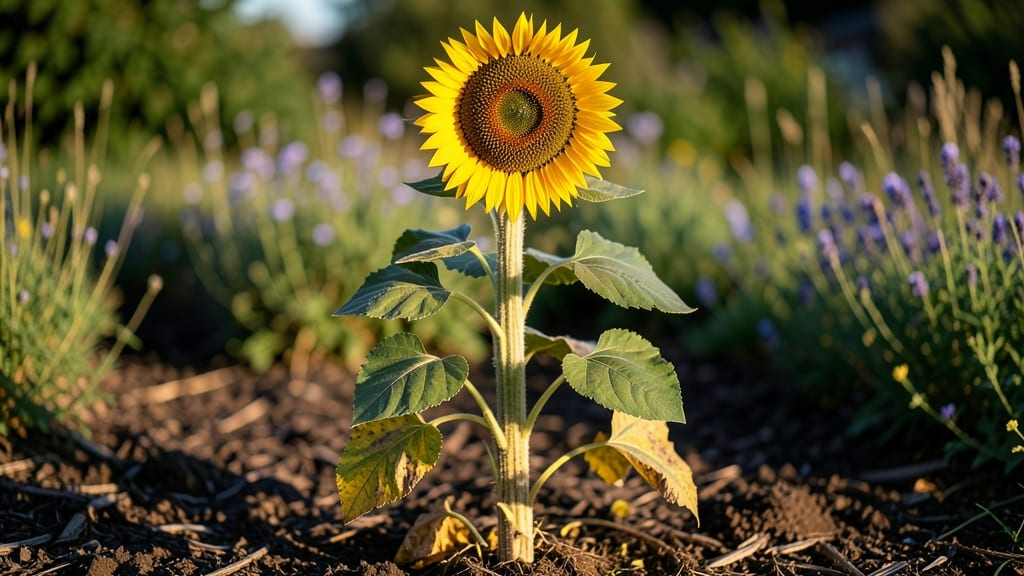
Mammoth sunflowers can grow 10 to 16 feet tall — the kind of towering giants that turn your garden into a sunflower skyline. 🌻
If you’ve ever dreamed of towering sunflowers that dwarf your fence line or even your house, Mammoth sunflowers could be your answer—but knowing their exact growth potential is key to planning your garden layout.
Their height isn’t just about show, though. Proper spacing, support, and soil prep can mean the difference between a sturdy, sun-drenched giant and a floppy mess by midsummer. I’ll walk you through the height ranges by variety, plus the 3 must-do steps to keep them standing tall.
Ready to plan your sunflower statement piece? Here’s how to set them up for success from seed to sky-high bloom.

Mammoth sunflower height by variety: exact growth data for garden planning
If you’re planning a garden that makes a bold statement, few plants deliver like Mammoth sunflowers. These giants can reach heights that rival small trees, but not all varieties grow to the same towering stature.
Understanding the exact height ranges of popular Mammoth sunflower varieties helps you choose the perfect fit for your space—whether you’re aiming for a privacy screen, a dramatic focal point, or just a conversation starter.
Growth isn’t just about height, though. Factors like soil quality, sunlight exposure, and watering consistency play critical roles in whether your sunflowers hit their full potential. For example, the 'Russian Giant' variety often surpasses 14 feet, while 'Autumn Beauty' might max out around 10 feet.
Knowing these details ensures you allocate enough space and provide the right care to avoid flopping stems or stunted growth.
When planning your garden, consider that Mammoth sunflowers grow fastest during peak summer months. The 'Giant Russian' variety, for instance, can add up to 5 inches per week under ideal conditions, while 'Autumn Beauty' grows more steadily at 1–2.5 inches per week.
This rapid growth means you’ll need to monitor soil moisture and provide support early—often within 4–6 weeks of germination—to prevent stems from snapping under their own weight.
Environmental factors like wind exposure and soil fertility can also influence height. For example, windy conditions may cause stems to lean or break, while nutrient-rich soil (especially with added phosphorus) can push heights toward the upper end of the range.
If you’re in a USDA Zone 6 or higher, you’ll likely see taller growth compared to cooler climates where frost risks may limit maturity.
Proper spacing is non-negotiable for Mammoth sunflowers. Plant seeds 6 inches apart initially, then thin seedlings to 18–24 inches apart to give roots room to anchor deeply. Crowding leads to competition for nutrients, which stunts height and increases disease risk.
In my own garden, I’ve found that trellising or staking with bamboo poles (inserted at planting) prevents flopping and encourages vertical growth, especially for varieties like 'Russian Giant'.
Don’t overlook the role of watering consistency. While Mammoth sunflowers are drought-tolerant once established, deep watering every 3–5 days during dry spells keeps stems strong. Shallow watering leads to weak stems that can’t support the weight of 10–16 foot flower heads.
I’ve seen firsthand how morning watering (before 10 AM) reduces fungal risks while ensuring roots absorb moisture efficiently.
For those with limited space, consider dwarf Mammoth varieties like 'Teddy Bear' (6–8 ft), though they won’t reach the same dramatic heights. Even these shorter types benefit from full sun exposure and well-draining soil to maximize their potential.
If you’re aiming for a privacy screen, plant 'Russian Giant' seeds in a double row with 2 feet between rows—this creates a lush, towering barrier by midsummer.
To coax your Mammoth sunflowers to reach their 10–16-foot potential, you’ll need to focus on three core factors: soil nutrition, sunlight exposure, and structural support. These giants don’t just grow tall—they thrive when given the right conditions. I’ve learned that even a small oversight in spacing or watering can leave them flopping by summer’s end. Start by ensuring your garden soil is rich in organic matter. Mammoth sunflowers are heavy feeders, and amended soil with compost or a balanced fertilizer (like 10-10-10) gives them the nutrients to stretch skyward. I mix in a 2–3 inch layer of compost before planting, and side-dress with fertilizer every 4–6 weeks during their growing season. Next, sunlight is non-negotiable. These sun-worshippers need 6–8+ hours of direct sun daily—any less, and their stems weaken, leading to shorter stature. If your garden lacks full sun, consider growing them near a south-facing fence or wall to maximize light exposure. I’ve seen my tallest sunflowers in the brightest spots, where they soak up rays from morning to evening. Proper spacing is critical—crowded sunflowers compete for nutrients and light, resulting in weaker stems. I plant seeds 6 inches apart initially, then thin seedlings to 18–24 inches apart once they’re 4–6 inches tall. This spacing allows air circulation, reducing fungal risks like powdery mildew, which can stunt growth. Watering plays a surprising role in height. Deep, infrequent watering encourages strong root development, while shallow watering leads to leggy, weak stems. I water my sunflowers early in the morning with a soaker hose, delivering 1–2 gallons per plant every 3–5 days. Avoid overhead watering, which can promote disease and weaken stems. Finally, support is essential for preventing flopping. Even with perfect care, 10–16-foot stems can bend under their own weight. I use bamboo stakes (3–4 feet tall) inserted at planting, then gently tie the stems with soft cloth or plant ties as they grow. For extra stability, I’ve even used trellis systems in windy areas to keep them upright.How to maximize Mammoth sunflower height in your garden
🌻 5 Key Steps to Sky-High Sunflowers