
Flowers
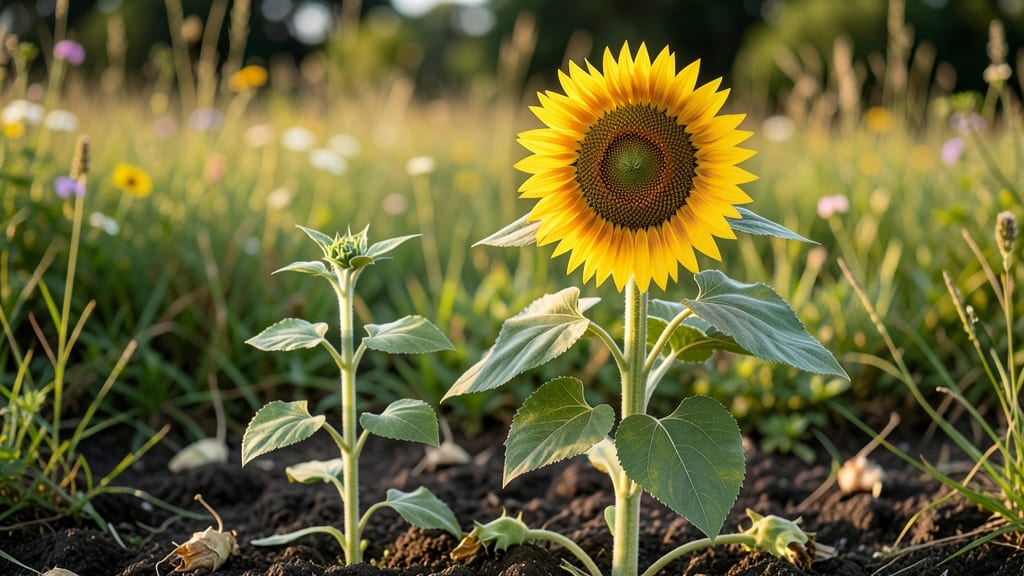
Sunflowers can grow from just 1 foot tall to towering over your fence at 16 feet—depending on the variety you choose.
Picture this: a tiny Teddy Bear sunflower adding cheerful color to your patio, while a Mammoth variety looms like a skyscraper in your backyard. That’s the beauty—and the challenge—of sunflower height.
Getting it right means picking the perfect variety for your space, whether you want a dramatic focal point or a compact border plant.
Below, I break down the height ranges of popular sunflower types, from dwarf varieties that stay under 3 feet to giants that reach 10 feet or more.
You’ll also discover how sunlight, soil, and water affect their growth—and how to support taller varieties so they don’t topple in the first breeze.
Ready to plan your sunflower garden? Let’s match the right height to your vision—whether you’re dreaming of a sunflower hedge or a backyard skyline.

Sunflower height by variety: Giant vs compact types explained
Choosing the right sunflower variety starts with understanding their height potential. Some tower like skyscrapers while others stay compact enough for containers.
The difference often comes down to genetics—giant varieties like 'Mammoth' can reach 12-16 feet, while dwarf types like 'Teddy Bear' max out at 1-3 feet. This dramatic range means you can grow sunflowers in everything from urban balconies to rural fields.
Height isn't just about space—it affects pollinator attraction, wind resistance, and even harvesting ease. Taller varieties need staking in windy areas, while shorter ones thrive in tight spaces.
Let's break down the four main height categories with real-world examples to help you pick the perfect sunflower for your garden.
🌻 Quick Tip: Always check seed packets for mature height ranges—they're legally required to list this information.
| Variety Type | Mature Height | Best For | Sunlight Needs | Growth Habit |
|---|---|---|---|---|
| Giant (12-16 ft) | 12-16 ft | Rural gardens, fields, windbreaks | Full sun (6-8+ hrs) | Tall, single-stemmed |
| Standard (8-10 ft) | 8-10 ft | Backyard borders, pollinator gardens | Full sun (6-8 hrs) | Medium height, branching |
| Semi-Dwarf (3-6 ft) | 3-6 ft | Containers, small gardens, cut flowers | Full sun (5-6 hrs) | Compact, bushy |
| Dwarf (1-3 ft) | 1-3 ft | Balconies, window boxes, children's gardens | Full sun (4-6 hrs) | Prostrate, multi-branched |
| Miniature (<1 ft) | 6-12 in | Desk gardens, fairy gardens, indoor growing | Bright light (3-4 hrs) | Tiny, clustered |
Note: Heights are approximate—growing conditions affect final size.
My all-time favorite giant is 'Russian Giant' sunflowers, which can reach 14-16 feet when given perfect conditions. I once grew one that outpaced our 10-foot fence—it was like having a living sunbeam in our backyard!
These giants need rich soil and consistent watering to reach their full potential, but the payoff is worth it for that dramatic vertical impact.
For small-space gardens, I recommend 'Teddy Bear' sunflowers—these 2-3 foot varieties produce double-layered petals that look like pom-poms. They're perfect for container growing and even do well in partial shade if you're in a shadier climate.
Their compact size makes them ideal for urban gardeners or anyone with limited yard space.
One common misconception is that all sunflowers need full sun to reach their maximum height. While this is generally true, dwarf varieties can tolerate 4-6 hours of sun daily, making them more adaptable to shadier microclimates.
I've successfully grown 'Moulin Rouge' sunflowers in a morning sun location where they received only 5 hours of direct light and still reached 4 feet tall.
When planning your garden layout, consider how sunflower height will interact with surrounding plants. A 12-foot sunflower can cast significant shade—position it where it won't smother shade-loving plants like hostas or ferns.
For mixed-height gardens, I like to place taller varieties at the north side of beds to minimize shading effects on shorter companions.
🌱 Pro Tip: If you're growing tall sunflowers in windy areas, use soft ties to stake them at the base. I
How sunflower height affects garden design and companion planting
Sunflower height isn’t just about aesthetics—it’s a game-changer for your garden’s layout and plant pairings. A 16-foot Mammoth sunflower will cast a shadow that could smother your marigolds, while a 2-foot Teddy Bear variety adds cheerful color without dominating your space.
Understanding these differences lets you design with purpose, whether you’re creating a pollinator-friendly haven or a vertical accent in a small yard.
Taller sunflowers (like Russian Giant or Autumn Beauty) can serve as natural trellises, drawing the eye upward and providing privacy. Meanwhile, shorter varieties work beautifully in containers or as border plants.
The key is strategic placement—pairing sunflowers with companion plants that thrive in their shade while avoiding competition for nutrients and water.
Here’s how to leverage sunflower height in your garden design, from spacing tips to support structures for towering varieties:
🌱 Height-Based Garden Design Tips
- 1-3 ft (Dwarf): Perfect for containers or front borders. Pair with basil or nasturtiums to create a pollinator magnet.
- 3-6 ft (Semi-Dwarf): Ideal for mid-height beds. Plant near tomatoes or beans to improve air circulation and deter pests.
- 8-12 ft (Standard): Use as backdrop plants for vegetable gardens. Space 3-4 feet apart to prevent shading shorter crops.
- 12-16 ft (Giant): Plant in isolated areas or near fences/walls. Add stakes or cages to prevent toppling in windy conditions.
Pro Tip: Rotate sunflowers yearly to avoid soil depletion from their deep roots.
When designing around sunflower height, think vertically. Taller varieties create a natural focal point in your garden, drawing bees and butterflies upward while providing shade for heat-sensitive plants like lettuce or spinach at their base.
For example, a 6-foot sunflower can shield radishes from the afternoon sun while still allowing light to reach their leaves.
Support structures are essential for varieties exceeding 8 feet. Use bamboo stakes, tree rings, or cattle panels to prevent flopping, especially in wind-prone areas. I’ve found that Russian Giant sunflowers benefit from a 3-foot-wide support circle to distribute weight evenly.
This not only keeps them upright but also creates a mini trellis for climbing plants like morning glories.
For companion planting, avoid pairing sunflowers with shallow-rooted plants like carrots or onions, as their roots compete aggressively. Instead, opt for deep-rooted companions like corn or squash, which thrive in the same soil depth without direct competition.
A 3-foot buffer zone between sunflowers and other plants helps maintain airflow and reduces disease risk.
Don’t forget about seasonal adjustments. Taller sunflowers planted in early spring may need extra support as they grow into summer’s stronger winds. If space is limited, consider container growing for dwarf varieties—just ensure the pot is at least 12 inches deep to accommodate their root systems.
With the right height strategy, your sunflowers can transform your garden into a pollinator paradise while adding year-round interest.