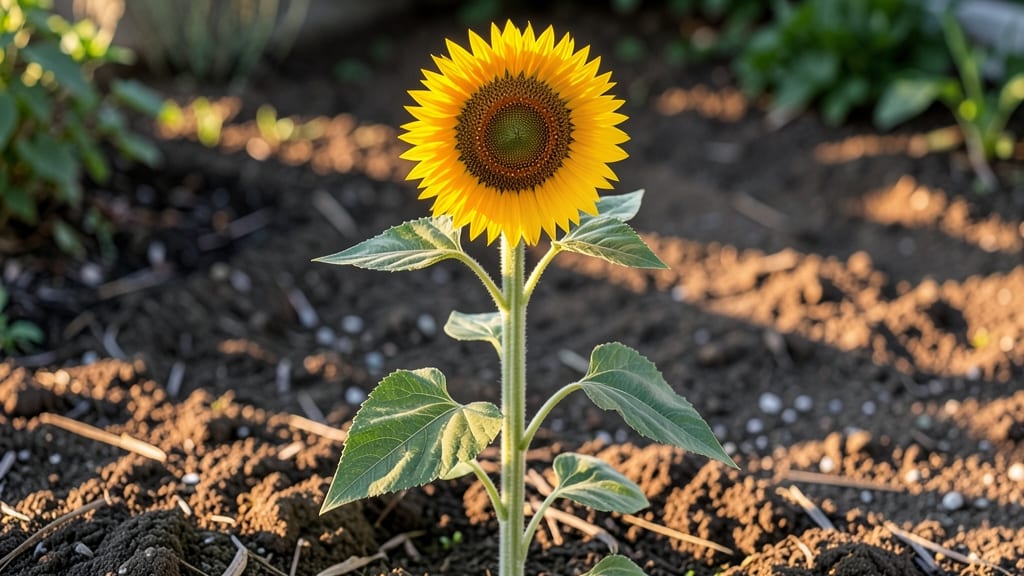
Sunflowers can grow anywhere from 1 foot to 16 feet tall, depending on the variety you choose — and that range is the key to picking the perfect plant for your space.
Picture this: a 3-foot-tall sunflower 🌻 spilling over a patio planter, or a 12-foot giant casting shade over your picnic table. The difference isn’t just in height; it’s in how you use them in your garden. Dwarf varieties bring color to small spaces, while towering types make dramatic statements.
But it’s not just about the variety. Soil quality, sunlight, and even how much you water can push a sunflower toward its full potential—or hold it back.
In this guide, I’ll break down the height ranges by type, share tips to control or encourage growth, and recommend the best varieties for your garden size.
Whether you’re dreaming of a sunflower hedge or just want a few cheerful blooms in containers, you’ll find out exactly how tall your sunflowers will grow—and how to make it happen.
Sunflower Height Range
3 ftto16 ft
0 ft
3 ft
6 ft
9 ft
12 ft
🌱
Very Tall Flower
Sunflower height ranges by variety: from dwarf to towering giants
Sunflowers come in a stunning range of heights, from delicate dwarf varieties perfect for containers to giant cultivars that can rival your house in stature.
The variety you choose determines not just how much vertical space your sunflowers will occupy, but also their growth habits, flower size, and even their sunlight requirements.
Whether you're working with a balcony garden or a sprawling backyard, selecting the right height will ensure your sunflowers thrive without crowding other plants.
Most sunflowers fall into three broad categories: dwarf (1-3 feet), medium (3-8 feet), and giant (8-16 feet). The difference isn't just in their height—it's also in their root systems, stem strength, and cultural needs.
For example, towering varieties need staking or trellising to prevent toppling, while compact types can thrive in small pots with minimal support. Let's explore the specifics so you can pick the perfect sunflower for your space.
Pro Tip: Always check seed packets for mature height estimates, as some varieties can exceed listed ranges under ideal conditions. Local climate and soil quality play significant roles in final height, so consider your growing zone when selecting seeds.
| Variety Type |
Mature Height |
Best For |
Sunlight Needs |
Spacing |
| Dwarf Varieties |
1-3 ft |
Containers, borders, cut flowers |
Full sun (6+ hrs) |
12-18 inches |
| Teddy Bear |
1.5-2 ft |
Patio pots, window boxes |
Full sun |
12 inches |
| Moulin Rouge |
2-3 ft |
Cut flowers, borders |
Full sun |
18 inches |
| Medium Varieties |
3-8 ft |
Backyard gardens, pollinators |
Full sun (6-8 hrs) |
24-36 inches |
| Autumn Beauty |
3-5 ft |
Cut flowers, pollinators |
Full sun |
24 inches |
| Procut |
4-6 ft |
Commercial cut flowers |
Full sun |
30 inches |
| Giant Varieties |
8-16 ft |
Privacy screens, focal points |
Full sun (8+ hrs) |
36-48 inches |
| Russian Giant |
10-14 ft |
Privacy screens, cut flowers |
Full sun |
48 inches |
Factors that determine sunflower height (beyond the variety)
While sunflower varieties set the baseline for height, your growing conditions can push them to their limits—or hold them back. Even a giant sunflower like 'Mammoth' won't reach its full 12-foot potential without ideal conditions.
Understanding these factors lets you maximize height for dramatic displays or control growth in tight spaces.
Sunflowers thrive on sunlight, but not all light is equal. Full sun exposure (6+ hours daily) fuels rapid vertical growth, while partial shade can stunt plants by 30-50%**.
Poor soil nutrition or competition for resources further reduces height potential. Even spacing prevents overcrowding, which triggers plants to grow taller and leanier for light.
Key Factors Affecting Sunflower Height
- 🌞 Sunlight: 6+ hours daily = full height potential; 4-6 hours = 25-40% shorter
- 🌱 Soil Quality: Rich, well-draining soil with compost supports 30% taller growth vs. poor soil
- 📏 Spacing: 12-24" apart prevents competition; crowding forces plants to grow taller
- 💧 Watering: Deep weekly watering maintains height; drought stress reduces growth by 20-30%
- 🌡️ Climate: Warm seasons (70-85°F) = optimal growth; cool temps slow vertical development
Your watering habits play a surprising role in height regulation. Sunflowers need deep watering (1-2 inches per week) to develop strong stems, but overwatering can weaken roots and reduce height.
In containers, dwarf varieties like 'Teddy Bear' may only reach 2-3 feet unless you use large pots (12"+ diameter) with proper drainage.
Climate adaptation is often overlooked but critical. Sunflowers grown in cooler climates (USDA Zones 3-5) may mature 2-4 weeks slower, resulting in shorter stems. Conversely, hot, dry climates can accelerate growth but require extra mulching to retain moisture.
Even wind exposure matters—strong breezes can cause stems to lean or snap, reducing effective height.
For height control, use these techniques: prune side shoots to direct energy upward, stake tall varieties to prevent toppling, and choose semi-dwarf hybrids like 'ProCut' for 5-6 foot growth without sacrificing stability. In small gardens, container-growing with compact varieties ensures manageable heights while maximizing vertical impact.
Remember, even the tallest sunflowers need a strong foundation. Focus on soil prep (add compost before planting) and consistent care to unlock their full potential—or gently guide them to fit your space perfectly.
With the right conditions, your sunflowers could become the centerpiece of your garden—or a charming, space-saving accent. 🌻
★★★★★4.7(15 reviews)