
Planting
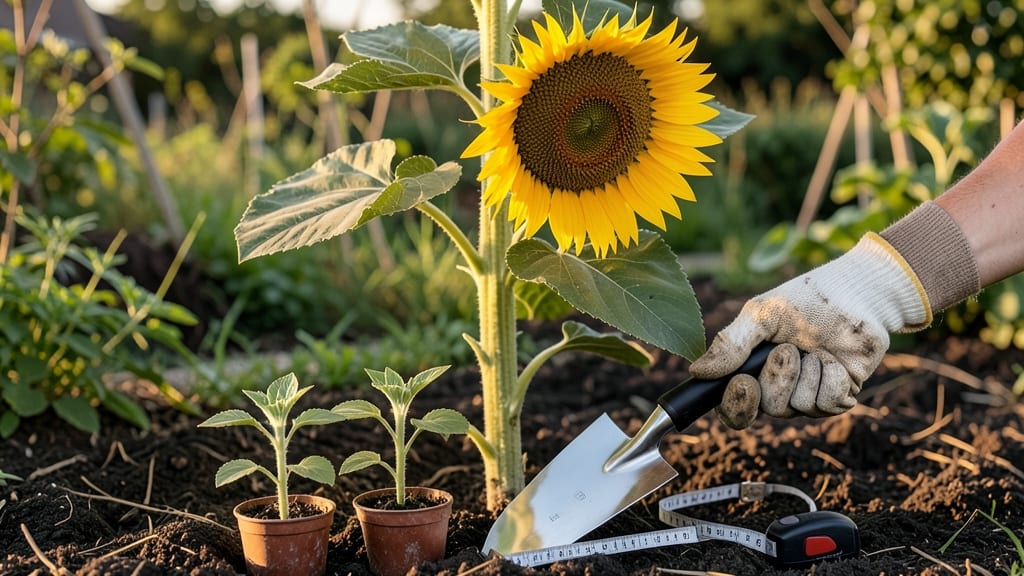
Proper Mammoth Sunflower plant spacing is the secret to those 12-foot-tall giants you’ve always dreamed of—without the floppy stems and disease risks that come from overcrowding.
Picture this: your 🌻 Mammoth Sunflowers stretching toward the sky, their massive blooms turning heads in your Zone 6a garden. But cram them too close, and you’ll end up with weak stalks, yellowing leaves, and flowers that never fully open.
The right spacing isn’t just about aesthetics—it’s about giving each plant the room to thrive.
Whether you’re planting in-ground or in containers, the ideal distance keeps roots from competing for nutrients while maximizing sunlight exposure. Too tight, and you’ll struggle with wind damage and fungal issues; too wide, and you waste precious garden real estate.
Below, I’ll walk you through the proven layouts that balance both—so your sunflowers grow strong, tall, and disease-free.
You’ll also discover how to fix common spacing mistakes (like those sad, leaning stalks) and creative hacks for small gardens. Ready to turn your sunflower patch into a showstopper? Let’s get started.


Optimal Mammoth sunflower spacing by planting method (with visual layouts)
Growing Mammoth sunflowers (Helianthus annuus) requires thoughtful spacing to prevent competition for nutrients, water, and sunlight. These giants can reach 12+ feet tall, so proper spacing ensures strong stems and vibrant blooms.
Whether planting in-ground, containers, or raised beds, the right layout prevents disease and maximizes yield. Let's explore proven spacing methods tailored to your garden setup.
Most gardeners focus on plant-to-plant distance, but row spacing and variety type (single-stem vs. branching) also play critical roles. For example, single-stem varieties like 'Russian Giant' need more elbow room than branching types like 'Moulin Rouge'.
Below, I’ll break down spacing by method, including adjustments for small spaces and square-foot gardening.
| Planting Method | Plant-to-Plant Distance | Row Spacing | Notes |
|---|---|---|---|
| In-Ground (Traditional) | 18-24 inches | 36-48 inches | Ideal for single-stem varieties; reduce to 12-18" for branching types. |
| Raised Beds (10x4 ft) | 12-18 inches | N/A (Single row) | Use branching varieties to maximize space; rotate beds yearly. |
| Containers (5+ gallon) | 1 plant per container | N/A | Use dwarf varieties like 'Teddy Bear'; ensure containers have drainage. |
| Square-Foot Gardening | 4 plants per sq ft | N/A (Grid layout) | Best for branching types; interplant with shallow-rooted crops. |
| Pro Tip | Reduce spacing by 25% | N/A | For short-season zones, plant closer to ensure maturity before frost. |
For in-ground planting, I recommend starting with 24-inch spacing between plants and 48-inch row spacing to allow airflow and prevent fungal diseases like powdery mildew. If your soil is rich, you can reduce plant-to-plant distance to 18 inches for branching varieties, which produce multiple stems per plant.
Always plant in full sun—these giants need 6-8 hours of direct sunlight daily to reach their full height.
In raised beds, prioritize vertical growth by choosing compact varieties or training single-stem types with stakes. A 10x4-foot bed can comfortably fit 4-6 Mammoth sunflowers spaced 12-18 inches apart, depending on the variety.
Raised beds also warm up faster in spring, giving your sunflowers a head start. Just ensure the bed is at least 12 inches deep to accommodate their deep taproots.
Container growing is ideal for urban gardeners or those with limited space. Use 5-gallon or larger containers with drainage holes and plant one sunflower per container. Dwarf varieties like 'Teddy Bear' thrive in containers and reach 3-5 feet tall, making them perfect for patios or balconies.
Remember to fertilize lightly every 4-6 weeks and water daily in summer to prevent wilting.
Square-foot gardening is a game-changer for small spaces. In this method, you plant 4 Mammoth sunflowers per square foot, but only if you choose branching varieties.
This layout works best when combined with companion planting, such as pairing sunflowers with bush beans or marigolds to maximize space efficiency. Just avoid planting sunflowers near tomatoes, as they compete for the same nutrients.
Adjust your spacing based on your local climate and
5 Common spacing mistakes that stunt Mammoth sunflower growth (and how to Fix them)
If your 🌻 Mammoth Sunflowers are struggling to reach their full 12-foot potential, the issue might be spacing mistakes you’re overlooking. Overcrowded plants compete for nutrients, sunlight, and water, leading to weak stems, yellowing leaves, and flowers that never fully bloom.
The good news? Most of these issues are easily fixable with simple adjustments to your planting layout.
I’ve seen gardeners make these same errors—even experienced growers sometimes underestimate how much room these giants need. Whether you’re dealing with leggy stalks, premature flowering, or disease-prone foliage, the solution often starts with giving your sunflowers the space they deserve.
Let’s diagnose the most common spacing blunders and how to correct them before it’s too late.
⚠️ callout warning
- Yellowing leaves at the base (nutrient competition)
- Weak, floppy stems that can’t support blooms
- Premature flowering (small, underdeveloped blooms)
- Fungal spots (from poor air circulation)
- Stunted growth (plants maxing out at 6-8 feet)
Mistake #1: Planting too close in rows. Many gardeners follow the 12-inch rule for sunflowers, but Mammoth varieties need 18-24 inches apart to develop strong stems. When plants are too close, they lean toward the sun, creating a tangled mess that’s prone to wind damage.
The fix? Space them 2 feet apart in rows that are 3 feet apart—this gives roots room to expand and stems the support they need.
Mistake #2: Ignoring mature height. A 14-foot sunflower needs a 6-foot root zone to stay upright. If you’re planting in tight rows or containers, the roots can’t anchor properly, leading to top-heavy stalks that snap in storms.
For containers, use 5-gallon pots with 1 plant per container—any smaller, and the roots will circle, stunting growth. In-ground? Give them 36 inches of clearance in all directions.
Mistake #3: Skipping soil prep. Compacted or nutrient-poor soil forces plants to compete aggressively for resources, making spacing issues worse. Before planting, amend your soil with compost and sand to improve drainage.
A 6-inch-deep hole filled with compost around each plant gives roots a nutrient boost, reducing the need for overcrowding. Think of it as giving your sunflowers a head start in a crowded garden.
Mistake #4: Mixing varieties without planning. Some Mammoth Sunflowers branch at the top, while others grow single stalks. Planting them together creates uneven competition—branchers steal sunlight from single-stemmed types.
Solution: Group single-stemmed varieties (like ‘Russian Giant’) together and branching types (like ‘Moulin Rouge’) in separate clusters. This ensures each plant gets the light and air circulation it needs.
Mistake #5: Not thinning seedlings. Many gardeners forget to thin their sunflower seedlings after germination, leaving weak, overcrowded plants. If you sow seeds 1 inch apart and they all sprout, thin to 18 inches apart once they’re 4 inches tall.
Use sharp scissors to avoid disturbing roots—this prevents shock and gives remaining plants the space to thrive. Pro tip: Harvest the thinned seedlings as microgreens for a bonus harvest!
🌱 Diagnostic Checklist: ☑️ Are your plants leaning or flopping? (Fix: Stake or thin) ☑️ Do leaves have yellow patches? (Fix: Improve spacing or fertilize) ☑️ Are blooms smaller than expected? (Fix: Increase sunlight exposure) ☑️ Do stems snap easily? (Fix: Space 24+ inches apart) ☑️ Is there mold on leaves? (Fix: Thin for better airflow)