
Blooming
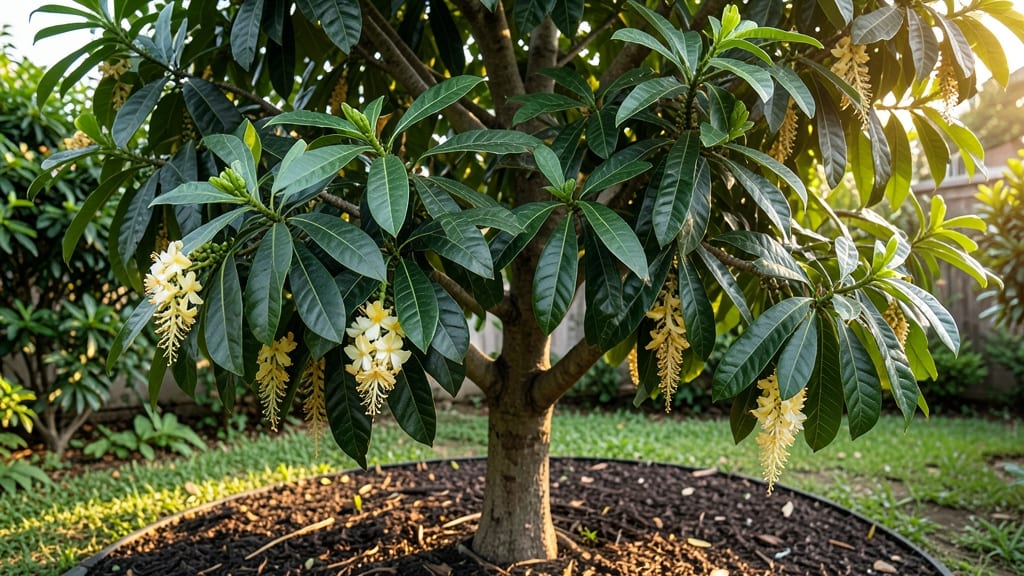
The flowering stages of a mango tree 🥭 are the hidden blueprint for your harvest—miss one, and you risk ending up with blossoms instead of fruit.
Did you know a mango tree’s flowering stages determine whether you’ll end up with a bountiful harvest—or just a beautiful blossom show? Understanding these phases is the key to optimizing fruit production and avoiding common gardening mistakes.
From the first signs of tiny buds to the critical pollination window, each stage has its own needs—temperature, sunlight, even the right nutrients. Get it wrong, and your tree might drop flowers before they set fruit.
Here’s what each phase looks like, how to support it, and the simple tweaks that can turn a sparse crop into a tree heavy with ripe mangoes by summer.
The 5 critical stages of mango tree flowering and their impact on fruit
Understanding the 5 critical stages of mango tree flowering is essential for maximizing fruit production. Each phase—from panicle initiation to fruit set—requires specific conditions to ensure healthy blooms and successful harvests.
As someone who’s nurtured mango trees through multiple seasons, I’ve learned how temperature, humidity, and sunlight play pivotal roles at every step. Let’s break down what happens during each stage and how you can support your tree for the best results.
First, let’s clarify why these stages matter. Mango trees are florally sensitive, meaning they only produce fruit if all five stages occur under optimal conditions. Skipping or disrupting any phase—like poor pollination or nutrient deficiencies—can lead to flower drop or tiny, underdeveloped fruit.
My Alphonso mango tree, for example, struggled with fruit set until I adjusted its care during the bud formation stage. Here’s how to avoid similar pitfalls.
The first stage, panicle initiation, begins when your mango tree starts forming tiny flower clusters called panicles. This usually happens in late winter or early spring, depending on your climate. During this phase, your tree is highly sensitive to nutrient imbalances.
I’ve seen trees with excessive nitrogen produce lush foliage but fail to initiate flowers. To prevent this, switch to a low-nitrogen fertilizer (like 6-6-6) and focus on potassium and phosphorus to encourage flowering. Maintain consistent moisture but avoid waterlogging, as soggy roots can stress the tree and halt flower development.
Next comes bud formation, where those tiny panicles swell and differentiate into male and female flowers. This is a delicate transition, and even slight temperature drops below 18°C (64°F) can cause buds to abort.
In my Florida garden, I’ve used row covers during cold snaps to protect buds. Humidity also matters—aim for 70% or higher to prevent bud desiccation.
If your tree is in a dry climate, consider misting the branches lightly in the early morning to maintain humidity without promoting fungal diseases.
When your mango tree finally blooms, you’ll see clusters of fragrant white or pink flowers. This is the flowering stage, and it’s the most visually stunning but also the most temperature-sensitive phase.
Ideal conditions are 22-28°C (72-82°F) with calm winds—anything outside this range can cause flowers to drop prematurely. I once lost an entire bloom cycle after a heatwave pushed temperatures to 35°C (95°F).
To mitigate this, provide afternoon shade if needed and avoid overhead watering, which can stress the delicate blossoms. This is also when
How to support healthy flowering and maximize fruit set in mango trees
To transform your mango tree’s flowering potential into a fruit-filled harvest, focus on the three pillars of care: pruning, nutrition, and environmental support. These steps ensure your tree allocates energy to fruit production instead of excessive leaf growth or weak blooms.
Start with pruning in late winter—this removes dense branches and improves airflow, reducing humidity-related diseases like anthracnose that can devastate blossoms. Aim to open the canopy by 20-30% to let sunlight reach inner buds.
- 🌱 Prune in late winter to remove dead/diseased wood and thin dense branches by 20-30%.
- 💧 Apply balanced fertilizer (6-6-6 NPK) in early spring to boost flower bud formation.
- ☀️ Ensure full sun (6+ hours daily) during flowering stages to prevent bud drop.
- 🐝 Hand-pollinate if bees are scarce by gently shaking branches during peak bloom.
- ✂️ Thin fruit 1-2 months after set to 12-18 inches apart for larger, healthier mangoes.
Next, fertilize strategically—mango trees need phosphorus-rich food (like bone meal) in late winter to kickstart blooms. Switch to a low-nitrogen formula (e.g., 8-3-9) once flowers appear to avoid leafy growth at the expense of fruit
Pest control is critical during flowering. Mango hoppers and fruit flies can ruin buds, so spray neem oil or kaolin clay as a preventive barrier. Avoid chemical sprays during bloom—they can repel pollinators and reduce fruit set by up to 40%. Adjust care based on seasonal shifts. In hot, dry climates, increase watering slightly during flowering to prevent bud abortion, but never overwater—root rot can kill new growth. In humid areas, space out waterings to reduce fungal spores that thrive on wet foliage. Finally, thin fruit 6-8 weeks after pollination to leave only the healthiest, well-spaced mangoes. This ensures your tree doesn’t overproduce small fruit and directs energy to size and sweetness. A mature tree can support 50-100 fruit—any more risks poor development. With these adjustments, your mango tree will shift from pretty blossoms to a tree heavy with juicy fruit by harvest season. The key? Timing and balance—just like nature intended. 🌳