
Blooming
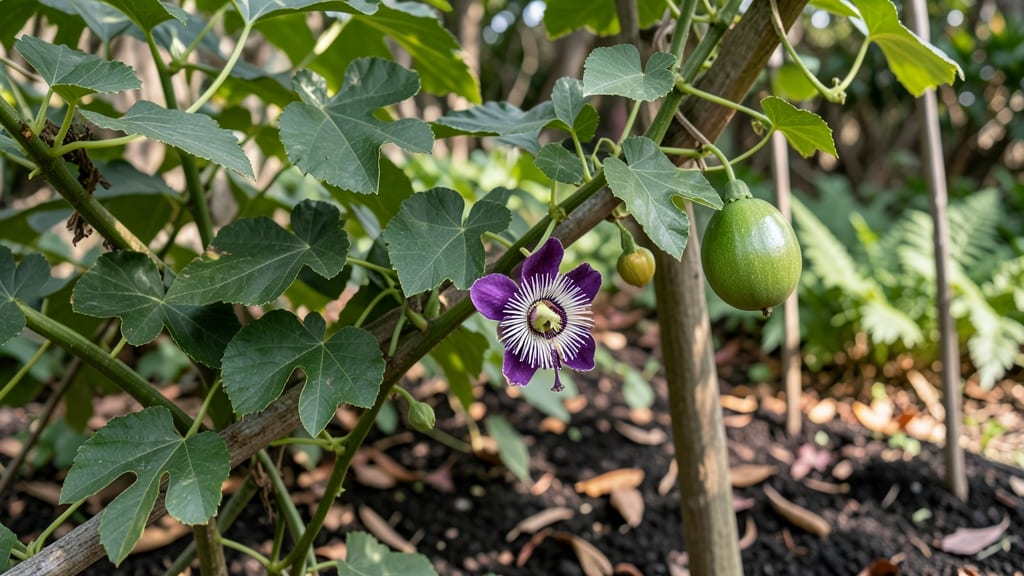
The time from passion fruit flower to fruit is 6-9 months—a journey that hinges on pollination, climate, and variety, not just patience.
If you’ve ever watched a passion fruit vine burst with blossoms only to wonder where the fruit went, you’re not alone. The gap between bloom and harvest isn’t just about waiting—it’s about understanding the hidden triggers that turn flowers into those sweet, tropical treats.
In General (Tropical/Subtropical Climates), purple varieties like ‘Panama Red’ typically fruit in 120-180 days, while yellow types like ‘Golden Gem’ may take slightly longer. But throw in cooler zones (like 9b with winter protection) or poor pollination, and that timeline can stretch—or worse, stall entirely.
Here’s the breakdown: how to track each stage, what climate quirks can delay ripening, and the 3 key factors that cut weeks off your wait time. Spoiler? Hand-pollination and the right nutrients make all the difference.
Passion fruit flower to fruit timeline: exact weeks by variety
Passion fruit vines are patient but predictable—once those stunning exotic blooms appear, you can count on a predictable timeline to harvest. Understanding the exact weeks for each variety helps you plan for optimal yields and troubleshoot delays.
From purple passion fruit to yellow varieties, the journey from flower to fruit spans 12-24 weeks, depending on conditions.
The process starts with pollination, which typically occurs 24-48 hours after flowering. Once pollinated, the fruit enters a growth phase where size and color development happen in distinct stages. Humidity levels and temperature consistency are the biggest factors in speeding up or slowing down this process.
🌱
The purple passion fruit variety typically takes the least time to mature, making it ideal for cooler subtropical climates.
In contrast, yellow passion fruit varieties often mature slightly faster but require higher humidity to prevent fruit drop. Hybrid varieties like 'Panama Red' may take longer due to their larger fruit size and complex genetics.
After pollination, the fruit enters a rapid growth phase where it develops its signature shape and color. During this 8-12 week window, the fruit grows from a pea-sized bud to a golf-ball size.
This phase is most vulnerable to nutrient deficiencies and pest damage, so monitor your vines closely.
🌿
One critical factor that affects the timeline is temperature consistency. Passion fruit vines grow best in 70-90°F conditions.
If temperatures drop below 60°F or exceed 95°F, the fruit may take 2-4 weeks longer to mature. Humidity levels also play a role—low humidity can cause fruit to abort or shrivel, while high humidity speeds up the process.
For container-grown vines, the timeline may extend by 1-2 weeks due to limited root space and water stress. To compensate, use well-draining potting mix and deep watering techniques to keep roots hydrated.
In-ground vines, on the other hand, benefit from natural soil moisture retention, often resulting in faster fruit development.
💧
If you’re growing passion fruit in a subtropical climate (like USDA Zone 9b), expect the timeline to stretch slightly due to cooler nights.
In these regions, winter protection, such as row covers or greenhouses, can help maintain optimal growing conditions and keep your fruit on track for a spring harvest.
Finally, hand-pollination can accelerate the process by ensuring every flower is fertilized. Use a soft paintbrush to transfer pollen from male to female flowers in the morning when humidity is low.
This method can reduce the pollination phase from 3-5 weeks to just 2 weeks, shaving valuable time off your harvest timeline.
☀️
How to speed up passion fruit development: pro tips for faster harvests
Ready to turn those passion fruit flowers into harvest-ready fruit weeks faster? The secret lies in mimicking nature’s best conditions—and a few strategic tweaks. While the average flower to fruit time is 6-9 months, you can slash that window by focusing on pollination, pruning, and nutrients.
Let’s cut to the chase: these four moves will jumpstart your vine’s productivity.
First, hand-pollination is your fastest shortcut. Passion fruit flowers are self-pollinating but benefit from a little help—especially in cooler climates (USDA Zone 9b) where bees are sluggish. A soft paintbrush or cotton swab transferred between flowers in the morning can double fruit set within 24 hours.
Pair this with potassium-rich fertilizer (like banana peel tea) to boost fruit development speed by 15-20%.
Use a paintbrush to transfer pollen between flowers at 7-9 AM when humidity is high. Focus on open flowers (not buds) for immediate fruit set.
Remove overlapping vines and dead leaves to improve sunlight penetration. Prune aggressively after harvest to redirect energy to new flowers.
Use a 10-10-10 NPK ratio fertilizer (higher in P/K) during flowering stages. Tropical growers: add wood ash for potassium. Subtropical? Try bone meal for phosphorus.
Tropical zones? Ensure 75-85°F daytime temps. Subtropical? Use row covers to retain heat. Both need 60%+ humidity—mist vines in dry spells.
Leave 3-5 fruits per vine (max). Overloaded vines produce smaller, slower-ripening fruit. Harvest early to encourage new flower buds.
Pruning isn’t just about tidying up—it’s a growth hack. After your first harvest, prune 1/3 of the oldest vines to stimulate new shoots. This forces the plant to redirect energy toward flower production instead of maintaining old growth.
In subtropical zones (Zone 9b), prune late winter to avoid frost damage, while tropical growers can prune year-round.
Don’t overlook the soil nutrient balance. Passion fruit vines crave phosphorus (P) and potassium (K) to convert flowers into fruit. A soil test will reveal deficiencies, but a quick fix is mixing composted manure (for nitrogen) with wood ash (for potassium) at planting.
For established vines, switch to a low-nitrogen, high-P/K fertilizer (like 5-10-10) during flowering. Pro tip: Banana peels are a potassium powerhouse—bury chopped peels around the base every 2 weeks.
Climate plays a huge role in speeding up development. In tropical climates, passion fruit vines thrive with consistent warmth (75-85°F) and high humidity.
If you’re in a subtropical zone (like Zone 9b), protect your vines with frost blankets in winter and use black plastic mulch to warm the soil in spring. Even a 5°F temperature bump can accelerate fruit set by 10-15 days.
Pair this with drip irrigation to maintain even moisture—fluctuations stress the plant and delay ripening.
Finally, thin your fruit load like a pro. Overloaded vines produce small, underdeveloped fruit that ripens slowly. Once fruit reaches golf-ball size, cull all but 3-5 per vine.
This shock-treatment signals the plant to prioritize quality over quantity, and you’ll see larger, faster-ripening fruit in just 4-6 weeks. Harvest early to encourage new flower buds, and repeat the cycle for continuous yields.
With these tweaks, you’ll shave 30-50 days off the passion fruit flower to fruit time. The key? Act fast after flowering—hand-pollinate, prune, and fertilize within 48 hours of seeing buds open. Your vine will thank you with juicy, ripe fruit in record time! 🌱