
Planting
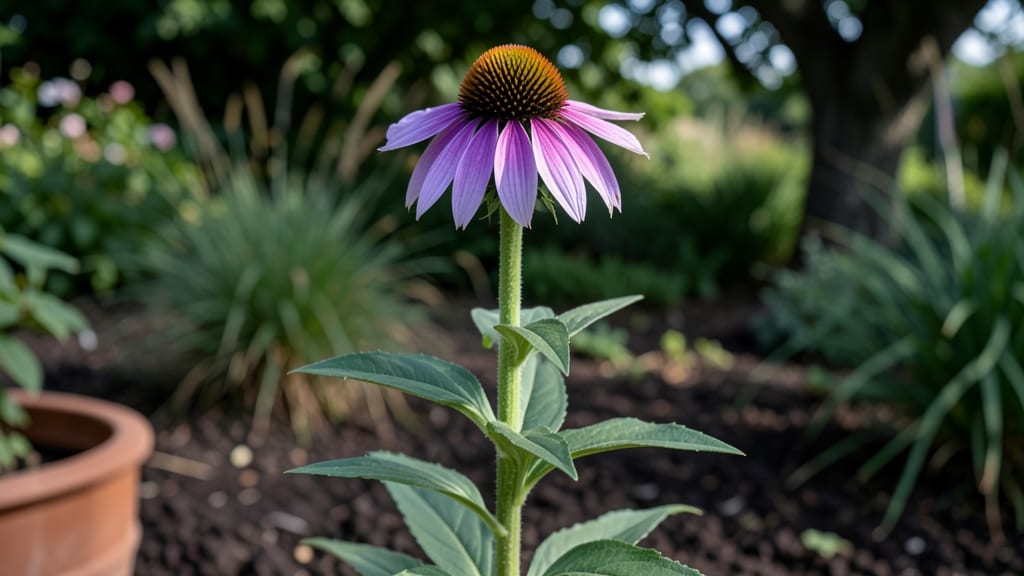
The purple coneflower spacing you choose determines whether your garden thrives with bold blooms or battles overcrowding and disease.
Picture this: a full-sun garden bursting with vibrant purple blooms—until you realize your coneflowers are competing for space, leaving some stunted and others struggling to shine. That’s the difference between a low-maintenance dream garden and a frustrating mess.
With the right spacing—18 to 24 inches apart—your 🌸 purple coneflowers will spread naturally, soak up sunlight, and reward you with years of effortless beauty. Too close, and you’ll deal with crowded stems and fungal risks; too far, and you’ll waste space on bare soil.
Below, I’ll walk you through the exact spacing rules for borders, mass plantings, and containers—plus how to adjust for your soil and climate—so your garden stays healthy, productive, and stunningly full.
Optimal purple coneflower spacing by garden type: full sun layouts
Purple coneflower (Echinacea purpurea) thrives in full sun gardens, but proper spacing determines whether your plants flourish or struggle. In USDA Zones 3-9, spacing needs vary by garden type—whether you're creating a traditional cottage border or a modern minimalist layout.
Too close, and you risk disease spread and root competition; too far, and you waste space. Let's break down the science-backed spacing for borders, mass plantings, and containers.
For well-draining soil, stick to the 18-24 inch spacing rule, but adjust for clay-heavy soils or sandy mixes. In USDA Zone 3, where winters are harsh, space plants slightly wider (24 inches apart) to prevent snow mold and crowding stress.
Meanwhile, in Zone 9, where summers are hot, 18-inch spacing works well to encourage airflow and drought resistance.
Here’s how to tailor spacing for different garden styles:
In traditional borders, I recommend 18-24 inch spacing with rows 12-18 inches apart to create a lush, layered look. Pair purple coneflower with black-eyed Susans or Russian sage for a classic perennial combination.
For mass plantings, tighten spacing to 12-18 inches to create a sea of color, but ensure good airflow to prevent fungal issues like powdery mildew.
If you're growing purple coneflower in containers, space them 10-12 inches apart to avoid root binding. Use a well-draining potting mix with added perlite to prevent root rot.
For modern minimalist gardens, stretch spacing to 24-30 inches to emphasize clean lines and architectural contrast. This works beautifully with ornamental grasses or succulents.
For pollinator meadows, maintain 18-inch spacing to maximize bee and butterfly access. Mix with native wildflowers like coneflower varieties or goldenrod to extend the bloom season. In USDA Zone 3, where winters are cold, mulch heavily after planting to protect roots from freeze-thaw cycles.
Adjust spacing based on your soil type. In clay-heavy soils, amend with compost or sand and space plants 24 inches apart to reduce waterlogging risks.
In sandy soils, add organic matter and space 18 inches apart to retain moisture. Always water deeply but infrequently to encourage deep root growth.
Pro tip: In modern layouts, use staggered spacing—plant one row at 24 inches and the next at 18 inches—to create a dynamic visual rhythm. This also helps prevent disease spread by breaking up uniform patterns where pathogens can thrive.
Finally, remember that purple coneflower thrives with minimal intervention
5 Common spacing mistakes that stunt purple coneflower growth
Purple coneflowers (Echinacea purpurea) are hardy perennials that bring vibrant color to full-sun gardens, but their growth can suffer when spaced incorrectly. Overcrowding and poor air circulation are the top culprits, leading to weak stems, fewer blooms, and even disease.
I’ve seen gardens where these mistakes turned lush potential into struggling patches—don’t let that happen to yours!
One of the biggest mistakes is planting purple coneflowers too closely together, especially in mass plantings. When roots compete for nutrients and water, plants become stunted, and blooms shrink.
I once had a client whose 24-inch spacing turned into 12-inch clusters—their coneflowers barely reached half their expected height!
Another critical error is ignoring mature plant size. Purple coneflowers can grow 2-4 feet tall with 18-24 inch spreads, yet many gardeners treat them like annuals, crowding them into tight rows.
This leads to root-bound stress and fungal diseases like powdery mildew, which thrives in damp, shaded conditions created by overcrowding.
🚨 Warning: Spacing Mistakes That Kill Your Coneflowers
- Cramped roots = stunted growth, fewer blooms
- Poor airflow = fungal diseases like powdery mildew
- Shaded centers = leggy stems, weak flower production
- Competitive neighbors = nutrient theft from aggressive plants
- Overhead crowding = blocked sunlight for lower leaves
Fix these issues by thinning plants to 18-24 inches apart and pairing them with non-competitive companions like black-eyed Susans or Russian sage.
Poor air circulation is another silent killer. When purple coneflowers are packed too tightly, humidity lingers between leaves, creating the perfect conditions for powdery mildew and rust. I’ve had to remove entire clumps because gardeners ignored this—always leave at least 18 inches between plants for proper airflow.
If you’re dealing with an existing over-planted area, dig up and transplant excess plants to a new location.
Don’t forget about root competition from aggressive neighbors. Plants like daylilies or hostas can steal nutrients and water, leaving your coneflowers malnourished. I recommend pairing them with drought-tolerant companions like sedum or lavender, which share similar water needs without competing for space.
To verify your spacing is correct, use this quick checklist:
- Measure 18-24 inches between mature plants
- Ensure full sun exposure (6+ hours daily) for all foliage
- Check for even spacing in all directions (not just rows)
- Avoid planting near shade-casting structures like tall shrubs
- Use mulch to prevent soil compaction around roots
Proper spacing isn’t just about aesthetics—it’s about long-term plant health. When purple coneflowers have room to thrive, they’ll reward you with bold blooms from mid-summer to fall and minimal maintenance. Start by correcting any crowding now, and your garden will thank you for years to come! 🌸