
Trees
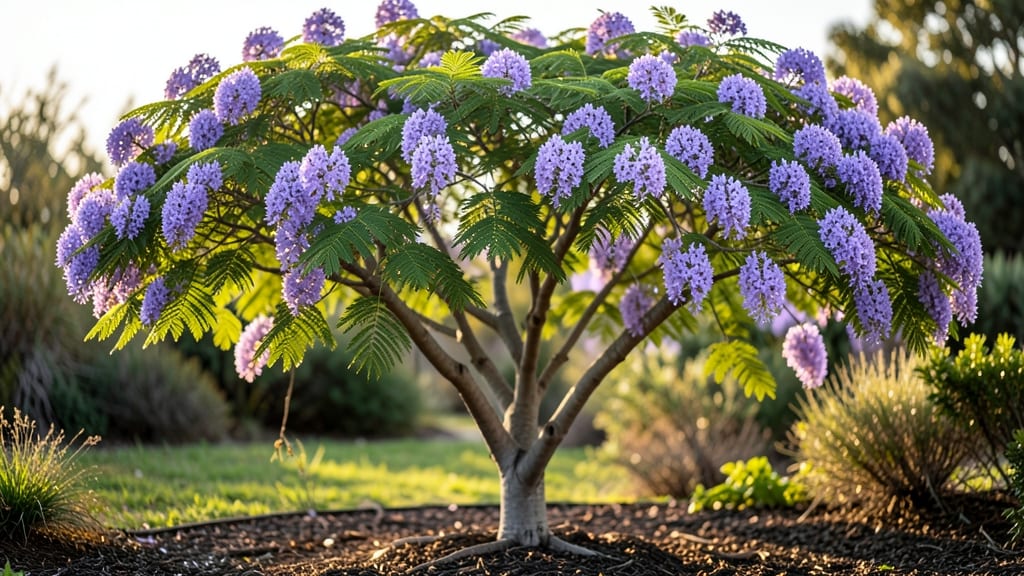
The purple jacaranda mimosifolia flowering tree 🌸 is the crown jewel of spring gardens, turning streets into dreamy purple canopies—but only if you know how to coax its best blooms.
Picture this: a 30-foot tree bursting with lavender clusters that last for weeks, all while asking for less fuss than your average houseplant. But here’s the catch—skip a few key steps, and you might end up with a leggy, sparse specimen instead of the showstopper you planted for.
In USDA Zones 9b-11, where frost is a distant memory, this tree thrives with minimal effort. The secret? Well-draining soil, full sun, and a pruning schedule that keeps it both healthy and picturesque.
Below, I’ll walk you through the exact care routine that turns "pretty in theory" into "wow, every spring."
From watering deep roots to timing your fertilizing just right, these simple tweaks will ensure your jacaranda doesn’t just survive—it dominates the neighborhood with those iconic blooms.
Purple jacaranda mimosifolia: ideal growing conditions for maximum blooms
The purple jacaranda (Jacaranda mimosifolia) is a breathtaking ornamental tree known for its stunning lavender-blue blooms that carpet the ground in spring. To unlock its full potential, you’ll need to replicate its native tropical/subtropical conditions.
This means prioritizing full sun exposure, well-draining soil, and a climate that avoids frost. With the right setup, your jacaranda will reward you with vibrant, abundant flowers year after year.
Native to South America and Australia, the purple jacaranda thrives in USDA Zones 9b-11, where temperatures rarely drop below 20-25°F. If you live in cooler climates, consider growing it in containers that can be moved indoors during winter.
The key to maximizing blooms lies in mimicking its natural habitat—let’s break down the essentials.
🌱
Your jacaranda’s sunlight needs are non-negotiable for maximum blooms. Plant it in a location where it receives at least 6 hours of direct sunlight daily, ideally in a south-facing spot. While it can tolerate light shade, reduced sunlight leads to fewer flowers and leggy growth.
If growing in containers, place them near a south-facing window or use grow lights during shorter winter days.
For soil conditions, jacarandas despise soggy roots, so prioritize well-draining soil. A mix of garden soil, compost, and perlite works well. If your native soil is heavy clay, amend it with organic matter or plant in raised beds.
The ideal pH range is 6.0-7.5, which is slightly acidic to neutral. Test your soil and adjust with lime (to raise pH) or sulfur (to lower pH) if needed.
When it comes to watering, consistency is key. Newly planted jacarandas need weekly deep watering to establish roots, while mature trees thrive on bi-weekly deep soaks. Water at the base of the tree in the early morning to reduce evaporation and fungal risks.
Avoid wetting the foliage, as this can promote powdery mildew. During droughts, jacarandas are surprisingly resilient, but deep watering encourages healthier blooms.
Climate plays a critical role in jacaranda success. These trees are frost-sensitive and will suffer damage if temperatures drop below 20-25°F for extended periods. In cooler climates, grow your jacaranda in a large container and move it indoors or to a sheltered location during winter.
If you’re in USDA Zone 9b or warmer, your jacaranda can stay outdoors year-round with minimal stress.
Microclimates can also work in your favor. For example, urban areas with heat islands (like paved surfaces) may create slightly warmer microclimates, extending the growing season. Conversely, coastal regions with salty air may require extra care—flush the soil occasionally with fresh water to prevent salt buildup.
Pay attention to local weather patterns and adjust care accordingly.
To encourage abundant blooms, prune your jacaranda lightly after the flowering season ends. Remove any dead, diseased, or crossing branches to improve airflow and sunlight penetration. Avoid heavy pruning, as this can reduce next year’s flower production. A light trim in late spring helps maintain shape without sacrificing blooms.
If you’re planting multiple jacarandas, space them 15-25 feet apart to allow for their mature width. Grouping them creates a stunning purple canopy effect during spring blooming
Year-round care schedule: pruning, fertilizing, and pest control for healthy jacarandas
Keeping your jacaranda mimosifolia thriving year-round requires a seasonal rhythm that aligns with its natural growth cycles. The key is balancing pruning for shape, targeted fertilizing, and organic pest prevention—all while respecting its tropical roots.
Unlike cold-hardy trees, jacarandas reward consistency over intensity, so think of this as a gentle dance with nature rather than heavy-handed maintenance.
I’ve pruned my own 20-foot jacaranda for five years, and the difference between a sparse, leggy tree and one covered in lavender blooms comes down to timing and technique. Spring is all about encouraging new growth, summer focuses on pest watch, and fall sets the stage for winter dormancy.
Let’s break it down by season so you can keep your tree looking like a living purple waterfall every year.
- 🌱 Late Winter (Feb-March): Prune dead/diseased branches first, then shape for airflow and sunlight.
- 🌿 Early Spring (April): Apply balanced 10-10-10 fertilizer after new leaves emerge.
- ☀️ Summer (June-August): Reduce watering but monitor for aphids or scale with neem oil.
- 🍂 Fall (Oct-Nov): Light potassium-rich feed to strengthen roots before winter.
- ❄️ Winter (Dec-Jan): No pruning—wait until buds swell in late winter.
Let’s start with pruning, the backbone of your jacaranda’s shape and health. The best time to prune is right after the spring bloom (around May), when the tree has finished flowering but before summer heat stress sets in.
Use clean, sharp shears to make cuts just above a leaf node or bud, and avoid cutting into old wood—this encourages new growth where you want it.
For fertilizing, I swear by a slow-release 10-10-10 formula applied in early spring (March) and again in fall (November). Jacarandas are light feeders, so overdoing it leads to leaf burn or weak blooms.
Always water deeply after fertilizing to help nutrients reach the roots, and avoid feeding during summer when the tree naturally slows growth to conserve water.
Pest control is where most jacaranda owners trip up, but organic solutions work wonders. I’ve had success with a neem oil spray (mix 1 tbsp per gallon of water) for aphids or spider mites, which love the tree’s sap.
Apply it in the early evening to avoid harming beneficial insects, and repeat every 7-10 days until pests vanish. For scale insects, scrape them off with a plastic scraper and follow up with horticultural oil.
Don’t forget to mulch around the base with 3-4 inches of wood chips in spring to retain moisture and regulate soil temperature. This simple step cuts down on weed competition and keeps roots cool during scorching summers.
If you’re in Zone 9b or warmer, your jacaranda will thank you with longer flowering seasons and fewer stress-related issues.
With this seasonal routine, your jacaranda mimosifolia will reward you with vibrant purple blooms for decades—no green thumb required, just a little attention to detail. 🌸