
Flowers
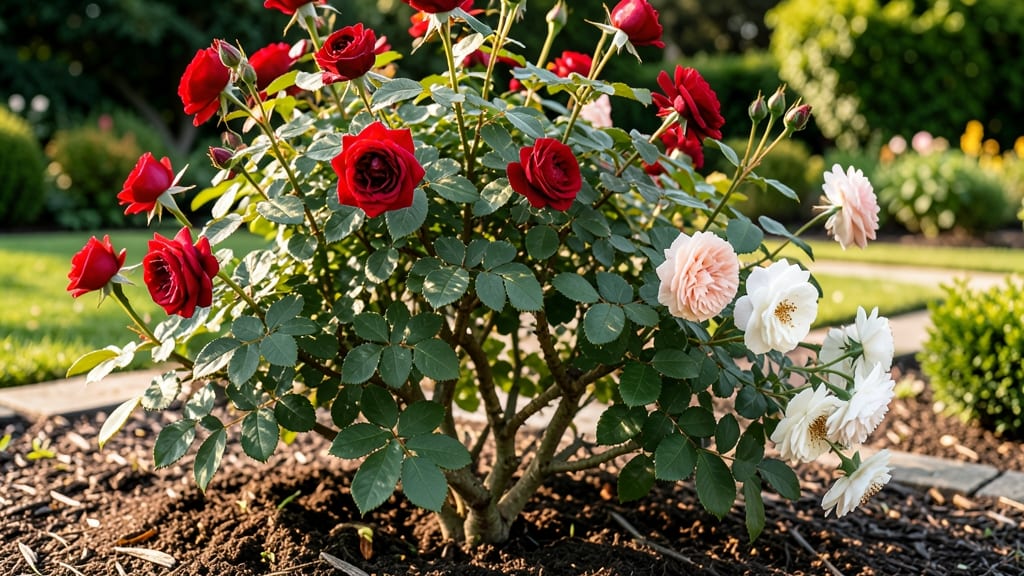
Rose flower height can range from under 2 feet to towering over 10 feet, depending on the variety and how you care for them.
Did you know some roses grow like shrubs while others climb like vines? Picking the right type for your space isn’t just about looks—it’s about how much room you have and how much maintenance you’re willing to handle.
From delicate dwarf roses perfect for containers to dramatic climbing roses that need a trellis, the height of your roses will shape your garden’s layout and pruning routine.
In this guide, I’ll break down the height ranges of popular varieties, the factors that influence growth, and tips to control their size—so you can choose roses that fit your space and your lifestyle.

How tall do roses grow? Height ranges by popular variety types
Choosing roses for your garden starts with understanding their mature height. From dwarf roses perfect for containers to climbing roses that scale walls, each variety offers distinct vertical potential.
The rose flower height you select directly impacts your garden design, pruning routine, and even the types of trellises or supports you'll need.
Most gardeners assume all roses grow tall, but the truth is far more diverse. Hybrid teas often reach 3-5 feet, while old garden roses can sprawl up to 6 feet wide with 4-5 feet of vertical growth.
Even within the same category, heights vary significantly—some shrub roses stay compact at 2-3 feet, while others stretch toward 10 feet when trained properly.
Here's where things get interesting: the rootstock you choose can alter a rose's natural height by 30-50%. For example, grafting a hybrid tea onto a dwarfing rootstock might reduce its height from 5 feet to just 2 feet.
This knowledge lets you customize roses to fit even the smallest spaces or create dramatic vertical accents in your landscape.
Let's explore some real-world examples to illustrate these height ranges. The 'Patio' series of roses, like 'Patio Pink', stays under 2 feet tall but produces 3-inch blooms—perfect for window boxes.
Meanwhile, 'New Dawn', a climbing rose, can reach 12-15 feet when given proper support, making it ideal for covering large fences or pergolas.
For gardeners with limited space, 'Fairy' roses are a game-changer. These miniature roses mature at just 1-1.5 feet tall but pack the same fragrant blooms as their larger counterparts. They thrive in 10-inch containers and can even be grown indoors near sunny windows.
My own 'Fairy Rose' in a terracotta pot has become the centerpiece of my patio, proving that small size doesn't mean small impact.
At the opposite end of the spectrum, 'Blaze' climbing rose can grow 15-20 feet when trained properly. This variety produces deep red blooms continuously from spring to fall, making it a stunning vertical accent.
If you're considering a climbing rose, plan for a strong trellis or arbor that can support 20+ pounds of foliage when in full bloom. I once saw a 'Blaze' rose trained over a 12-foot archway—the effect was absolutely breathtaking.
Even within shrub roses
What determines rose flower height? 5 Key factors to control growth
Understanding rose flower height starts with recognizing that genetics and care work together to shape your roses. While some varieties naturally grow tall, others stay compact—but your pruning techniques and soil conditions can push them beyond their expected limits.
For example, a climbing rose grafted onto a vigorous rootstock might reach 15 feet with proper support, while the same variety on a dwarf rootstock could stay under 4 feet.
The sunlight exposure your roses receive also plays a critical role. Roses need at least 6 hours of full sun daily to reach their full height potential, but too much shade can stunt growth. Even seasonal variations—like longer daylight hours in summer—can trigger faster vertical growth.
If you're aiming for standard roses (those with a single trunk), controlling sunlight exposure during early growth stages is key to encouraging a straight, sturdy stem.
5 Key Factors Controlling Rose Height
- 1 Rootstock Type: The underground part of your rose determines its growth habit. Dwarfing rootstocks (like Dr. Huey) keep roses under 3 feet, while vigorous rootstocks (like Fortuniana) can push heights to 10+ feet. Always check the rootstock before buying.