
Diseases
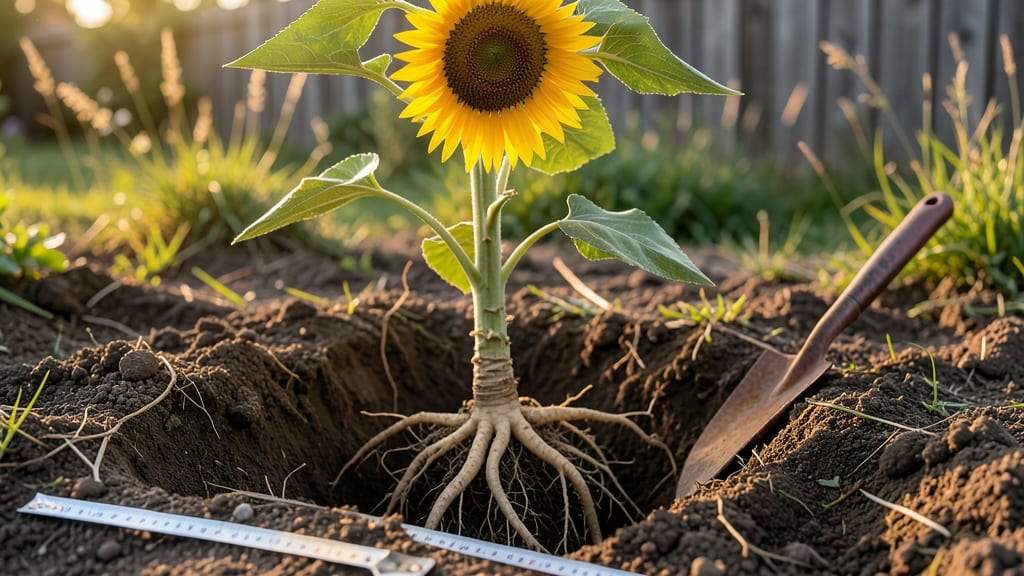
Sunflower roots reach a staggering depth of 3 to 6 feet 🌻—far deeper than most gardeners realize—and that depth is the secret to their resilience and towering growth.
Picture this: a 6-foot plant with roots stretching nearly twice its height into the soil, anchoring itself against wind while tapping into water reserves others can’t access.
That’s why shallow planting or compacted soil can turn your sunflowers into weak, top-heavy giants—prone to snapping in storms or wilting when summer heat dries the surface.
But root depth isn’t just about survival; it’s the foundation for bigger blooms, better spacing, and even soil health. Too shallow, and you’ll struggle with watering and nutrients.
Too deep, and you might be overcomplicating what your sunflowers actually need. Let’s break down the science—and the simple strategies—to get it right.
You’ll learn how to prep soil for those deep roots, space plants for maximum growth, and troubleshoot when things go wrong. By the end, you’ll know exactly how to give your sunflowers the strong, stable foundation they crave.
How deep do sunflower roots grow and what affects their depth?
Sunflowers develop a primary taproot that can reach depths of 3 to 6 feet under ideal conditions. This deep root system allows them to access water and nutrients from lower soil layers, making them remarkably resilient during droughts.
The taproot grows straight down while secondary lateral roots spread outward, creating a wide network that stabilizes the towering stems.
Understanding this root structure is crucial because it directly influences how you should plant, water, and space your sunflowers. For example, shallow planting can stunt root development, while compacted soil may restrict lateral spread.
Let’s break down the key factors that determine how deep sunflower roots will grow in your garden.
🌱 Key Insight: Sunflower roots grow deeper in loose, well-drained soil with adequate moisture. In heavy clay or rocky soil, roots may struggle to penetrate beyond 12-18 inches, limiting plant stability and nutrient uptake.
| Root Type | Depth Range | Key Function | Environmental Influence |
|---|---|---|---|
| Primary Taproot | 3-6 feet | Accesses deep water/nutrients | Soil type, moisture, maturity |
| Lateral Roots | 1-3 feet outward | Stabilizes plant, absorbs surface nutrients | Soil aeration, competition |
| Secondary Roots | 6-12 inches deep | Supports early growth | Planting depth, soil temperature |
The primary taproot begins developing immediately after germination and can grow 1-2 inches per day during optimal conditions. By the time sunflowers reach maturity (typically 70-120 days after planting), their roots may have penetrated deeper than most gardeners realize.
This depth is why sunflowers thrive in drought-prone areas—they can tap into water reserves that shallow-rooted plants can’t access.
Soil type plays a massive role in root depth. In sandy soil, roots may grow deeper and faster due to loose particles, while clay soil can restrict growth to 12-18 inches unless amended with organic matter.
I’ve seen sunflowers in my garden with roots reaching 5 feet in well-aerated, compost-rich soil, but the same variety struggled in compacted clay.
Water availability is another critical factor. Sunflowers need consistent moisture during early growth to encourage deep root penetration. Once established, they become drought-tolerant, but prolonged dry spells can stunt root development. In my experience, deep watering 2-3 times per week during the first month promotes healthier root systems.
Plant maturity also affects root depth. Young sunflowers (under 30 days old) focus energy on establishing their taproot, while older plants (60+ days) develop extensive lateral roots. This is why overcrowding can limit root spread—plants compete for space, resulting in shallower, weaker systems.
I always space my sunflowers 18-24 inches apart to give roots room to expand.
Temperature and season also matter. Sunflowers planted in warmer months (May-July) tend to develop deeper roots faster than those sown in cooler spring conditions. In my USDA Zone 6a garden, I’ve noticed roots grow 20-30% deeper when planted after the last frost (April 15) compared to earlier spring plantings.
One common misconception is that all sunflower varieties have the same root depth. Dwarf varieties (2-4 feet tall) typically develop roots 12-24 inches deep, while standard varieties (8-16 feet tall) can reach 4-6 feet.
When selecting seeds, check the variety’s mature height—taller sunflowers will always have deeper roots.
To encourage maximum root depth, I recommend these three key practices:
- Loosen soil to 18 inches before planting.
- Water deeply but infrequently after germination.
- Avoid over-fertilizing with nitrogen, which promotes top growth at the expense of roots.
By focusing on these factors, you’ll give your sunflowers the best chance to develop strong, deep root systems that support their impressive height and beauty.
🌿 Pro Tip: Use a garden trowel to create a deep planting hole (6-8 inches) when sowing seeds. This gives the taproot a head start in loose soil, reducing the risk of root restriction as the plant matures.
Why sunflower root depth matters for your garden’s success
Sunflowers don’t just need space to stretch upward—their roots demand deep, healthy soil to thrive. Those 3-6 foot taproots aren’t just impressive; they’re essential for accessing water and nutrients during dry spells.
When you ignore root depth, you risk stunted growth, wilting, or even toppling plants in windy conditions. The deeper the roots, the more stable and resilient your sunflowers become.
One of the biggest mistakes I see is planting sunflowers in shallow soil or containers that don’t accommodate their root length. Even 18-inch-deep soil is the bare minimum—any less, and roots will struggle to reach moisture.
This leads to frequent, shallow watering that actually harms root development. Proper depth also means better soil aeration, which prevents root rot and encourages stronger growth from the start.
Sunflowers with restricted root growth are more prone to wind damage and drought stress. A 3-foot taproot can’t anchor a 10-foot stem—leading to snapped stalks in storms. Even worse, shallow roots compete aggressively with nearby plants, stealing nutrients from companions like beans or marigolds.
Fix it: Loosen soil to 18+ inches deep before planting. Use a deep-root fertilizer (like compost or mycorrhizal fungi) to encourage downward growth.
Deep roots also transform your garden’s watering strategy. Instead of daily sprinkles, sunflowers reward you with deep, infrequent watering. Aim for 1-2 inches of water per week, delivered directly to the soil.
This mimics natural rainfall and trains roots to grow deeper in search of moisture. Overhead watering creates shallow roots that dry out faster—especially in USDA Zone 6a summers.
Another game-changer? Companion planting with deep-rooted allies. Pair sunflowers with legumes (like peas) or alliums (like chives), which improve soil structure without competing for space. Avoid shallow-rooted plants like lettuce—they’ll get outcompeted for water. Even windbreaks (like cornstalks) help stabilize sunflowers by reducing stress on their deep anchor systems.
Let’s talk about spacing: 12-24 inches apart isn’t just about aesthetics—it’s about giving roots room to spread. Crowded sunflowers develop shallow, tangled roots that struggle to support their own weight. This is especially critical for standard varieties (8-16 ft tall), which need the extra elbow room.
Pro tip: Use a soil probe to check root depth after 4-6 weeks—if roots aren’t reaching 12 inches, amend the soil with compost.
Finally, deep roots act as a natural soil aerator. As they penetrate compacted layers, they create channels for air and water to move freely. This is why sunflowers thrive in loamy or sandy soil but suffer in clay.
If your garden has heavy soil, mix in perlite or coarse sand to mimic the natural aeration roots provide. The result? Healthier plants that store more nutrients and resist disease better.