
Watering
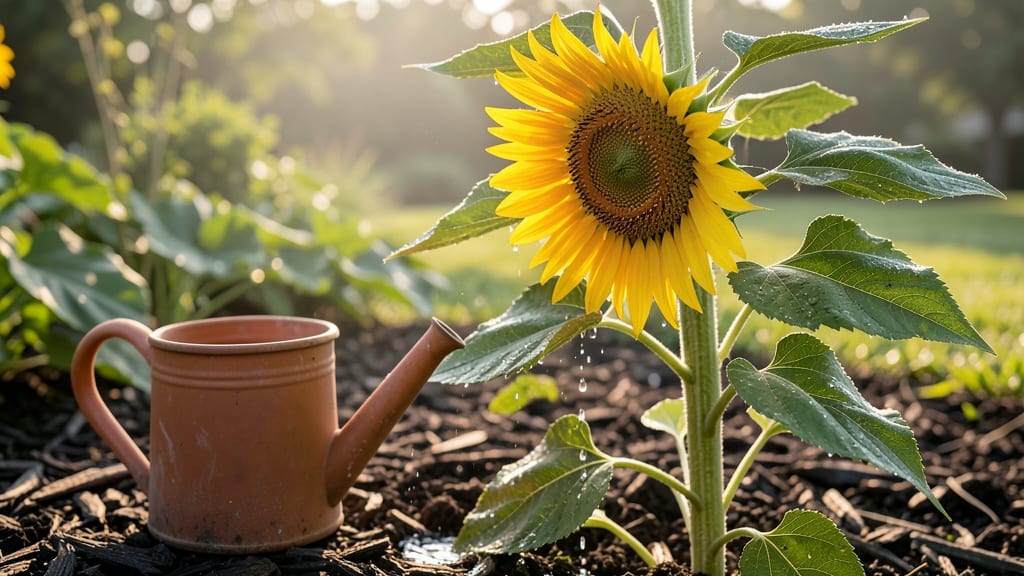
Understanding your sunflower’s water needs is the key to growing those towering, 6-foot stalks you’ve always dreamed of—because too little or too much water can stunt growth or invite disease.
Picture this: you’ve planted your 🌻 sunflower seeds in spring, and they’re thriving—until they suddenly wilt despite full sun. The problem? Most gardeners overlook how watering habits change as the plant matures, from delicate seedlings to thirsty bloomers.
In this guide, I’ll break down exactly how often to water sunflowers at each stage, what the soil should feel like, and how to spot the subtle signs of over- or under-watering before it’s too late.
You’ll also learn seasonal adjustments to keep your sunflowers hydrated without wasting water, plus my go-to tricks for mulching and deep-watering that’ve saved my plants from drought stress every summer.
Sunflower water requirements by growth stage: seedlings to full bloom
Sunflowers may seem low-maintenance, but their water needs change dramatically from seedlings to full bloom. Too little water stunts growth, while too much causes root rot—both can kill your towering giants.
The key is deep, infrequent watering that adapts to each growth phase. I’ve grown sunflowers from 1-foot seedlings to 12-foot giants, and these precise watering schedules make all the difference.
Sunflowers have three critical growth stages: seedling (0-4 weeks), vegetative (4-8 weeks), and flowering (8-12 weeks). Each requires a different approach to hydration. For example, seedlings need daily moisture to prevent wilting, while mature plants can survive weekly deep waterings once established.
The biggest mistake? Assuming "more water is better"—sunflowers hate soggy roots more than drought.
| Growth Stage | Water Frequency | Depth | Key Tips |
|---|---|---|---|
| Seedlings (0-4 weeks) | Every 1-2 days | 1-2 inches | Keep soil consistently moist (not soggy). Use spray bottle for delicate sprouts. |
| Vegetative (4-8 weeks) | Every 3-4 days | 4-6 inches | Transition to deep watering. Let topsoil dry slightly between waterings. |
| Flowering (8-12 weeks) | Every 5-7 days | 6-8 inches | Focus on root zone. Reduce frequency but increase volume for seed production. |
| Mature (12+ weeks) | Weekly (drought) | 8+ inches | Established plants need less frequent but deeper water. Mulch helps retain moisture. |
💧 Pro Tip: Always water at soil level (not leaves) to prevent fungal diseases like powdery mildew.
During the seedling stage, sunflowers are most vulnerable to drought stress. I’ve seen 1-week-old sprouts wilt within hours if the soil dries out. Use a moisture meter or stick your finger 1 inch deep—if it’s dry, water immediately.
A clear plastic dome over seed trays can double humidity and reduce evaporation. Just remember to remove it once true leaves appear to prevent rot.
The vegetative stage (when stems thicken rapidly) is where many gardeners overcorrect by watering too often. Sunflowers in this phase can store water in their thick stems, so let the top 2 inches of soil dry between waterings.
I test this by pressing my thumb into the soil—if it feels damp 1 inch down, wait another day. Overwatering here leads to weak stems that snap under their own weight.
When buds form (flowering stage), your watering strategy shifts again. This is when deep, infrequent watering becomes critical. Sunflowers need 1-2 gallons per plant every 5-7 days to support bloom development and seed production.
I use a soaker hose placed at the base to deliver water directly to roots, avoiding wasteful evaporation. Avoid wetting the flower buds—this invites powdery mildew, a common fungal disease.
Mature sunflowers (12+ weeks) are surprisingly drought-tolerant once established. If you’ve maintained proper watering earlier, they can survive on weekly deep waterings during dry spells. In my Zone 6a garden, I’ve seen 14-foot sunflowers thrive with bi-weekly waterings in summer if mulched correctly.
The key is mulching with straw (2-3 inches thick) to lock in moisture and regulate soil temperature.
Seasonal adjustments are crucial. In spring, when soil is cooler, sunflowers need more frequent watering (every 2-3 days) because roots haven’t fully developed. By summer, increase depth to 6-8 inches and space waterings to every 5-7 days.
In fall, reduce frequency as temperatures drop—weekly waterings are often enough unless you’re in a dry climate. Always water in the early morning (before 10 AM) to prevent evening moisture that fuels fungal growth.
One common myth is that sunflowers need constant watering like thirsty annuals. In reality, they’re deep-rooted perennials that can access moisture from 3 feet down. I’ve tested this by planting sunflowers in sandy soil
Signs of overwatering vs underwatering sunflowers (and how to fix them)
Sunflowers may love the sun, but their roots need a careful balance of moisture—not too soggy, not too dry. I’ve seen 🌻 sunflowers collapse from both extremes, and the symptoms often look eerily similar at first glance.
The key difference? Overwatered plants feel mushy at the base, while underwatered ones pull away from the soil when tugged gently.
Most gardeners assume sunflowers are drought-tolerant once established, but their root systems actually need consistent moisture during rapid growth phases. I’ve learned the hard way that skipping watering for just a few days in summer can cause buds to drop before blooming.
Let’s dive into the telltale signs so you can rescue your stalks before it’s too late.
🚨
⚠️ Critical Sunflower Water Needs
Seedlings: Keep soil consistently moist (like a damp sponge). Overwatering here causes root rot in just 3-5 days.
Vegetative Stage: Water deeply every 3-5 days. Yellowing leaves? Usually underwatering—not over.
Flowering Stage: Increase to every 2-3 days in heat. Wilted buds mean stress—check soil 2" down.
All Stages: Morning watering prevents fungal diseases like powdery mildew.
Yellow leaves are the most common red flag, but they mean different things depending on their location. Lower leaves turning yellow while the rest stays green? That’s overwatering—your sunflower’s roots are suffocating. But if the upper leaves yellow first, it’s usually underwatering or poor soil drainage.
For underwatered sunflowers, the stems often develop a hollow, brittle feel when you squeeze them gently. I once had a 10-foot stalk snap in half because I ignored the wilting signals for a week.
The fix? Water deeply until it drains from the bottom, then mulch with 2-3 inches of straw to lock in moisture.
Overwatered sunflowers reveal their struggle through mushy stems and a foul smell at the base. If you pull back the soil, you’ll see gray, slimy roots—a sure sign of root rot.
The solution? Stop watering immediately, loosen compacted soil around the roots, and let the area dry out for 24-48 hours before resuming a modified schedule.
Pro tip: Stick your finger 2 inches deep into the soil. If it feels dry, water; if it’s damp, wait. I keep a small notebook by my garden to track moisture levels—it’s saved my sunflowers from both extremes.
Remember, sunflowers are resilient, but they need your attention during their critical growth phases.