
Blooming
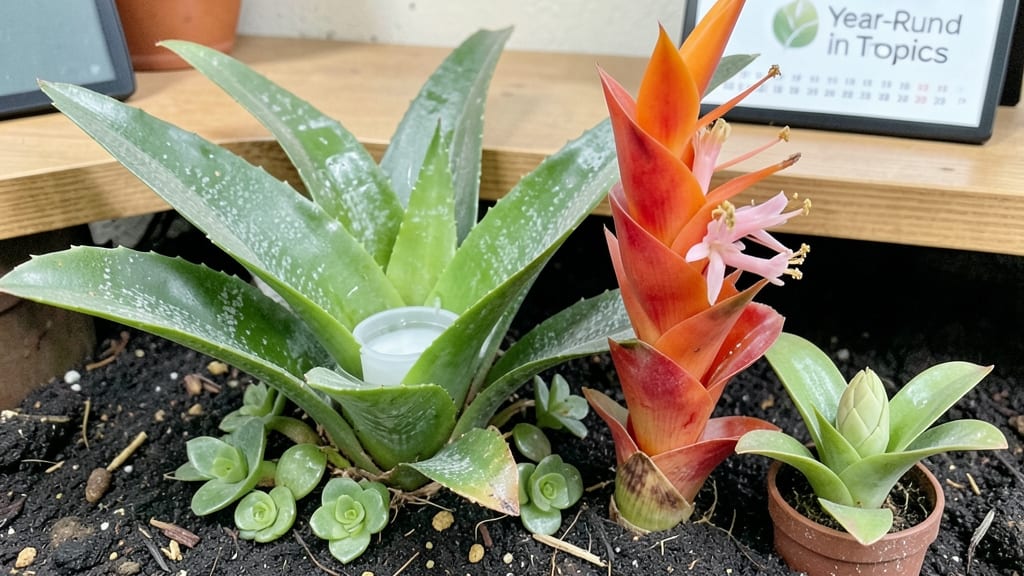
Bromeliads flower when they reach maturity, typically between 18 and 36 months after planting, though some tropical varieties bloom year-round while others wait for seasonal cues.
Wondering why your 🌺 bromeliad refuses to bloom? The answer lies in its natural triggers—and your climate zone plays a bigger role than you might think. Unlock the secrets to coaxing vibrant blooms from your tropical houseplant with science-backed timing.
Most bromeliads need bright, indirect light and a stable temperature range of 65-80°F to trigger flowering, but cooler nights can accelerate the process in subtropical zones. Humidity also matters—dry air can stall blooms entirely.
Below, I break down the exact conditions that force bromeliads to flower, including how to adjust care for your USDA zone, troubleshoot common delays, and even speed up blooming with simple tricks.
Natural triggers that force bromeliads to flower
Bromeliads are famous for their stunning, long-lasting blooms—but getting them to flower isn't as simple as waiting for spring. Unlike most houseplants, bromeliads rely on specific environmental triggers to initiate flowering, often mimicking their natural tropical conditions.
These triggers include light intensity changes, temperature fluctuations, and even humidity shifts, all of which signal the plant it's time to bloom. Understanding these cues is key to unlocking vibrant flowers, even in non-tropical climates.
The most critical trigger is a stress-like condition, often called the "bloom trigger" or "florigen signal." In the wild, bromeliads respond to seasonal shifts—like shorter days or cooler nights—that simulate the end of their growing season.
For indoor growers, replicating this stress artificially (without harming the plant) is the secret to forcing blooms. Think of it like giving your bromeliad a gentle nudge to say, "Hey, it’s time to flower!"
- 1. Light Intensity: A sudden drop in light (e.g., moving from bright indirect to low light) mimics seasonal changes, prompting blooms in 3-6 months.
- 2. Temperature Shift: Cooling nights (60°F/15°C) while keeping days warm (75°F/24°C) triggers flowering in Vriesea and Aechmea species.
- 3. Humidity Increase: Raising humidity to 60-70% for 2-3 weeks signals tropical conditions, encouraging blooms in Guzmania varieties.
- 4. Ethylene Gas: Exposing plants to ethylene-releasing fruits (like apples) near the pot can force flowering in 1-2 months.
- 5. Age Maturity: Most bromeliads won’t bloom until they’re 2-5 years old, with some taking up to 60 months to reach flowering age.
One of the most fascinating aspects of bromeliad biology is their monocarpic life cycle—meaning they flower only once in their lifetime. After blooming, the mother plant gradually dies, but not before producing pups (baby plants) at its base.
These pups inherit the mother’s genetic potential to flower, so your bromeliad’s legacy lives on! This cycle explains why patience is key: rushing the process can prevent flowering entirely.
Light plays a dual role in bromeliad flowering. While they thrive in bright indirect light year-round, a sudden reduction in light (like moving the plant to a shaded spot for 4-6 weeks) can trigger blooming. This mimics the shorter days of their native tropical seasons.
For example, Neoregelia species often bloom in response to lower light intensity during winter months, while Tillandsia (air plants) may need direct sunlight exposure to initiate flowering. Experiment with light adjustments based on your bromeliad’s variety.
Temperature is another powerful trigger, especially for species like Vriesea and Guzmania. These plants respond to a day-night temperature difference of at least 10°F (5°C). During the day, keep them warm (75-85°F/24-29°C), but drop nighttime temperatures to 60-65°F/15-18°C for 2-3 weeks.
This mimics the cooler nights of their native habitats and can force blooms in as little as 8-12 weeks. Use a grow light on a timer to control day lengths if natural light is insufficient.
Humidity is often overlooked but critical for bromeliads, particularly for species like Guzmania and Aechmea. These plants hail from tropical rainforests where humidity hovers around 70-80%. To replicate this, place your bromeliad on a pebble tray with water or use a humidifier near the plant.
For 3-4 weeks before the desired bloom time, increase humidity to 60-70%. This environmental shift signals the plant to prepare for flowering, often resulting in larger, more vibrant blooms than those produced under dry conditions.
Artificial triggers, like ethylene gas, can also force bromeliads to flower faster. Ethylene is a natural plant hormone that accelerates aging and flowering processes. Place an apple, banana, or avocado near your bromeliad (but not touching the leaves) for 1-2 weeks.
The ethylene gas released by the fruit will stimulate flowering in 4-8 weeks, depending on the species. This method is especially useful for Aechmea and Vriesea varieties that are slow to bloom under normal conditions.
Age is the final piece of the puzzle. Bromeliads are slow growers, and most won’t flower until they’ve reached maturity, which can take anywhere from 18 months to 5 years, depending on the species.
For example, Neoregelia often flowers at 2-3 years old, while Guzmania may take 4-5 years. Patience is key—don’t expect blooms from a young plant, no matter how perfect your growing conditions. Focus on providing optimal care (light, water, humidity) to ensure your bromeliad reaches flowering age.
If your bromeliad still refuses to bloom after trying these triggers, check for common mistakes like overwatering (which causes root rot) or insufficient light (leading to leggy growth). Bromeliads are resilient, but they need consistent conditions to thrive.
Start with the light trigger, then layer in temperature and humidity adjustments. With the right approach, you’ll be rewarded with stunning blooms that last for weeks—often longer than cut flowers!
Climate zone-specific blooming windows for bromeliads
Your bromeliad's blooming schedule isn't random—it's tightly linked to your climate zone and the plant's native habitat. In USDA zones 10-12, bromeliads often flower year-round, while those in zones 7-8 may only bloom in summer or fall.
Understanding these patterns helps you anticipate—and even encourage—those stunning bromeliad spikes that can last 2-6 months.
The key difference lies in temperature and daylight cues. Tropical bromeliads (zones 10-12) respond to consistent warmth, while temperate varieties (zones 7-8) need seasonal shifts to trigger blooming. Even humidity plays a role—drier air in zone 9 often delays flowering until summer's peak moisture.
| Climate Zone | Typical Bloom Season | Common Species | Key Trigger |
|---|---|---|---|
| Zones 10-12 (Tropical) | Year-round (peaks spring-fall) | Guzmania lingulata, Aechmea fasciata | Consistent 70-85°F temps |
| Zone 9 (Subtropical) | Summer-Fall (June-October) | Vriesea splendens, Neoregelia carolinae | Summer humidity spikes |
| Zones 7-8 (Temperate) | Late Spring-Early Fall (April-Sept) | Aechmea distichantha, Billbergia nutans | Daylength increase (14+ hours) |
In tropical zones (10-12), bromeliads like Guzmania often flower continuously, with spring and fall producing the most vibrant blooms. The longer daylight of summer triggers Aechmea species, while winter's shorter days can delay flowering until spring.
For example, Aechmea fasciata ("Silver Vase") typically blooms in late spring across all tropical zones.
Subtropical zone 9 gardeners should watch for blooms in summer and early fall when humidity rises. Vriesea species often respond to afternoon thunderstorms, which mimic their natural tropical rainfall patterns.
In zones 7-8, bromeliads like Billbergia nutans ("Queen's Tears") usually bloom in late spring when temperatures stabilize above 60°F.
Pro tip: If your zone 7-8 bromeliad isn't flowering, try moving it to a sunny east window in winter to simulate longer daylight cues. For tropical zones, maintain 60-70% humidity year-round to prevent delayed blooming. The right conditions can turn a 3-year-old bromeliad into a blooming superstar within months!
Remember, bromeliads often take 18-36 months to mature enough for their first bloom—patience is key! Once they flower, enjoy the 2-6 month spectacle, then watch for pups that can be propagated for your next blooming cycle. 🌺