
Plants
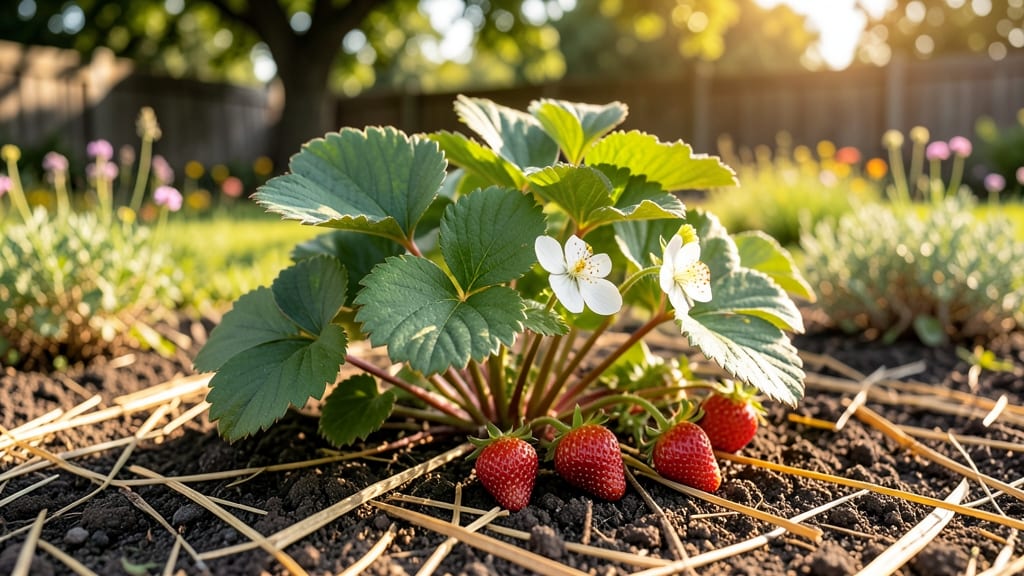
Strawberry plants flower when they’ve grown 5-7 healthy leaves—not just when the calendar hits June.
Most gardeners assume blooms follow a strict timeline, but the real trigger is leaf count, not days. That’s why your June-bearing 🍓 might send up flowers in May if it’s had a strong start, while a neighbor’s everbearing variety lingers into July. The difference? Leaf development, not luck.
Understanding this shift in timing lets you adjust care—like pruning runners or fertilizing at the right moment—to maximize fruit. Below, I’ll break down the exact leaf stages that signal blooms, how climate affects timing, and 3 key mistakes that keep strawberries from flowering at all.
You’ll also learn how to nudge flowering earlier or later (yes, it’s possible), plus when to protect those delicate blooms from frost. No guesswork—just science-backed steps for a harvest you can count on.
How many leaves trigger strawberry plant flowering (the exact count)
Strawberry plants don’t follow a strict calendar for flowering—they respond to a leaf count trigger that varies by variety. Most gardeners mistakenly focus on days after planting, but the real secret lies in counting leaves, not weeks.
Understanding this 3-leaf, 5-leaf, 7-leaf rule can help you predict blooms with precision and avoid common mistakes.
For June-bearing varieties, flowering typically occurs at the 5-leaf stage, while everbearing and day-neutral types may bloom earlier at 3-5 leaves. This leaf-based system explains why your neighbor’s strawberries might flower weeks before yours, even if planted at the same time.
The key is recognizing how many leaves signal readiness to bloom.
Here’s the exact leaf count breakdown for flowering, including how variety type affects timing:
| Variety Type | Leaf Stage for Flowering | Bloom Window | Example Varieties |
|---|---|---|---|
| June-bearing | 5-leaf stage | Late spring (May-June) | Jewel, Chandler, Honeoye |
| Everbearing | 3-5 leaves | Spring + Fall (2 harvests) | Ozark Beauty, Seascape, Tristar |
| Day-neutral | 5-leaf stage (continuous) | Spring to Frost | Albion, Seascape, Everest |
🌱 Note: Leaf counts are approximate—environmental factors like temperature and daylight can shift timing by 1-2 weeks.
If you’re growing June-bearing strawberries, patience is key—they won’t flower until the 5-leaf stage, which can take 6-8 weeks after planting. This explains why many gardeners see no blooms in their first spring, even if planted in early spring.
The plant prioritizes root and foliage growth before devoting energy to flowers.
For everbearing and day-neutral varieties, the process is faster. These types may produce small flowers at 3 leaves and continue blooming throughout the season. This is why they’re popular for container gardening—they reward you with multiple harvests instead of one big June crop.
The trade-off? Their berries tend to be smaller but more frequent.
Many gardeners make the mistake of pruning leaves too early, thinking it will encourage blooms. But removing leaves before the correct leaf stage can delay—or even prevent—flowering.
For example, cutting back to 3 leaves on a June-bearing plant might remove its future flower buds, which form at the leaf axils. Always wait until you’ve confirmed the 5-leaf stage before pruning.
Temperature also plays a hidden role. Strawberries need chill hours (300-500) to trigger flowering, but this happens before the leaf count stage. If your area lacks chill hours, your plants might skip flowering entirely, no matter how many leaves they produce.
This is why June-bearing varieties struggle in warm climates—they need cold winters to reset their growth cycle.
To encourage blooms, focus on these 3 key actions:
- Count leaves before pruning or fertilizing
- Avoid high-nitrogen fertilizer (it promotes leaves, not flowers)
- Ensure 6+ hours of sunlight (weak light delays flowering)
The right balance of leaves, light, and nutrients is what turns a strawberry plant from a leafy bush into a fruiting machine.
Pro tip: Use a small plant tag or marker to track leaf stages. Simply write “3L,” “5L,” or “7L” on a popsicle stick near each plant. This visual reminder will save you from guessing—and missing your plant’s flowering window.
With this system, you’ll never again wonder, “Why aren’t my strawberries blooming?”
Why strawberry plants flower at different times (and how to control it)
Strawberry plants don’t follow a strict calendar for flowering—they respond to a mix of environmental cues and plant maturity. While June-bearing varieties often bloom in late spring, everbearing types may flower multiple times per season.
The real secret? Your plant’s leaf count, not just days since planting, triggers blooms. Understanding these factors lets you delay or encourage flowering for better harvests.
Temperature plays a huge role—strawberries need chilling hours (300–1,000 hours below 45°F) to break dormancy and initiate buds. Without enough cold, your plants may skip flowering entirely. Daylight hours also matter: shorter days in fall can stimulate everbearing varieties to produce a second flush.
Even pruning affects timing—removing old leaves too early can delay blooms, while leaving too many may reduce fruit quality.
Factors Affecting Strawberry Flowering
- Longer harvest season with everbearing types
- Better fruit size from controlled flowering
- Reduced disease risk by managing runners
- Smaller berries if flowering happens too late
- Missed harvest windows in short growing seasons
- Weaker plants from overpruning to delay blooms
- Remove runners to redirect energy to leaves
- Prune old leaves after harvest to encourage regrowth
- Use shade cloth to reduce light exposure
- Ensure 6+ hours of sunlight daily
- Apply balanced fertilizer (10-10-10) in early spring
- Provide consistent moisture without waterlogging
To control flowering timing, start by choosing the right variety. June-bearing types (like 'Jewel') produce one big crop, while everbearing varieties (like 'Seascape') flower repeatedly. For June-bearing plants, remove runners in the first year to build strong roots before flowering.
Everbearing types benefit from light pruning to spread out blooms—pinch off early flowers to encourage later, more productive ones.
Light exposure is another lever. Strawberries need full sun (6+ hours/day), but too much heat can stress plants and delay blooms. In hot climates, use 30% shade cloth during peak afternoon sun to keep plants cool.
Conversely, supplemental grow lights in short-day seasons can trick everbearing varieties into flowering earlier. Just avoid overwatering, which can cause root rot and stunt growth.
Fertilizer timing matters too. Overfeeding with high-nitrogen fertilizer (like lawn fertilizer) promotes leafy growth at the expense of flowers. Instead, use a balanced 10-10-10 fertilizer in early spring to encourage blooms. After the first harvest, switch to a low-nitrogen, high-phosphorus formula (like 5-10-10) to support fruit development.
Always water deeply in the morning to avoid fungal issues that can stress plants and delay flowering.
If your strawberries refuse to bloom, check for environmental stressors. Extreme heat, drought, or poor soil can halt flower production. Amend your soil with compost and mulch with straw to retain moisture.
For container-grown plants, ensure pots are at least 6 inches deep with drainage holes—root-bound plants often prioritize survival over flowering. With the right balance of light, nutrients, and pruning, you can time strawberry blooms to maximize your harvest.