
Fertilization
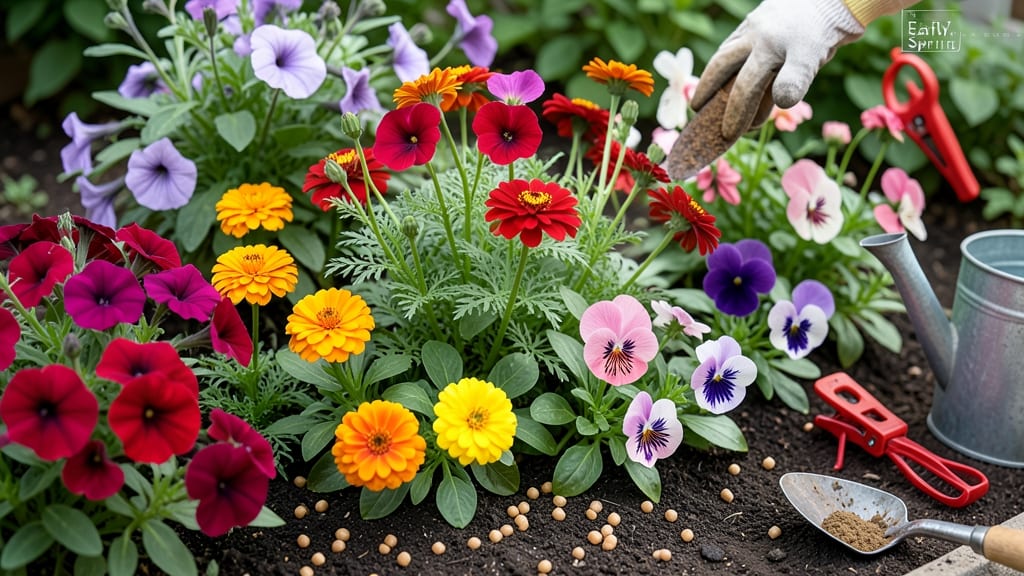
To fertilize flowers at the right time means catching them when they’re hungry—not when they’re already full or about to rest.
Picture this: You’ve just planted your spring blooms 🌸, and you’re eager to see them thrive. But fertilizing too early can burn delicate roots, while waiting too long means missed opportunities for vibrant color and lush growth. The key is knowing when to feed for maximum impact without overdoing it.
Most flowers crave a nutrient boost in early spring as they wake from dormancy and again after blooming to recharge for next year. But the timing shifts depending on whether you’re growing annuals, perennials, or bulbs—and even your local climate plays a role.
Skip the guesswork with a seasonal schedule tailored to your garden’s needs.
In this guide, I’ll break down the best months to fertilize, how to spot when your plants are truly hungry (and when they’re not), and the simple tricks to avoid common mistakes. Ready to turn your garden into a nonstop show of color?
Best seasonal timing for fertilizing flowers by type
Timing your flower fertilization is like scheduling a workout for your plants—do it at the wrong time, and you’ll get weak blooms or even burned roots. The key is understanding each flower type’s natural growth cycle and climate needs.
Annuals, perennials, bulbs, and tropical flowers all have unique seasonal windows for feeding. For example, bulbs like tulips need a spring kickstart, while tropical hibiscus thrive with year-round feeding in warm zones. Let’s break it down by type and climate so you can fertilize like a pro.
In cool climates (Zones 3-7), focus on fertilizing during the active growing season—typically April through September. Early spring is about root stimulation, mid-summer boosts bloom production, and late summer preps plants for dormancy.
Meanwhile, warm climates (Zones 8-11) can fertilize almost year-round, with a slight pause in the hottest months to avoid stress. The goal? Feed when plants are actively growing, not when they’re dormant or stressed.
🌱 PRO TIP: Always water your plants 24 hours before and after fertilizing to prevent root burn. And remember: less is more—over-fertilizing is a common mistake that leads to leafy growth at the expense of blooms.
| Flower Type | Best Fertilizing Time | Climate Adjustments | Fertilizer Type | Avoid Fertilizing |
|---|---|---|---|---|
| Annuals (e.g., marigolds, petunias) | Early spring (planting), mid-summer (bloom boost) | Cool: April–September; Warm: February–November | High-phosphorus (e.g., 5-10-10) | After first frost, during heatwaves |
| Perennials (e.g., daylilies, coneflowers) | Early spring (root growth), late summer (rebloom) | Cool: March–August; Warm: January–December (light) | Balanced (e.g., 10-10-10) | 6+ weeks before frost, during dormancy |
| Bulbs (e.g., tulips, daffodils) | Early spring (foliage stage), never after blooming | Cool: March–April; Warm: October–November | Low-nitrogen (e.g., 5-10-5) | After leaves yellow, during summer dormancy |
| Tropicals (e.g., hibiscus, orchids) | Monthly year-round (light feed) | Warm: January–December; Cool: May–September (potted) | Organic liquid (e.g., fish emulsion) | During extreme heat, winter dormancy |
Annual flowers like petunias and zinnias are heavy feeders during their short lifespan. Start with a balanced fertilizer at planting, then switch to a high-phosphorus blend (like 5-10-5) when buds form. In cool zones, fertilize every 4-6 weeks from spring to early fall. Skip feeding in late summer to let plants harden off before winter.
For perennials, think of fertilization as a two-part strategy: early spring for root growth and late summer for a rebloom boost. Use a balanced fertilizer in spring, then switch to a low-nitrogen option (like 10-20-20) in summer.
In warm climates, you can fertilize lightly every 6-8 weeks, but avoid heavy feeding when nights dip below 50°F.
B
Signs your flowers need fertilizer (and when to skip it)
Your petunias might be screaming for help, but you’re missing the signals. Yellowing leaves, stunted stems, or fewer blooms than last year are classic cries for nutrients—but timing matters just as much as what you feed them.
Over-fertilizing in heatwaves or before winter can burn roots or delay dormancy. Let’s decode your flowers’ secret language and fertilize like a pro.
First, check for nutrient deficiency signs. Pale green leaves often mean nitrogen deficiency, while purple stems signal low phosphorus. Slow growth or small buds that never open? Your plants are starving for a balanced NPK boost.
But before grabbing that fertilizer, ask: Is this the right time? Some flowers hate late-season feeding, while others need a spring kickstart.
⚠️ callout-warning ⚠️
⚠️ Critical Mistakes to Avoid
- Fertilizing in extreme heat (above 90°F) burns roots—wait for cooler mornings.
- Feeding before winter encourages tender new growth that won’t survive frost.
- Using high-nitrogen fertilizer on blooming plants—it promotes leaves, not flowers.
- Skipping soil tests—guessing nutrients leads to waste or harm.
Pro Tip: Organic options like compost tea or bone meal are gentler for sensitive flowers like roses or orchids.
For organic fertilizers, like compost or fish emulsion, focus on early spring and mid-summer. These release nutrients slowly, mirroring natural cycles. Synthetic fertilizers, however, offer quick fixes—ideal for container gardens where nutrients leach faster. Always water thoroughly after applying to prevent root burn.
Not all flowers need feeding. Bulbs like daffodils store energy underground—skip fertilizer until they sprout. Perennials often thrive on last year’s nutrients; feed only if leaves look lifeless.
And if your annuals (like marigolds) are wilting despite water, check for pests first—fertilizer won’t help if aphids are sucking the life out of them.
Timing is everything. Feed perennials in early spring as new growth emerges, and annuals every 4-6 weeks during bloom season. For tropical flowers (like hibiscus), fertilize year-round but reduce in winter.
Always pause 6-8 weeks before first frost to let plants harden off. Your garden’s bloom power depends on reading these cues!
Remember: Less is more. A little fertilizer goes a long way—especially for container plants where roots have limited space. Start with half the recommended dose, monitor your flowers’ response, and adjust.
Happy blooming means happy plants, and happy plants tell you exactly what they need—you just have to listen! 🌷