
Planting
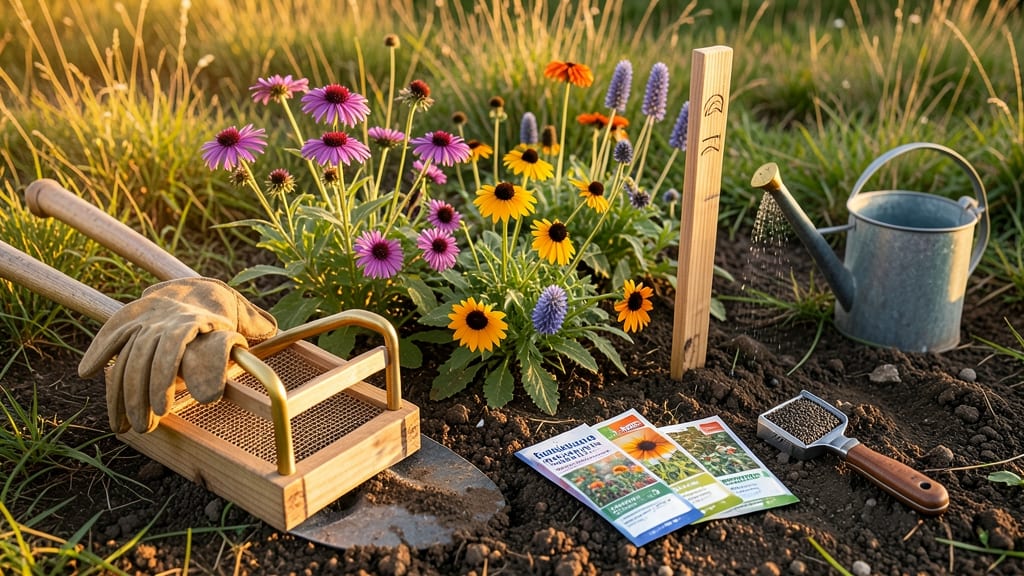
To plant native wildflower seeds at the perfect time means choosing between late summer and early spring—depending on your USDA zone and the species you’re growing.
Get it wrong, and you’ll either wait months for blooms or watch your seeds blow away before they sprout. The key? Cool-season wildflowers like black-eyed Susans thrive when sown in fall, while sunflowers and coneflowers prefer spring’s warmer soil.
Below, I break down the ideal planting windows for USDA zones 3–10, soil prep tricks to boost germination, and why some regions (like the arid Southwest) skip fall entirely.
You’ll leave here with a zone-specific schedule, a soil checklist, and the confidence to time your planting like a pro—no guesswork, just perfect blooms next season.
Best planting times for native wildflower seeds by USDA zone
Timing your native wildflower seeds correctly can mean the difference between a vibrant meadow and a patch of bare soil. USDA zones 3-10 each have unique planting windows, but the golden rule is plant when soil temps are ideal—not just when the calendar says spring.
In cooler zones, fall planting often outperforms spring because cold stratification mimics natural conditions. Meanwhile, arid regions like the Southwest thrive with dry-sowing in late summer to avoid summer heat stress.
For northern climates (zones 3-5), late summer to early fall is ideal because seeds germinate in cool soil and establish roots before winter. In warmer zones (7-10), early spring or late fall avoids summer drought.
But here’s the catch: Pacific Northwest zones (6-8) often prefer spring planting due to wet winters, while Southwest desert zones (9-10) rely on rainfall-triggered germination in late summer.
Cold stratification—chilling seeds before planting—is critical for northern species like black-eyed Susans or purple coneflowers. In zones 3-6, plant seeds in fall or stratify them in the fridge for 4-6 weeks before spring.
Southern species, like blanketflower, often skip stratification entirely. Always check seed packets for specific instructions, as some native seeds need scarification (scratching the seed coat) to break dormancy.
| USDA Zone | Best Planting Time | Key Method | Soil Temp Goal | Regional Tip |
|---|---|---|---|---|
| 3-4 | Late August–September | Fall sowing or cold-stratified spring | 40–50°F | Use mulch to protect seeds from harsh winters. |
| 5-6 | September–October or March–April | Fall or spring with stratification | 45–55°F | Avoid planting after first frost—seeds need time to root. |
| 7-8 | March–April or September | Spring or fall, no stratification | 50–60°F | Pacific Northwest: Plant in early spring to avoid winter rains. |
| 9-10 | July–August or October–November | Dry-sow in late summer or fall | 60–70°F | Southwest: Rely on monsoon rains for germination. |
In USDA zones 3-6, where winters are harsh, fall planting is your best bet. Seeds germinate in early spring when soil warms, giving plants a head start. For example, wild bergamot and butterfly weed thrive when sown in September.
If you must plant in spring, stratify seeds for 4-6 weeks in a damp paper towel in the fridge to simulate winter conditions. Pro tip: Mix seeds with sand before refrigerating for better airflow.
Zones 7-8 offer flexibility, but timing matters. Spring planting (March–April) works for most species, while fall planting (September) is ideal for cool-season bloomers like blue wild indigo. In the Pacific Northwest, where winters are wet, avoid fall planting—seeds can rot in saturated soil.
Instead, plant in early spring (February–March) to catch the first dry spell. For Southern California and desert zones (9-10), late summer (July–August) is critical—seeds germinate with the first autumn rains.
Dry-sowing—scattering seeds on undisturbed soil—is a game-changer for arid regions. In Southwest zones (9-10), this mimics natural desert conditions where seeds wait for rain. After sowing
Soil preparation and pre-planting checks for wildflower success
Before scattering native wildflower seeds, I always prepare the soil—this makes the difference between a thriving meadow and a disappointing patch. Start by clearing the area of weeds and debris, especially invasive species like cheatgrass or Johnson grass, which can choke out your natives.
Use a broadfork or hoe to loosen the top 4-6 inches of soil without disturbing deeper layers, as wildflowers often have shallow roots.
Next, test your soil’s pH level. Most native wildflowers prefer a slightly acidic to neutral pH (6.0–7.0). If your soil is too alkaline, mix in sulfur or peat moss to lower the pH gradually.
For sandy soils, add compost or leaf mold to improve water retention, while clay-heavy soils benefit from gypsum or coarse sand to break up compaction.
🌱 When to Plant Native Wildflower Seeds
| Season | USDA Zones | Best Method | Prep Tip |
|---|---|---|---|
| Early Spring | 3-7 | Direct sow after last frost | Cold-stratify seeds 4-6 weeks prior |
| Late Summer | 4-10 | Scatter before first frost | Avoid treated seeds—use untreated natives |
| Fall | All zones | Dry-sow in fall | Mulch lightly to protect seeds |
⚠️ Pro Tip: Always check seed packets for scarification or cold treatment needs—some species like black-eyed Susans need their seed coats scratched!
Choosing the right planting method depends on your seeds and climate. For direct sowing, scatter seeds lightly over prepared soil and press them into the surface—never bury them deeply, as most wildflower seeds need light to germinate.
If you’re dealing with hard-coated seeds like those from prairie coneflowers, try scarification by nicking the seed coat with sandpaper or soaking in warm water for 24 hours.
In colder climates (USDA Zones 3-6), use cold stratification to mimic winter conditions. Place seeds in a damp paper towel, seal them in a plastic bag, and refrigerate for 4-8 weeks before planting.
This trick helps break dormancy for species like wild bergamot or purple coneflower, which won’t sprout otherwise.
Finally, avoid commercial seed treatments designed for lawns or agricultural crops. These often contain fungicides or herbicides that can harm native wildflowers. Stick to untreated, native seed mixes from reputable suppliers to ensure genuine biodiversity in your garden.
Once planted, water gently but deeply to settle the soil, and resist the urge to overwater—most native wildflowers thrive with minimal moisture once established. Mulch lightly with straw or leaves to retain moisture and suppress weeds without smothering new sprouts.