
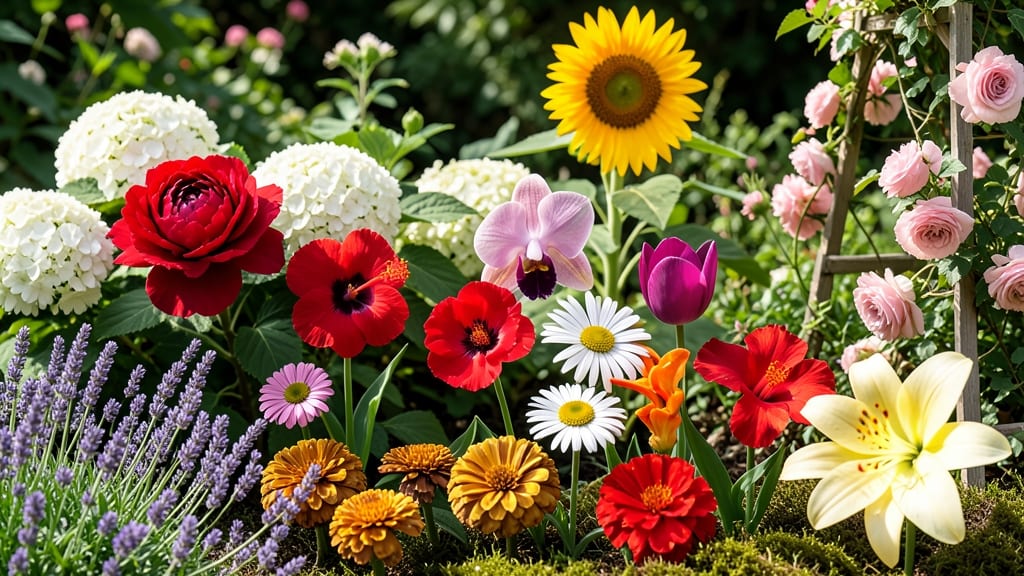
Differen Types of Flowers: Seasonal Color Palettes for Garden Designers

Flowers

Differen Types of Flowers: Seasonal Color Palettes for Garden Designers

Exploring the different types of flowers 🌱 is like unlocking a palette of colors, textures, and fragrances that can transform even the simplest garden into a breathtaking masterpiece.

Imagine stepping into your backyard and being greeted by vibrant blooms that shift with the seasons—spring’s delicate tulips giving way to summer’s bold sunflowers, then autumn’s fiery chrysanthemums, and even winter’s hardy hellebores.

Each type of flower doesn’t just add beauty; it brings life, pollinators, and a sense of harmony to your outdoor space.

But here’s the catch: not all flowers play well together, and picking the wrong mix can leave your garden looking disjointed or requiring too much upkeep. The key is understanding how to layer seasonal blooms so they overlap just enough to keep color flowing year-round without gaps.

In this guide, I’ll break down the most stunning flower categories by season, share expert tips for combining them like a pro, and even spotlight some underused varieties that’ll make your garden stand out. Ready to design a garden that turns heads all year?

12 Seasonal flower categories every garden designer should know

Designing a garden that blooms beautifully year-round requires knowing which seasonal flower categories thrive in each part of the year. Each season brings its own color palette and textural contrasts, creating opportunities to craft stunning landscapes.

Whether you're focusing on spring bulbs or winter hardy perennials, understanding these categories will help you create a garden that stays vibrant from frost to frost.

Seasonal flowers can be categorized into four main groups based on their peak bloom times: spring, summer, fall, and winter. Some flowers even bridge seasons, offering extended interest. For example, tulips and daffodils announce spring’s arrival, while chrysanthemums and asters bring fall’s crisp air to life.

By strategically blending these categories, you can ensure your garden remains a dynamic, ever-changing masterpiece.

Below is a breakdown of the 12 essential seasonal flower categories that every garden designer should incorporate, along with their peak bloom periods, hardiness zones, and standout varieties. This guide will help you plan a garden that thrives across all four seasons.

Season Flower Category Key Examples Peak Bloom Hardiness Zones
Spring Spring Bulbs Tulips, Daffodils, Hyacinths March - May 3-9
Spring Early Perennials Bleeding Heart, Columbine, Lungwort April - June 4-8
Summer Summer Annuals Zinnias, Marigolds, Petunias June - September 2-11
Summer Summer Perennials Coneflowers, Black-Eyed Susans, Lavender July - August 3-10
Fall Fall Bloomers Chrysanthemums, Asters, Goldenrod September - November 4-9
Fall Late Perennials Russian Sage, Sedum, Hellebores October - December 4-8
Winter Winter Interest Plants Hellebores, Witch Hazel, Winter Jasmine December - February 5-9
Winter Evergreen Shrubs Boxwood, Holly, Juniper Year-round 3-10
Spring/Fall Biennials Foxgloves, Hollyhocks, Sweet William May & September 3-10
Summer/Fall Ornamental Grasses

How to choose flowers for year-round color harmony in your garden

Creating a garden that blooms beautifully across all seasons requires strategic planning and an understanding of different types of flowers.

Each season brings unique color palettes—bright yellows and purples in spring, vibrant reds and pinks in summer, and deep oranges and golds in fall—while winter often relies on evergreens and late-blooming perennials.

The key is selecting flowers that overlap in bloom times or have complementary colors to ensure continuous visual interest.

Start by identifying your garden’s hardiness zone and sunlight conditions. Some flowers, like tulips and daffodils, thrive in full sun and bloom early, while others, such as hydrangeas and asters, prefer partial shade and bloom later in the season.

Pairing these with evergreen shrubs or ornamental grasses adds structure and texture year-round. For example, a spring-blooming crocus can transition into a summer display of coneflowers, followed by fall chrysanthemums and winter interest from hellbores.

🌸 Annuals vs. Perennials vs. Biennials

Annuals

  • Pros: Bold colors, long bloom seasons, easy to replace
  • Cons: Require replanting yearly, higher maintenance

Perennials

  • Pros: Return yearly, low maintenance, diverse varieties
  • Cons: Slower to establish, some die back in winter

Biennials

  • Pros: Two-year lifespan, unique blooms (e.g., foxgloves)
  • Cons: Limited bloom time, may self-seed aggressively

Consider color theory to create harmony. For instance, pairing cool blues and purples with warm reds and oranges creates a striking contrast, while monochromatic schemes (e.g., varying shades of pink) offer a soft, cohesive look.

Use tall flowers like delphiniums as backdrops, medium-height flowers like roses in the middle, and low-growing annuals like pansies in the front for depth. This layering technique ensures every season has visual balance and flow.

Think about maintenance requirements too. Some flowers, like lavender and Russian sage, are drought-tolerant and low-maintenance, while others, such as petunias and impatiens, need consistent watering and fertilizing.

Group high-maintenance plants together to simplify care routines. For example, place water-loving flowers like irises near a drip irrigation system and drought-resistant succulents in a sunny, dry corner.

Don’t overlook fragrance and texture—they add depth to your garden. Sweet-smelling flowers like jasmine and gardenias attract pollinators and create a sensory experience, while fuzzy lamb’s ear or spiky globe thistle provide tactile interest. Mixing these elements ensures your garden remains engaging even when not in full bloom.

For example, winter jasmine offers fragrant blooms when little else is flowering, while ornamental kale adds color and texture during cold months.

Finally, sketch a simple layout before planting. Use seasonal bloom charts to map out which flowers will shine at different times. Test small sections first—this helps you refine your color palette and plant combinations without overwhelming your entire garden.

With the right mix of annuals, perennials, and evergreens, your garden will stay vibrant and harmonious from spring through winter. 🌿

★★★★★4.7(2 reviews)
Categories Flowers