
How To
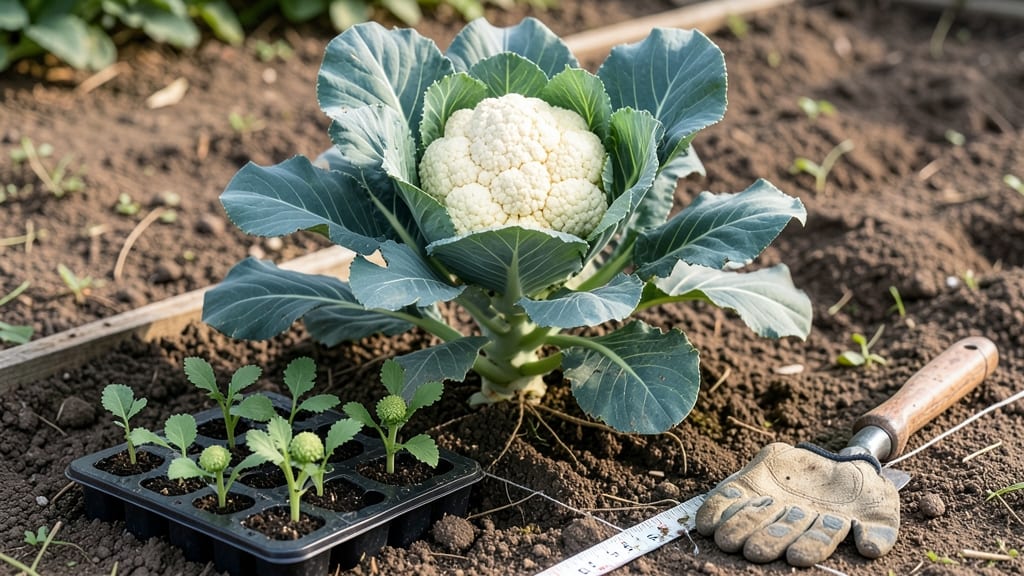
Planting cauliflower how far apart to plant cauliflower at the right distance ensures dense, disease-free heads—but get it wrong, and you’ll end up with stunted crops or a battle against rot.
I’ve watched perfectly healthy seedlings turn into sad, yellowing plants because they were crowded too close. The fix? A little math and a few simple rules that make all the difference.
Spacing isn’t just about fitting more plants in—it’s about airflow, sunlight, and giving each head room to grow without competing for nutrients. Too tight, and diseases like black rot move in; too wide, and you waste garden space.
Below, I break down the exact spacing for your variety, whether you’re growing in rows, containers, or raised beds—and how to adjust for shade, humidity, or small spaces.


Optimal cauliflower spacing by variety and growing conditions
Cauliflower spacing isn’t one-size-fits-all—it depends on your variety type, head size, and growing method. Dwarf varieties like ‘Snowball Y Improved’ need less room than giant types like ‘Romanesco’, and container gardens demand tighter spacing than in-ground beds.
Even a 12-inch difference can mean the difference between perfect heads and stunted growth.
I’ve planted everything from 5-gallon containers to full garden rows, and trust me—skipping proper spacing leads to crowded plants that compete for nutrients, attract pests, and develop fungal diseases like black rot. The key is balancing air circulation, root space, and sunlight exposure for each variety’s needs.
Here’s my go-to spacing guide for cauliflower, broken down by variety type and growing conditions, so you can plan your garden like a pro. Whether you’re working with raised beds, containers, or traditional rows, these measurements will set you up for success.
⚠️ Pro Tip: Always measure from the center of one plant to the center of the next. This ensures even spacing as plants mature and fill out.
For raised beds, reduce plant-to-plant spacing by 10–15% to maximize yield, but never go tighter than 12 inches for dwarf varieties. In containers, prioritize
Why proper spacing prevents common cauliflower problems
Cauliflower plants thrive when given enough room to breathe—but too little space creates a recipe for disaster. Crowded plants compete for nutrients, leaving you with small, loose heads and inviting fungal diseases like black rot and clubroot.
These issues aren’t just annoying; they can wipe out an entire crop if ignored. The key is understanding how spacing impacts air circulation, soil health, and disease resistance.
Poor air circulation is the #1 enemy of healthy cauliflower. When plants are packed too tightly, humidity lingers between leaves, creating the perfect environment for fungal spores to spread. This is especially true in humid climates or shaded areas where moisture doesn’t evaporate quickly.
Even in ideal conditions, crowded plants develop weak stems that can’t support their own weight, leading to blighted heads or rot before harvest.
Too close (12" or less): Leads to black rot, clubroot, and stunted growth. Plants compete for nutrients, resulting in small, loose heads.
Too far (24"+): Wastes garden space and reduces yield. Plants struggle to pollinate effectively, leading to poor head formation.
Uneven spacing: Creates weak stems from uneven competition. Leads to blight in crowded spots and nutrient deficiency in isolated plants.
Solution: Aim for 18-24" between plants in rows spaced 30-36" apart. Adjust for dwarf varieties (12-18") or container growing (12" max).
Another hidden problem is nutrient competition. When cauliflower plants are too close, their root systems tangle, making it hard for each plant to access the nitrogen and phosphorus it needs to form dense heads.
This often results in yellowing leaves or heads that stay small and loose. Even if you fertilize heavily, crowded plants can’t utilize nutrients efficiently, leaving you with underwhelming results.
Adjusting spacing for your specific conditions makes all the difference. In shady gardens, space plants 12-18" apart to maximize light exposure for each plant. In high-humidity areas, increase spacing to 24-30" to improve airflow.
For container growing, limit to one plant per 12-15" pot—any closer, and you’ll struggle with disease and poor growth. Always prioritize airflow over squeezing in extra plants.
Don’t forget that disease pressure changes with the season. Early spring or fall planting in cooler weather? You can get away with slightly tighter spacing (18") because fungal diseases are less aggressive.
But in hot, muggy summers, 24" spacing is non-negotiable to prevent outbreaks. Pay attention to your local climate patterns and adjust accordingly.
By mastering proper spacing, you’ll create an environment where cauliflower plants can focus their energy on growing dense, disease-resistant heads instead of competing for survival. The effort pays off with bigger harvests, fewer pests, and less stress on your plants.
Start with the right spacing, and you’ll set your cauliflower up for success from day one. 🌱