
How To
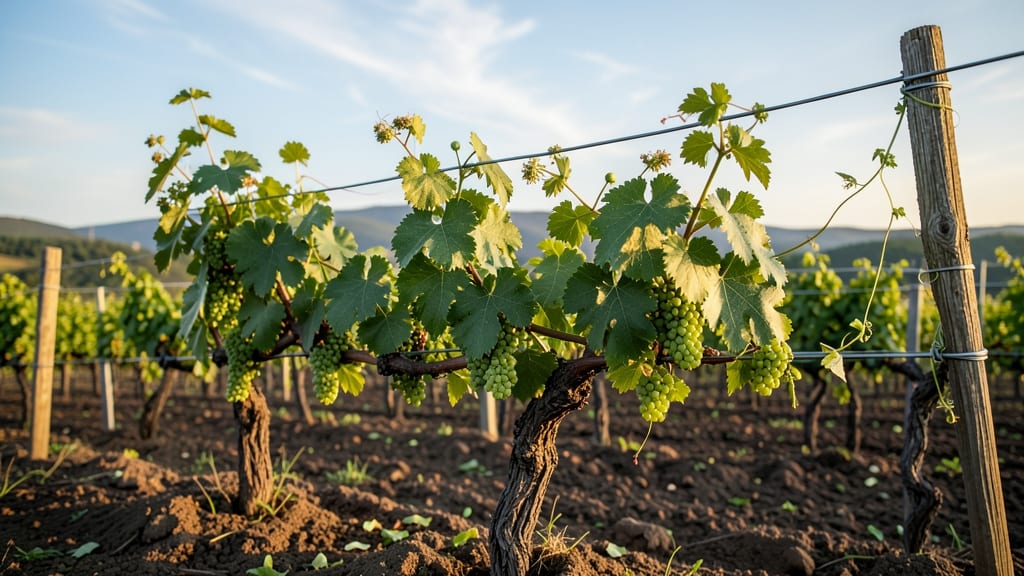
Grapes take about 60–90 days to grow after flowering, depending on the variety and growing conditions—so your patience will pay off sooner than you think.
Wondering how quickly your grapevines will bear fruit after those delicate flowers appear? The timeline from flowering to ripe grapes is shorter than you might think—but getting it right means knowing the exact stages and factors that speed up or slow down ripening.
Most varieties reach berry set within 4–6 weeks after flowering, followed by rapid growth during summer heat. Cool weather or drought can stretch this out, while warm days and proper care can bring grapes to harvest in as little as 70 days.
Below, I’ll break down the key stages—from fruit set to veraison—and share how to track progress so you know exactly when to pick those sweet, juicy 🍇 clusters.

Grapes growth timeline after flowering: 60-90 days breakdown
Once your grapevines bloom, the journey to harvest unfolds in a 60-90 day window, but understanding each stage helps you optimize care. From fruit set to veraison, every phase brings visible changes that signal progress toward ripe grapes.
The timeline varies slightly by variety and climate, but knowing these milestones ensures you’re ready to harvest at peak flavor.
After flowering, the first 10-14 days are critical for fruit set, where tiny berries form and begin growing. This stage is highly sensitive to temperature fluctuations and water stress, which can cause berry drop.
If your vines are healthy, you’ll notice clusters swelling within this window. Pay close attention to pollination—some varieties, like Concord, require cross-pollination, while others like Thompson Seedless are self-fertile.
Here’s a detailed breakdown of the 60-90 day timeline from flowering to harvest, including key actions to support each stage:
| Stage | Days After Flowering | Key Growth Milestones | Care Tips |
|---|---|---|---|
| Fruit Set | 10-14 days | Tiny berries form; clusters begin swelling | Monitor for berry drop; ensure consistent watering and pollination |
| Berry Development | 20-40 days | Berries grow rapidly; seeds develop; skin hardens | Apply balanced fertilizer; prune suckers to direct energy to fruit |
| Veraison | 50-60 days | Berries soften; color changes (green to red/purple); sugar accumulates | Reduce watering slightly to concentrate sugars; protect from pests |
| Ripening | 60-90 days | Berries reach full size, color, and sweetness; stems toughen | Harvest when berries detach easily and taste fully ripe; monitor for birds |
During the berry development phase (20-40 days), grapes grow exponentially in size. This is when you’ll see seeds forming inside the berries, and the skin transitions from thin to thicker. Thompson Seedless varieties, for example, develop a glossy skin during this stage, while Muscadine grapes may appear more waxy.
To support this growth, focus on soil moisture—grapevines need 1-2 inches of water per week, especially in hot climates like USDA Zone 8 or higher.
Around 50-60 days post-flowering, you’ll hit veraison, the most dramatic phase where berries soften and change color. This is when red grapes turn purple, green grapes deepen to gold, and sugars begin accumulating rapidly. Veraison is also when acidity drops, making the grapes taste sweeter.
If your vines are in a cooler climate, like Zone 5 or 6, veraison may take longer—sometimes up to 70 days—so don’t rush harvesting.
By 60-90 days, grapes are in the final ripening stage, where they reach their peak flavor and texture. This is when you’ll need to decide: are these table grapes for fresh eating or wine grapes for fermentation?
Table grapes should be plump, firm, and easily detachable from the stem, while wine grapes are often harvested slightly earlier for higher acidity. In hot climates, like Southern California, grapes may ripen faster—sometimes in as little as 50 days—so stay vigilant.
One critical factor that affects this timeline is variety selection. Early-ripening varieties, like Catawba or Niagara, can reach harvest in 60-70 days, while late-season grapes, such as Cabernet Sauvignon, may take 90-120 days.
If you’re in a shorter growing season, like Zone 4, opt for short-season varieties to ensure they ripen before the first frost. Always check the days to maturity listed on seed packets or nursery tags to plan accordingly.
Climate plays a huge role in speeding up or slowing down ripening. In hot, dry regions, grapes may ripen 10-20 days faster due to intense sunlight and higher temperatures. However, excessive heat can also cause sunburn on the berries, so provide light shade cloth if temperatures exceed 90°F.
Conversely, in cooler climates, grapes may take longer to ripen, and you might need to extend the season
5 Key factors that speed up or delay grape ripening
Your grapevines may take 60–90 days to ripen after flowering, but those timelines can shift dramatically based on care and environment. The right conditions can shave weeks off the process, while stress or neglect can stretch it out.
Let’s break down the five critical factors that control how quickly your grapes mature—so you can optimize for faster, sweeter harvests.
First, sunlight exposure is non-negotiable. Grapes need 6–8+ hours of direct sun daily to develop full sugar content. Even partial shade can delay ripening by 10–20 days, as berries struggle to photosynthesize efficiently.
If your vines are in a spot with less sun, consider relocating them or using reflective surfaces to maximize light penetration.
Next, watering practices play a surprising role. Too much water dilutes sugar content and slows ripening, while drought stress can cause berries to shrivel. The sweet spot? Deep, infrequent watering (every 7–10 days) during fruit development.
Avoid wetting leaves to prevent fungal diseases like powdery mildew, which can further stress the vines.
- 🌞 Maximize sunlight: Ensure 6+ hours of direct sun daily to boost sugar production. Use trellises or reflective mulch if needed.
- 💧 Water deeply but less often: 1–2 inches per week during fruit set to avoid dilution. Drip irrigation is ideal.
- 🌡️ Monitor temperatures: Ideal range is 75–90°F. Heat waves can speed ripening, but below 60°F slows it down.
- ✂️ Prune strategically: Remove excess foliage to improve airflow and sunlight penetration to clusters.
- 🌱 Fertilize wisely: Use a balanced 10-10-10 fertilizer in spring, then switch to low-nitrogen in summer to avoid late-season growth.
Temperature fluctuations also impact ripening speed. Grapes thrive in 75–90°F conditions, where they ripen 20–30% faster than in cooler climates. Early-season heat waves can push berries to maturity sooner, but sudden drops below 60°F will stall development.
In cooler regions, choose early-ripening varieties like Concord or Thompson Seedless to work within shorter growing seasons.
Don’t overlook pruning techniques, which directly affect airflow and sunlight access. Overgrown vines with dense canopies trap moisture and block light, delaying ripening by 2–3 weeks. Prune in late winter to remove dead or crossing canes and thin clusters to ½ inch apart for better air circulation.
This simple step can make a huge difference in fruit quality and speed.
Finally, soil nutrition sets the foundation. Grapes need well-draining, slightly acidic soil (pH 6.0–6.5) rich in organic matter. A balanced fertilizer in early spring encourages strong vine growth, while a low-nitrogen blend in summer shifts energy toward fruit development.
Test your soil annually—low potassium or phosphorus can leave berries small and underripe.
By mastering these five factors, you’ll turn your 60–90 day ripening window into a predictable, high-yield harvest. Start with sunlight and water, then fine-tune with temperature, pruning, and soil—your grapevines will thank you with sweeter, juicier clusters come harvest time! 🍇