
Blooming
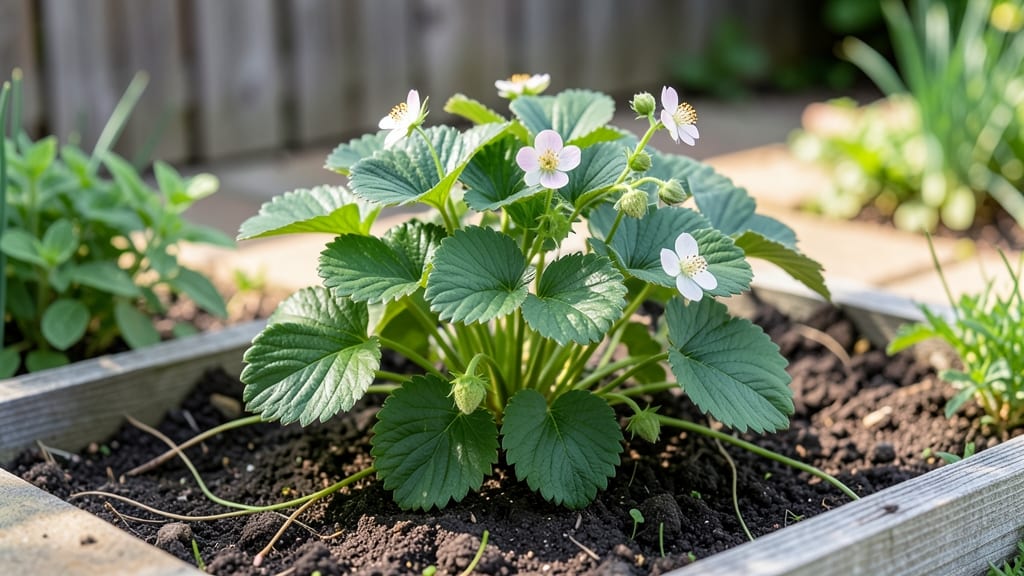
If you’ve ever eagerly watched strawberry blossoms fade only to wonder when those berries will finally ripen, you’re not alone. The wait can feel endless, especially when you’re itching to harvest your homegrown bounty.
Most strawberries follow a predictable growth pattern after flowering: fruit sets within 1 to 2 weeks, then swells over the next 3 to 4 weeks, and finally turns red and softens in the final stretch.
Understanding these stages helps you avoid picking too early or missing the perfect moment.
Below, I’ll break down the week-by-week timeline, share tips to speed up ripening without sacrificing quality, and highlight common mistakes that can delay your harvest. Let’s get those strawberries ready for the table!

Strawberry growth stages after flowering: a 4-6 week timeline breakdown
Once those delicate strawberry blossoms fade, the real magic begins—but how long until those tiny green berries turn sweet and ripe? The answer depends on variety, climate, and care, but most strawberries follow a predictable 4-6 week timeline from pollination to harvest.
Understanding each stage helps you monitor progress and troubleshoot delays before they happen.
After successful pollination, the first 1-2 weeks focus on fruit set, where the berry’s cells begin dividing rapidly. This is when you’ll notice those familiar green "strawberry hearts" forming.
During this phase, temperature and water consistency are critical—too much heat or drought can cause blossom end rot or stunted growth.
The next 2-3 weeks bring the most dramatic changes as the berries swell and color shifts from green to pale pink. This is when cell expansion dominates, and proper nutrient balance (especially potassium and phosphorus) ensures sweetness development.
Evergreen varieties like Albion or Seascape may show color changes earlier than June-bearing types.
By week 4, most strawberries will show red pigmentation, though the exact timing varies by variety.
June-bearing types like Jewel often take the full 6 weeks, while everbearing varieties like Ozark Beauty may ripen in just 4-5 weeks under ideal conditions. Day-neutral varieties can produce multiple harvests if given consistent care.
Temperature plays a huge role—cool nights (50-60°F) and warm days (70-80°F) accelerate ripening, while extreme heat (>90°F) can cause sun scald or blossom drop. If your berries stall in color, check for pest damage (like spider mites) or nutrient deficiencies (yellow leaves indicate nitrogen needs).
One common misconception is that bigger berries always mean riper fruit. Size matters less than color uniformity and texture—a small berry that’s deep red and slightly soft is often sweeter than a large one still mostly green.
Use your fingernail to gently press the berry; if it yields slightly, it’s ready.
For container-grown strawberries, the timeline may stretch slightly due to limited root space, but proper container size (at least 12 inches deep) and daily watering can keep them on track. Dwarf varieties like Tristar often ripen faster in pots because their roots stay cooler and more consistently moist.
If you’re growing strawberries in high-altitude areas (above 5,000 feet), expect a 1-2 week delay in ripening due to cooler temperatures. Conversely, tropical climates can push berries to maturity in as little as 3 weeks, though flavor may suffer without proper day-night temperature variation.
Pro tip: Mark your calendar when you see the first pink blush on berries—this is your 4-week countdown to harvest. Keep a growth journal to track what works best in your microclimate, including notes on rainfall patterns and sun exposure variations throughout the season.
Remember, patience is key! Rushing to harvest underripe berries can stunt future fruit production and leave your plants vulnerable to disease. When in doubt, wait an extra day—your taste buds (and plants) will thank you. 🌱
How to speed up strawberry ripening after flowering (without sacrificing quality)
Once those strawberry blossoms fade, you’ll notice tiny green berries forming—but how quickly they ripen depends on your care routine. The average 4-6 week timeline can shrink with the right techniques, like adjusting watering schedules or boosting sunlight exposure.
I’ve found that June-bearing varieties (like Jewel or Chandler) take the full 6 weeks, while everbearing types (like Albion) ripen in just 30-40 days.
To maximize speed without compromising flavor or size, focus on three key areas: water consistency, nutrient balance, and pruning strategy. Skipping these steps can leave your berries small, pale, or even falling off prematurely.
Let’s dive into actionable methods that work for both container gardens and in-ground beds.
- ✅ Week 1-2: Apply balanced fertilizer (10-10-10) after blossoms drop to fuel fruit development. Use 1 tbsp per plant in morning hours to avoid leaf burn.
- ✅ Week 3-4: Increase watering depth to 1-2 inches per week. Water at soil level (not leaves) to prevent fungal diseases like gray mold.
- ✅ Week 5-6: Prune old leaves (yellow or brown) to redirect energy to ripening fruit. Remove no more than 20% of foliage per pruning session.
- ✅ All Weeks: Ensure 6+ hours of sunlight daily. Move container plants to sunnier spots if shade appears—even partial shade can delay ripening by 10-15 days.
- ✅ Bonus Tip: Hand-pollinate greenhouse-grown strawberries by gently shaking plants or using a paintbrush to transfer pollen between flowers.
For second harvests in everbearing varieties, pinch off the first flush of berries once they ripen. This encourages new flower buds to form, giving you a second crop 4-6 weeks later.
I’ve seen Albion plants produce 3 harvests per season with this method—just be patient and consistent with care.
Organic fertilizers like compost tea or fish emulsion can also speed up ripening by providing micronutrients (like calcium and magnesium) that store-bought fertilizers often lack. Mix 1 tbsp of compost tea into the watering can weekly during fruit development.
Avoid synthetic nitrogen-heavy fertilizers—they promote leafy growth at the expense of fruit ripening.
Watch for overripe signs like berries splitting or turning mushy. This often happens when soil stays too wet or when plants receive uneven watering. To fix it, reduce watering slightly and mulch with straw or pine needles to keep moisture levels stable.
A 1-inch mulch layer also deters weeds and regulates soil temperature—critical for consistent ripening.
Remember, patience is key—even with perfect care, strawberries need time to develop their signature sweetness. The fastest-ripening varieties (like Seascape) can go from flower to harvest in just 30 days, while heirloom types may take 70 days.
Always check for full red color and a slight softness before picking to ensure peak flavor and texture.