
Watering
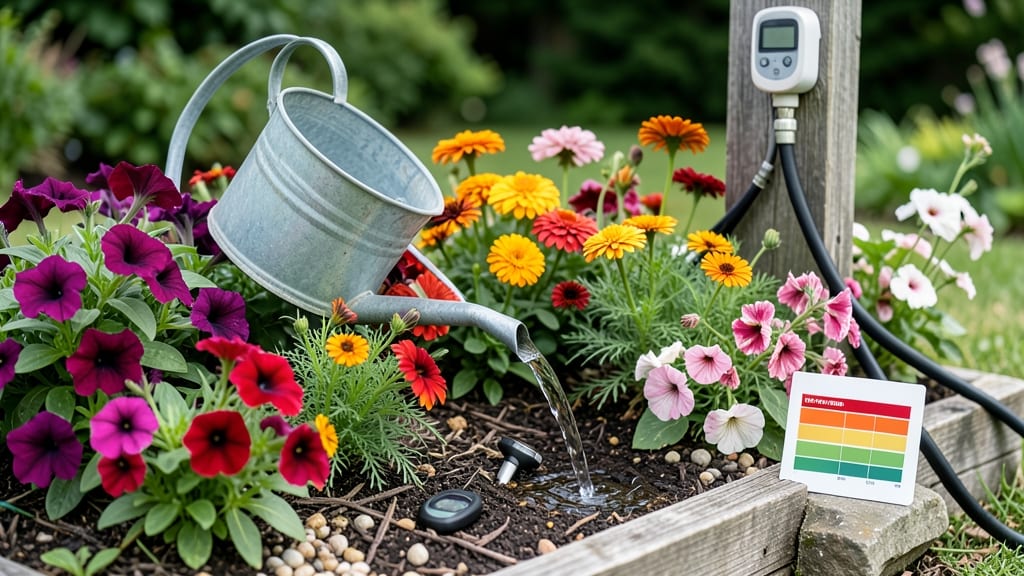
Watering outdoor flowers the right way means understanding how often to water flowers outside to keep them vibrant and healthy 🌸 — and it’s not just about sticking to a rigid schedule.
Struggling to keep your outdoor flowers thriving? Overwatering or underwatering can kill them—so knowing the exact watering schedule for each plant type is the secret to a lush, vibrant garden all year.
Most flowers thrive with deep watering every 1-3 days, but the timing depends on your climate, soil type, and whether they’re in pots or planted in the ground. In Zone 6a, summer heat can dry out soil faster, while winter slows everything down.
Below, I break down the ideal watering frequency by season, plant type, and signs your flowers are thirsty—or drowning. You’ll learn how to adjust for rain, drought, and even the best time of day to water for maximum impact.
Optimal watering frequency for outdoor flowers by season and type
Watering your outdoor flowers correctly can mean the difference between a vibrant, blooming garden and struggling plants. The frequency and depth of watering change dramatically by season, plant type, and even your local climate.
For example, petunias need daily watering in summer, while lavender thrives on neglect—just bi-weekly watering during its dormant months. Let’s break down the exact schedule you need to keep your flowers thriving year-round.
Most gardeners make two critical mistakes: overwatering (which causes root rot) or underwatering (leading to wilting and stunted growth). The key is deep, infrequent watering that encourages roots to grow deeper into the soil.
In spring and summer, aim to water early in the morning to reduce evaporation and fungal risks. For winter, cut back dramatically—most flowers need minimal watering once they’ve entered dormancy.
Spring is all about encouraging root growth and preparing flowers for their blooming season. Most flowers need deep watering every 2-4 days, but adjust based on rainfall. For example, roses love 1-2 inches of water per week during spring, while lavender only needs 1 inch every 7-10 days.
Use a moisture meter or the finger test (stick your finger 1-2 inches into the soil)—if it’s dry, water.
Summer heatwaves demand more frequent watering, but timing matters. Water early in the morning (between 4-8 AM) to minimize evaporation and prevent fungal diseases like powdery mildew. Annuals like petunias may need daily watering in extreme heat, while perennials like black-eyed Susans can handle every other day.
Always water at the base of the plant, not the leaves, to avoid scorching.
Fall is a transitional season where most flowers slow their growth in preparation for winter. Reduce watering to every 3-5 days for moisture-loving varieties and every 7-10 days for drought-tolerant ones. Roses and peonies benefit from a final deep watering in late fall to strengthen roots before dormancy.
Avoid watering if frost is forecasted—wet foliage can freeze and damage plants.
Winter care varies by climate and plant type. In mild winter zones (like USDA Zone 7-10), perennials like lavender may need bi-weekly watering if there’s no rain.
In colder zones, most flowers enter dormancy and require little to no water. Bulbs like tulips should only be watered if the ground isn’t frozen and shoots are emerging. Always check soil moisture—dry soil is better than soggy soil in winter.
Grouping plants with similar water needs makes maintenance easier. For
Signs your flowers are overwatered or underwatered (and how to fix it)
Even with the best watering schedule, your flowers can still show signs of distress. Overwatering and underwatering are sneaky killers—both can stunt growth, invite pests, or even rot roots. The key is learning to read your plants' signals before damage sets in.
I’ve seen petunias wilt from too much love and lavender turn crispy from neglect, and I’m here to help you spot the difference.
Start by checking the soil moisture with your finger. Stick it 1-2 inches deep—if it feels damp, hold off on watering. If it’s bone-dry, your flowers are thirsty. But here’s the catch: clay soil stays wet longer than sandy soil, so adjust your routine accordingly.
For example, roses in clay may need water every 3-4 days, while geraniums in sand might dry out in just 24 hours.
Watering Flowers Outside: The Golden Rule
Most outdoor flowers need 1-2 inches of water per week, but never water on a schedule. Instead, test soil moisture before watering. In hot climates, water in the early morning to reduce evaporation. In humid areas, avoid evening watering to prevent fungal diseases like powdery mildew.
Yellowing leaves are a red flag—but are they from overwatering or underwatering? Look closer: overwatered leaves turn yellow and feel mushy, while underwatered leaves yellow at the edges and crisp up. Another clue? Fungal spots (like brown patches or white powder) mean your flowers are drowning.
I once saved a hydrangea from root rot by reducing water and adding perlite to the soil to improve drainage.
Wilting is tricky too. Morning wilting often means thirst, but evening wilting with soggy soil signals overwatering. Try the finger test: Press your finger into the soil. If water squirts out, you’re overdoing it.
If it’s dry, give your flowers a deep drink—aim for water to reach 6 inches deep to encourage strong roots. Mulch helps retain moisture and regulate temperature, so spread 2-3 inches of organic mulch around your plants (but keep it away from the stem to prevent rot).
Adjust your irrigation system based on your climate. In arid regions, drip irrigation delivers water directly to roots, reducing waste. In rainy seasons, use a soaker hose on low settings to avoid oversaturating the soil.
For container flowers, check moisture daily—they dry out faster than in-ground plants. Pro tip: Group plants with similar water needs together to simplify care.
Fixing watering mistakes starts with observation. Keep a gardening journal to track when you water and how your flowers respond. Over time, you’ll spot patterns—like how marigolds thrive with weekly watering while impatiens need daily attention in summer.
The goal? Happy, healthy blooms that reward you with vibrant colors and strong stems. With these signs and fixes, you’ll master the art of watering in no time.