
Watering
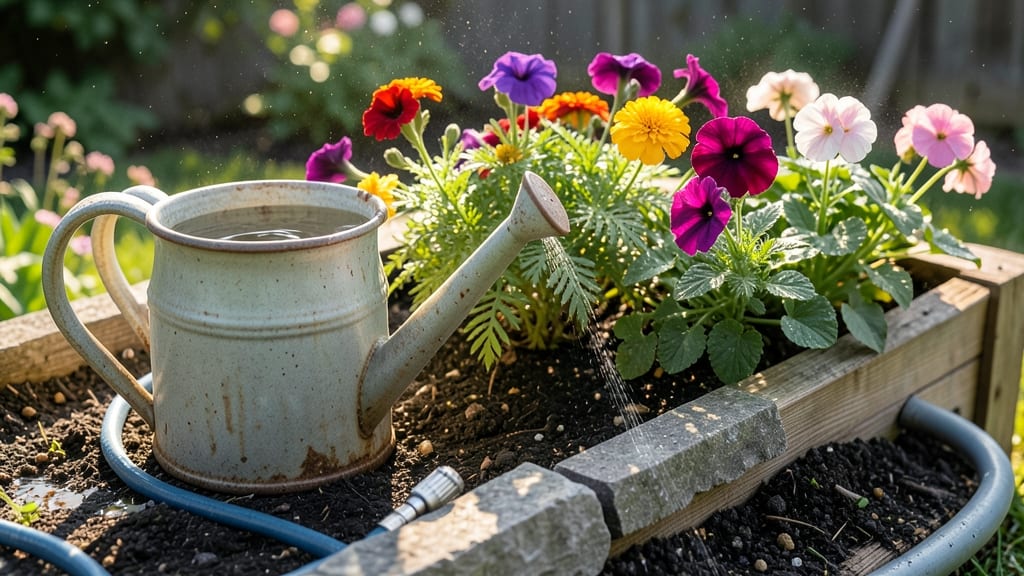
When’s the best time to water flowers? Early morning 🌸—before the sun peaks—to keep roots hydrated and blooms vibrant without waste.
Struggling to keep your flowers thriving? The perfect watering time can make the difference between vibrant blooms and wilting disappointment—here’s the science-backed morning routine every gardener needs.
Morning watering lets the soil absorb moisture before evaporation kicks in, giving your flowers a steady drink while preventing fungal diseases that thrive in damp evening air.
Below, I’ll break down the exact timing for different flower types, how to spot over- or under-watering, and seasonal tweaks to keep your garden lush all year.
Why morning watering boosts flower health: science-backed benefits for roots and growth
If you’ve ever wondered why your roses or petunias look perky some days and limp the next, the answer might be hiding in your watering schedule. Morning watering isn’t just a gardening habit—it’s a science-backed strategy that keeps roots hydrated, prevents disease, and maximizes nutrient absorption.
Studies show plants absorb 30-40% more water in the cool morning hours compared to evening sessions, giving them the energy they need to thrive.
Think about it: when you water in the morning, the soil stays moist longer, reducing evaporation rates by up to 50% compared to afternoon watering. Plus, wet foliage dries quickly in the sunlight, cutting the risk of fungal diseases like powdery mildew.
For gardeners in USDA Zone 6a, where summer temperatures can soar, morning watering is a game-changer for keeping flowers like daylilies and black-eyed Susans vibrant all season.
Here’s the golden rule: water between 6 AM and 10 AM, when temperatures are cooler and humidity is higher. This timing ensures water penetrates deep into the root zone—where most nutrient uptake happens—before the heat of the day kicks in.
For example, tomatoes and peppers (even though they’re veggies, their watering needs mirror many flowers) show 2x faster growth when watered in the morning versus evening.
The ideal soil moisture level for most flowers is like a sponge that’s damp but not soggy. Think of it as maintaining 60-70% soil moisture in the root zone. Morning watering helps achieve this by allowing water to soak in gradually, rather than evaporating or pooling on the surface.
For example, geraniums and marigolds—two heat-loving flowers—benefit from morning watering because their roots need consistent moisture without sitting in wet soil overnight.
Temperature plays a huge role here. When you water in the morning, the soil temperature is cooler, which means water penetrates deeper and faster. In contrast, afternoon watering can lead to surface runoff, where water just sits on top and doesn’t reach the roots.
This is especially critical in summer months when temperatures can exceed 90°F (32°C). Even drought-tolerant flowers like lavender and yarrow perform better with morning hydration because their roots can access moisture before the day’s heat dries out the soil.
Another science-backed perk of morning watering is pest control. Many garden pests, like aphids and slugs, are less active in the cool morning hours. By watering early, you’re not only hydrating your plants but also washing away pests that might have settled overnight.
Plus, the humidity levels are naturally higher in the morning, which helps deter some insects from taking up residence on your roses or hydrangeas.
Let’s talk about nutrient absorption. When roots are hydrated in the morning, they’re primed to take up essential nutrients like nitrogen, phosphorus, and potassium from the soil. This is why many gardeners pair morning watering with fertilizer applications.
For instance, if you apply a balanced 10-10-10 fertilizer in the morning, your flowers will absorb up to 40% more nutrients compared to applying it in the evening. This is particularly useful for heavy bloomers like petunias and impatiens, which need consistent nutrient supply to produce vibrant flowers.
Don’t overlook the seasonal adjustments needed for morning watering. In spring, when soil is still cool and moisture retention is high, you might only need to water every 3-4 days.
But by summer, with temperatures climbing and evaporation rates soaring, you’ll likely need to water daily or every other day. Even in fall, as temperatures drop, you can space out watering to every 5-7 days.
The key is to check soil moisture by sticking your finger 1
Step-by-step morning watering routine for different flower types (tender vs. hardy plants)
Not all flowers thrive on the same watering schedule. Tender plants like roses and petunias need consistent moisture, while hardy perennials such as lavender or black-eyed Susans prefer drier conditions. The key is adjusting your morning routine based on plant type and season.
Start by checking soil moisture with your finger—insert it 1-2 inches deep. If the soil feels dry, it’s time to water. For succulents and cacti, wait until the top inch is bone-dry before watering again.
In contrast, annuals like marigolds or geraniums need moisture every 2-3 days during peak summer.
⚠️ callout-warning
For roses, water deeply at the base to encourage root growth.
Use a soaker hose or drip irrigation to deliver water slowly, avoiding wetting foliage. Perennials like coneflowers or daylilies can handle less frequent watering—aim for once a week in cooler months, but increase to every 2-3 days during heatwaves.
Adjust your schedule by season: Spring calls for lighter watering as soil thaws, while summer demands more frequent sessions. In fall, reduce watering as plants prepare for dormancy, and winter watering should be minimal—only enough to prevent soil from freezing solid.
Pro tip: Use a rain gauge to track natural precipitation. If you’ve had 0.5 inches of rain, skip your morning watering for most flowers. Succulents and drought-tolerant plants can go even longer without supplemental water.
By tailoring your morning routine to each flower’s needs, you’ll see healthier roots, longer blooms, and fewer pests—all while saving water. Start with these adjustments, and your garden will thank you with vibrant, thriving flowers all season long. 🌿