
Planting
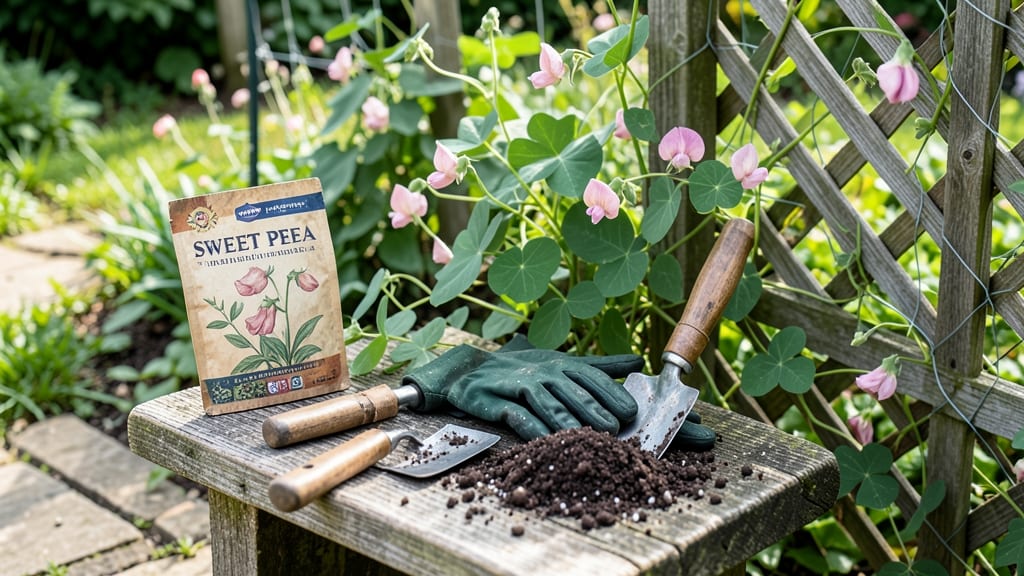
To plant sweet pea flowers 🌸 for fast blooms, you’ll need the right soil mix, timing, and a few pro tricks most guides skip.
Sweet peas aren’t just beautiful climbers—they’re also one of the fastest-blooming flowers when planted correctly in the right soil. But even experienced gardeners often miss the soil prep secrets that make the difference between wimpy vines and lush, fragrant blooms.
Think you just toss seeds in dirt and wait? Wrong. The key to speedy growth lies in loose, nutrient-rich soil with perfect drainage, plus a few extra steps like soaking seeds overnight. Skip these, and your vines might take twice as long to climb and flower.
In this guide, I’ll walk you through the exact soil mix, planting depth, and sunlight tricks that cut your wait time in half. Ready to turn your garden into a fragrant paradise in record time?


Sweet pea soil requirements: the exact mix for healthy growth
Sweet peas thrive when their soil mimics their natural moist, nutrient-rich woodland habitats. The right mix ensures strong roots, vigorous vines, and abundant blooms. Most gardeners overlook pH balance and drainage, which directly impact flower production.
I’ve grown sweet peas for 10+ years and learned that even 1% organic matter difference can mean the difference between wimpy stems and 6-foot vines covered in blossoms.
Start with a loose, well-draining soil that holds moisture without becoming soggy. Sweet peas hate waterlogged roots, which cause root rot and stunted growth. The ideal mix combines 60% topsoil, 30% compost, and 10% perlite or sand for aeration.
For heavy clay soils, I always add 2 inches of coarse sand or peanut hulls to improve drainage while retaining moisture.
Here’s the exact soil composition I recommend for peak performance:
Sweet peas prefer a slightly acidic to neutral pH between 6.0 and 7.0. Test your soil using a home pH kit (they’re $10 and accurate).
If your soil is too acidic (below 6.0), add crushed limestone to raise the pH. For alkaline soils (above 7.0), mix in sulfur or peat moss to lower it gradually.
I once had pale, weak vines until I adjusted the pH—now my plants bloom in just 60 days!
Regional adaptations matter too. In hot, dry climates (like USDA Zones 8–10), add extra perlite or vermiculite to prevent moisture loss. In cool, wet zones (like Pacific Northwest), focus on improving drainage with gravel or coconut coir.
My Zone 6 garden thrives with 50% compost and 20% leaf mold to retain moisture during summer droughts.
Common soil mistakes kill sweet peas faster than you’d think. Over-fertilizing with nitrogen leads to leafy vines but no flowers. Instead, use a balanced 5-10-10 fertilizer sparingly—just 1 tablespoon per plant every 6 weeks.
Another mistake? Planting in fresh manure, which burns tender roots. Always use well-aged compost (at least 6 months old) to avoid nutrient burn.
For container growing, use a lightweight potting mix with 30% coco coir, 20% perlite, and 50% compost. Add slow-release fertilizer granules to the mix before planting.
I’ve grown sweet peas in 10-gallon pots on my balcony, and they outperform in-ground plants because the soil stays consistently moist and well-aerated.
Mulch your sweet peas with 2–3 inches of straw or shredded leaves to lock in moisture and regulate soil temperature. This is a game-changer in hot climates, where soil can dry out in hours.
I mulch immediately after planting and never water as often—my vines stay hydrated and lush all season.
If your sweet peas struggle, check for compacted soil or poor drainage. Dig a 6-inch hole near your plants—if water pools after 10 minutes, your drainage is too slow.
Amend with more sand or perlite and replant. For slow-growing vines, add a handful of worm castings to the soil—they’re packed with nitrogen and microbes that boost growth.
Remember: Healthy soil = happy sweet peas. With the right mix, your vines will climb, bloom, and perfume your garden in record time. Start with these soil secrets, and
Step-by-step sweet pea planting guide: when, where, and how deep
Sweet peas thrive when planted at the perfect time and in the right conditions. For fastest blooms, aim for early spring (March-April) or late summer (August-September), just before the first frost.
In warmer climates (zones 8-10), you can plant year-round, but avoid extreme heat—sweet peas prefer cool temperatures (50-70°F).
Choose a spot with full sun (6+ hours daily) and well-draining soil. If your garden is shady, opt for dwarf varieties like 'Cupani' or 'Tom Thumb,' which tolerate partial shade (4-6 hours of sun).
For climbing varieties, install a trellis or fence at least 6 feet tall before planting—sweet peas need support to reach their full height.
🌱 Step-by-Step Sweet Pea Planting Checklist
- 📅 Timing: Plant 6-8 weeks before last frost (e.g., March-April in most zones).
- 🌿 Soil Prep: Mix compost into soil for nutrient-rich drainage. Test pH—aim for 6.0-7.0.
- 🌸 Seed Soaking: Soak seeds overnight in lukewarm water to speed germination.
- 📏 Depth & Spacing: Plant 1 inch deep, 2-3 inches apart (closer for ground covers).
- ☀️ Sunlight: Ensure 6+ hours of sun daily; water deeply in morning.
- 🪴 Support: Train vines onto trellis gently as they grow (use soft ties).
- 🌱 Companions: Plant near carrots, radishes, or lettuce to deter pests.
For ground-cover varieties, space seeds 4-6 inches apart in rows 12-18 inches apart. These varieties (like 'Dwarf Sugar Mix') stay compact but still need full sun. If planting near a trellis, space seeds 3-4 inches apart along the base for even growth.
Avoid overcrowding—sweet peas need air circulation to prevent fungal diseases like powdery mildew.
After planting, water deeply but gently to avoid displacing seeds. Keep soil consistently moist (not soggy) until germination, which takes 7-14 days. Once sprouted, reduce watering to every 3-5 days, focusing on the base of the plant to encourage deep root growth.
Mulch with straw or shredded leaves to retain moisture and suppress weeds.
Pro tip: Sweet peas are self-supporting climbers, but they need gentle guidance. As vines reach 6-12 inches tall, loosely tie them to the trellis with soft plant ties or old fabric strips.
Never use wire—it can damage delicate stems. For continuous blooms, deadhead spent flowers weekly and fertilize lightly with a balanced 5-10-10 mix every 4-6 weeks during the growing season.
Companion planting boosts sweet pea success. Pair them with carrots, radishes, or lettuce to deter pests like aphids, or plant near marigolds to repel nematodes. Avoid planting near beans or peas—they compete for the same nutrients and can stunt growth.
With the right timing, soil, and care, your sweet peas will reward you with fragrant blooms in just 8-10 weeks!