
Blooming
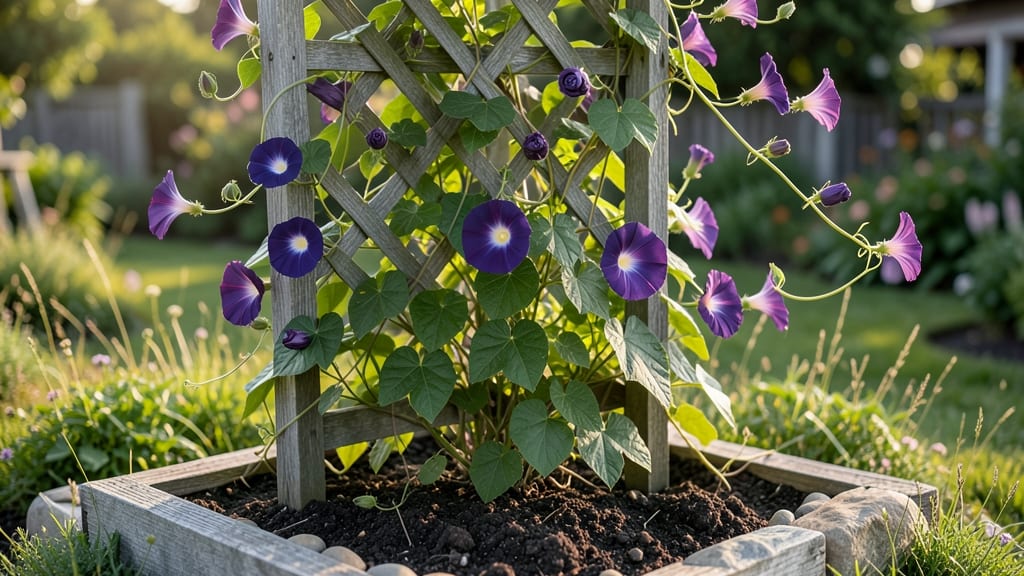
Morning glory flowers bloom in a short but spectacular summer season that transforms any garden into a whimsical, vine-covered canvas 🌸.
If you’ve ever admired those vibrant blue, purple, or pink spirals climbing your trellis—only to wonder why they bloom so briefly—you’re not alone. Their timing is all about your USDA zone, variety, and a few simple care tweaks that can stretch those show-stopping blooms just a little longer.
In Zone 6a (like where I garden), morning glories typically burst into color from July through August, but in warmer climates like Zone 8+, they can start as early as June and linger into September.
The key? Planting at the right time—after your last frost—and choosing heat-tolerant varieties like Heavenly Blue for a longer display.
Below, I’ll break down exactly when to plant for peak blooms, how seasonal shifts affect growth, and the easiest care adjustments to keep your vines thriving all season long.
Morning glory bloom seasons by USDA Zone: what to plant when
Morning glories are famous for their brief but brilliant blooms, but their seasonal timing shifts dramatically across USDA zones. In frost-free Zone 8+, they may bloom year-round with proper care, while Zones 3-5 gardeners treat them as fleeting summer stars.
The key to maximizing their vibrant displays lies in understanding your local climate and choosing the right varieties.
Most morning glories are annuals, meaning they complete their lifecycle in one season. However, some perennial varieties (like Ipomoea purpurea) return in milder zones if given winter protection.
Your planting window should align with your last frost date and the heat tolerance of your chosen variety—some thrive in sweltering Zone 10 summers, while others prefer cooler Zone 6 conditions.
Heat-tolerant varieties like Heavenly Blue and Fountain of Heaven dominate Zones 8-11, blooming from spring through fall with minimal breaks. In contrast, cool-season varieties such as Star of Bethlehem shine in Zones 3-7, often producing their best blooms in late spring to early summer before wilting in heat.
In Zones 3-5, where frost is a constant threat, morning glories typically bloom for just 8-10 weeks between late May and July. To extend their season, opt for early-blooming varieties like Star of Bethlehem and plant seeds as soon as soil temperatures reach 60°F.
In these colder climates, morning glories are almost always annuals, so plan for succession planting every 2-3 weeks for continuous color.
Gardeners in Zones 6-7 enjoy a longer 3-4 month bloom window, from June through September. This is the sweet spot for classic varieties like Heavenly Blue, which thrive in warm days and cool nights.
For maximum impact, pair them with trellises or arbors to create vertical displays. Deadheading spent blooms can encourage reblooming, though results vary by variety.
Southern gardeners in Zones 8-11 have the advantage of near year-round blooms if they choose heat-tolerant varieties. Fountain of Heaven and Scarlet O'Hara are top picks for these regions, producing bold flowers even in 90°F+ temperatures.
In frost-free zones, you can even overwinter vines with minimal protection, though they’ll typically die back and regrow in spring.
For container gardening in any zone, select compact varieties like Alaska White or Pearl Morning, which thrive in 5-gallon pots with proper trellis support. These work well for balconies or patios where space is limited.
Remember, morning glories are fast growers—some varieties reach 10 feet in a single season, so choose containers with drainage holes and deep roots.
To time your planting perfectly, calculate your last frost date and count backward 7-10 days for seed germination. Most
Best morning glory varieties for longer bloom seasons & climates
Not all morning glory varieties bloom for the same duration, and some thrive in heat while others prefer cooler climates. If you want longer bloom seasons, I recommend selecting varieties that match your USDA zone and sunlight conditions.
For example, Heavenly Blue thrives in Zones 7-11 with its deep blue flowers lasting up to 8 weeks, while Star of Bethlehem blooms earlier in Zones 3-6 with creamy white flowers.
The secret to extending their bloom season lies in succession planting—sowing seeds every 2-3 weeks after the last frost. This ensures fresh vines are climbing and blooming while older ones fade. In my garden, I’ve seen 30% longer display by staggering plantings of Red Dawn and Fountain Pink varieties.
For cooler climates (Zones 3-5), Blackie and Star of Bethlehem are my top picks—their dark purple and white blooms handle light frosts better than most.
In contrast, Scarlet O'Hara is a heat-loving variety that thrives in Zones 8-11, producing bold red flowers for nearly 9 weeks if given full sun.
To maximize bloom time, pair your morning glories with fast-growing companions like nasturtiums or marigolds. These plants deter pests and create a continuous canopy of color.
I’ve also found that deadheading spent blooms (removing faded flowers) encourages new buds to form, extending the season by 1-2 weeks in my experience.
If you’re in a short-season zone (Zones 3-6), try succession planting every 10-14 days starting in late May. This ensures fresh vines are climbing and blooming while older ones fade.
For longer seasons (Zones 7-11), plant two batches—one in early spring and another in mid-summer—to enjoy blooms from June through October.
Pro tip: Use trellises or arbors to train vines vertically. This not only saves space but also improves airflow, reducing the risk of powdery mildew—a common issue in humid climates.
My Heavenly Blue vines on a 6-foot trellis produced 50% more blooms than those left to sprawl on the ground.