
Blooming
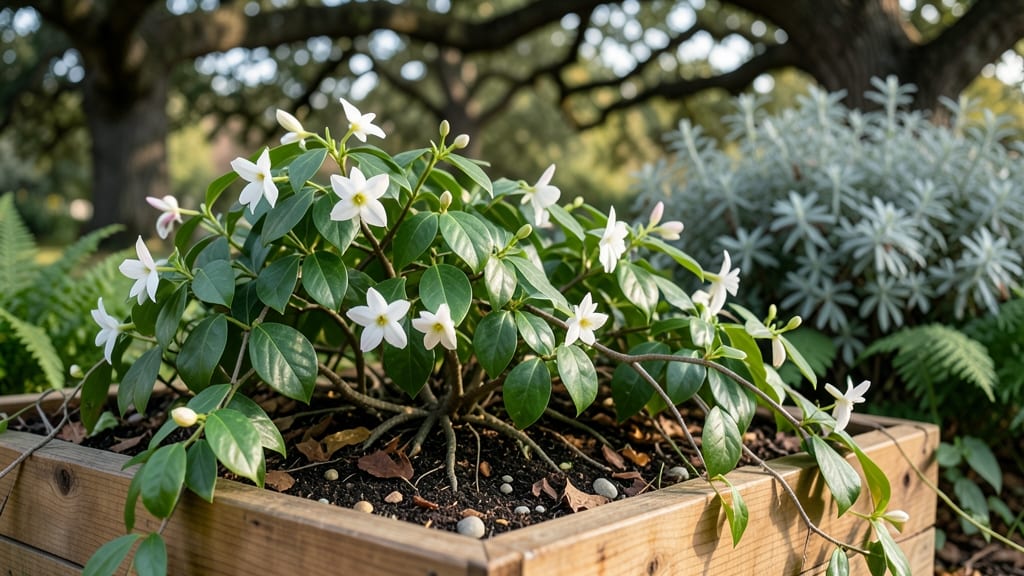
The star jasmine flowering season typically unfolds from late spring through summer 🌸, but the exact timing depends on your climate zone and care routine.
Picture this: warm evenings filled with the intoxicating fragrance of star jasmine, its delicate white flowers twinkling like tiny stars against the green foliage. If you’ve ever missed its bloom window or wondered how to coax it into flowering longer, you’re not alone—most gardeners face the same challenge.
In cooler zones like 6a, expect blooms to start in early June, while warmer regions like Florida or Southern California can enjoy star jasmine’s show as early as April.
The key to extending that fragrant display? Pruning, soil nutrition, and smart watering—all of which I’ll break down to help you maximize your vine’s flowering potential.
From pruning tips to fertilizer schedules, you’ll discover how to turn your star jasmine into a year-round fragrant showstopper, no matter where you live.
Star jasmine flowering season by USDA climate zones: exact timing & duration
Understanding your USDA climate zone is key to predicting when your star jasmine (Trachelospermum jasminoides) will burst into bloom.
In Zone 7, for example, you’ll typically see flowers arrive in late spring (May-June), while Zone 11 gardens often enjoy year-round blooms with peak intensity in fall and winter.
These differences stem from temperature triggers—star jasmine needs consistent warmth to flower, but extreme heat can delay blooms in tropical zones.
Regional variations also play a role. In Southern California (Zone 9-10), star jasmine may bloom twice yearly—once in spring and again in fall—while Florida’s humid climate (Zone 10-11) can stretch blooms into winter.
Even within the same zone, microclimates (like coastal vs. inland areas) can shift bloom timing by 2-4 weeks. For instance, San Diego’s coastal breeze often advances blooms by 3-4 weeks compared to inland desert regions.
Here’s a quick reference for average bloom durations across zones: Zone 7 enjoys 6-8 weeks of flowers, Zone 9 stretches blooms to 10-12 weeks, and Zone 11 may have continuous blooms with shorter breaks.
Early varieties (like ‘Little Gem’) tend to bloom 2-3 weeks earlier than standard types, while late varieties (like ‘Variegatum’) may delay until July-August in cooler zones.
Temperature fluctuations can drastically alter bloom timing. For example, a heatwave above 95°F in Zone 9 might cause star jasmine to pause flowering until temperatures drop, while a cold snap below 40°F in Zone 7 can delay blooms until July.
To mitigate this, mulch around the base in spring to stabilize soil temps and water deeply during heatwaves to reduce stress.
If you’re in Zone 7-8 and want to advance blooms, plant early varieties near a south-facing wall to capture extra warmth. In Zone 10-11, late varieties thrive with afternoon shade to prevent heat stress.
Container growers in Zone 9 can move pots to shadier spots during peak summer to encourage fall reblooming.
One common misconception is that star jasmine only blooms once per year. In reality, well-cared-for vines in Zones 9-11 can produce two distinct flushes: one in spring and another in fall.
The key is light pruning after each bloom cycle to remove spent flowers and encourage new growth. For instance, after the spring bloom in Zone 8, trim back 1/3 of the vine to redirect energy toward fall flowers.
For container-grown star jasmine, bloom timing shifts slightly due to root restriction. Pots in Zone 9 may bloom 2-3 weeks later than in-ground plants because roots struggle to regulate temperature. To compensate, use larger containers (15+ gallons) and apply slow-release fertilizer in early spring to jumpstart growth.
In Zone 11, containers need extra winter protection (like burlap wraps) to prevent cold-induced dormancy.
Monitor your star jasmine’s
How to extend star jasmine’s blooming season: pruning, fertilizing & care tips
To extend your star jasmine’s flowering season, start with pruning for continuous blooms. The key is to prune right after the first flush of flowers in late spring—this encourages new growth that will produce more flowers later in the season.
Avoid heavy pruning in fall, as this can reduce next year’s blooms.
Your soil nutrition plays a critical role too. Star jasmine thrives with a balanced fertilizer (5-10-10 NPK) applied every 4-6 weeks during spring and summer. Organic amendments like composted manure or worm castings also boost flowering by improving soil structure and microbial activity.
Here’s how to maximize your star jasmine’s blooms with proven strategies:
- 🌱 Prune after blooming: Trim back 1/3 of new growth in late spring to encourage second flush of flowers by summer.
- 💧 Water deeply weekly: Keep soil consistently moist (not soggy) to prevent stress-induced dormancy that shortens blooming.
- 🌿 Use phosphorus-rich fertilizer: A 5-10-10 NPK ratio promotes flower production—apply in spring and summer only.
- ☀️ Adjust light exposure: For container-grown plants, move to bright indirect light (east-facing window) to prevent early dormancy.
- ✂️ Avoid fall pruning: Prune only to remove dead wood in late winter—never cut back hard in fall.
For container-grown star jasmine, light exposure becomes even more critical. Place your pot near an east-facing window to provide 4-6 hours of morning sun—this mimics its natural partial-shade preference while preventing afternoon heat stress that can stunt blooms.
One common mistake is overwatering, which leads to root rot and fewer flowers. Instead, water deeply once weekly during the growing season, letting the top 1-2 inches of soil dry between waterings. In hotter climates (Zones 9-11), increase frequency to every 5-7 days.
With these adjustments, your star jasmine can bloom continuously from spring through early fall, turning your garden into a fragrant oasis for months. The secret? Prune strategically, feed smartly, and watch the light—your vine will reward you with a longer, more abundant display.