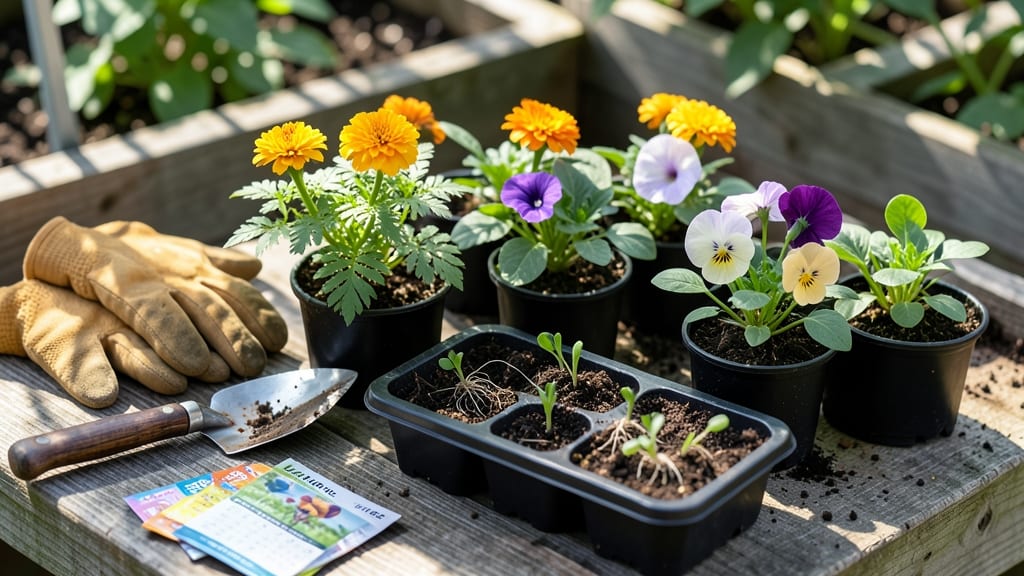
You can start planting flowers as early as 6-8 weeks before your last frost date — that’s the magic window for most varieties to bloom by summer.
Timing is everything in gardening—plant your flowers too early, and frost will kill them; too late, and they’ll struggle to bloom. But with this month-by-month guide, you’ll know exactly when to start planting flowers in your climate zone for a vibrant, thriving garden.
Whether you’re growing annuals for summer color or perennials that return year after year, the right timing ensures strong roots and healthy blooms. I’ll break down when to plant by USDA zone, how to prep your soil, and even how to cheat the season with early starts.
Ready to transform your garden? Let’s dive into the best planting schedule for your region, so you can enjoy flowers from spring through fall without the guesswork.
Best Time to Plant in General
Spring (after last frost) or Fall (6-8 weeks before first frost)
Prepare soil with compost and ensure good drainage before planting.
Best flower planting times by USDA climate zones (with frost date guide)
Getting your flowers in the ground at the right time means the difference between a showstopping garden and a sad, struggling one. Your USDA climate zone determines when to plant, but even within zones, microclimates (like urban heat islands or high-altitude areas) can shift your timing by weeks.
Let’s break down the best planting windows for annuals, perennials, and bulbs across zones 3–10, plus how to adjust for your local frost dates.
First, know your last average frost date—this is your golden rule. For example, in Zone 5, the last frost is typically around May 15, while in Zone 9, you might not have frost at all.
Use the USDA Plant Hardiness Zone Map to find your zone, then check local weather records for precise frost dates. Bulbs like tulips often need to be planted in fall (6–8 weeks before frost), while annuals like marigolds thrive when planted after your last frost.
Here’s a quick reference for when to plant flowers based on your zone, including adjustments for high-altitude areas (which can be 1–2 zones colder) and urban microclimates (which may warm up faster).
| USDA Zone |
Last Frost Date |
Best Time to Plant Annuals |
Best Time for Bulbs |
Perennial Planting Window |
Microclimate Adjustments |
| Zone 3 (-40°F to -30°F) |
Mid-May |
After May 20 (or start indoors in March) |
Fall (Sept 1–Oct 15) |
Early spring (April) or fall (Sept) |
High-altitude? Plant 2–3 weeks later. |
| Zone 4 (-30°F to -20°F) |
Early May |
After May 10 (or start indoors in April) |
Fall (Sept 15–Oct 1) |
Early spring (April) or fall (Sept–Oct) |
Urban areas? Plant 1 week earlier. |
| Zone 5 (-20°F to -10°F) |
Mid-May |
After May 15 (or start indoors in March) |
Fall (Oct 1–Nov 1) |
Spring (April–May) or fall (Sept–Oct) |
High-altitude? Add row cover for early starts. |
| Zone 6 (-10°F to 0°F) |
Late April |
After April 30 (or start indoors in Feb) |
Fall (Oct 15–Nov 15) |
Spring (March–April) or fall (Sept–Oct) |
Southern exposure? Plant 2 weeks earlier. |
| Zone 7 (0°F to 10°F) |
Mid-April |
After April 15 (or start indoors in Jan) |
Fall (Nov 1–Dec 1) |
Spring (Feb–March) or fall (Oct–Nov) |
Humid climates? Space plants wider to prevent disease. |
| Zone 8 (10°F to 20°F) |
Late March |
After March 15 (or start indoors in Dec) |
How to extend your flower planting season (cold frames, greenhouses & succession planting)
If you live in a short-season climate, you don’t have to miss out on vibrant blooms. With the right strategies, you can extend your flower planting season by weeks—or even months.
I’ve used cold frames, greenhouses, and succession planting to keep my garden bursting with color from early spring to late fall, even in USDA Zone 5 where frost is a real threat.
One of my favorite tricks is starting seeds indoors 8-10 weeks before the last frost date. This gives delicate varieties like petunias and geraniums a head start, so they’re ready to transplant outdoors as soon as the soil warms up.
For hardier flowers like pansies and snapdragons, I plant them directly in the garden 4-6 weeks before the last frost—they thrive in cooler temperatures and can handle light frosts.
5 Ways to Extend Your Flower Season
- 1. Start seeds indoors 8-10 weeks before last frost for heat-loving flowers like marigolds and zinnias.
- 2. Use cold frames to protect early plantings of pansies and violas from late frosts (adds 2-4 weeks of growing time).
- 3. Choose heat-tolerant varieties like portulaca and lantana for late-season color in full sun.
- 4. Practice succession planting by sowing fast-growing annuals every 2-3 weeks (e.g., bachelor’s buttons and cosmos).
- 5. Extend fall blooms with mums and asters, planted 6-8 weeks before first frost for winter interest.
For late-season extensions, I rely on succession planting. Instead of planting all my annuals at once, I stagger them in 2-3 week intervals. This keeps my garden blooming continuously—when the first batch of cosmos starts to fade, the second planting is just coming into bloom.
It’s a game-changer for short-season gardens!
Greenhouses and cold frames are also my secret weapons. A simple hoop house with row cover can push your planting window by 3-4 weeks in spring and fall. I’ve even grown tender perennials like cannas in containers that I move into the greenhouse before frost.
The key is monitoring soil temperatures—most flowers need 50°F+ soil to germinate properly.
Don’t overlook heat-tolerant annuals for late summer and fall. Varieties like celosia and verbena thrive in 90°F+ temperatures and can keep blooming until the first hard frost. Pair them with drought-resistant perennials like black-eyed Susans for a low-maintenance, long-lasting display.
With these strategies, you can turn your garden into a year-round blooming oasis, even in challenging climates. The trick is planning ahead and choosing the right tools for your space—whether it’s a full greenhouse or just a few cold frames. Happy planting! 🌸
★★★★★4.8(3 reviews)
|