
Flowers
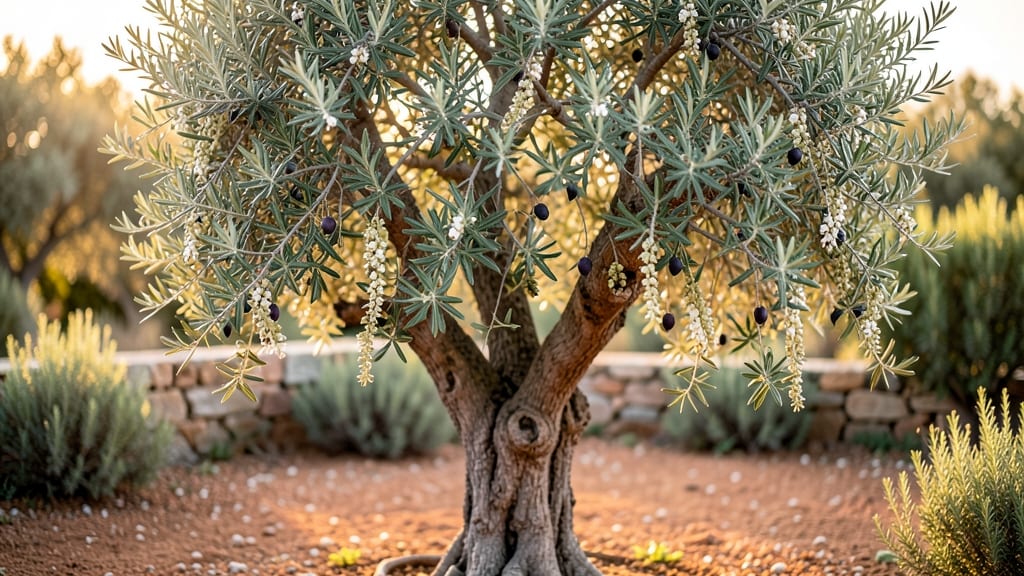
Olives flower in late spring, typically between April and June, when your tree is mature enough and conditions are just right.
Did you know olive trees can take years to flower—and timing depends entirely on their variety and climate? Understanding these factors is key to maximizing your harvest, whether you're a Mediterranean grower or a backyard gardener in a cooler zone.
For example, the Arbequina variety often blooms earlier, while Manzanillo may wait until June. Even within the same region, a young tree might skip flowering entirely until it’s at least three to five years old and well-established.
In this guide, I’ll break down the exact months by variety, how climate zones shift the schedule, and simple steps to encourage blooms—so you can predict (and even nudge) your tree’s flowering season for a better olive harvest.
Olive flowering timing by variety: months & key differences
Understanding when your olive tree flowers is crucial for predicting fruit production. Most olive varieties bloom in late winter or early spring, but exact timing varies by genetics and climate. For example, Arbequina olives often flower earlier than Manzanillo olives, sometimes by as many as 4-6 weeks.
These differences stem from their Mediterranean origins, where temperature fluctuations and day length trigger blooms.
The flowering process begins with tiny, white or pale green flowers that appear in clusters. These flowers are self-pollinating but benefit from cross-pollination for better fruit set.
If you're growing olives in cooler climates (USDA Zone 7-8), expect flowering to shift slightly later—often April instead of March—due to slower spring warming.
Genetics play a major role in flowering timing. Some varieties like Frantoio are known as late bloomers, while others like Kalamata may flower 2-3 weeks earlier.
Even within the same variety, young trees (under 5 years) may delay flowering until they reach maturity, which can take 3-7 years depending on growing conditions.
If you're growing olives in USDA Zone 9-10, expect flowering to align more closely with the Mediterranean calendar, typically January-February. However, in Zone 7 or cooler, flowering may stretch into May due to slower spring warming.
This delay can reduce fruit set if temperatures remain below 50°F (10°C) during bloom.
Another critical factor is tree maturity. Young olive trees often skip flowering entirely until they're 3-5 years old, even if conditions are ideal. This is because olives prioritize root and branch development before investing energy in reproduction.
Once established, consistent pruning and balanced fertilization can encourage earlier and more abundant flowering.
Did you know that temperature swings during bloom can actually improve fruit set? Olive flowers require daytime temperatures above 60°F (15°C) but cooler nights (50-55°F/10-13°C) to trigger pollination.
In hot climates (Zone 10+), flowering may occur twice a year, with a secondary bloom in late summer, though fruit from these later blooms is often smaller.
For home gardeners in cooler climates, consider choosing early-blooming varieties like Arbequina or Kalamata to maximize your chances of successful fruit production. These varieties are also more cold-tolerant, making them ideal for Zone 7-8 gardens.
Always monitor your tree for flower clusters, which appear as small, fuzzy buds before opening.
Pro tip: If your olive tree flowers but produces no fruit, it may be due to poor pollination or environmental stress. In this case, hand-pollinate flowers with a soft brush or consider planting a second variety nearby to ensure cross-pollination.
Also, ensure your tree receives adequate sunlight (6+ hours daily) and well-draining soil to support healthy blooms.
Finally, remember that flowering doesn’t guarantee fruit. Olive trees are prone to fruit drop if conditions aren’t ideal during bloom.
By understanding your variety’s specific flowering window and climate needs, you can take proactive steps—like pruning in late winter or adjusting irrigation—to encourage stronger blooms and a better harvest.
Climate zones & how they affect olive tree flowering
Olive trees thrive in Mediterranean climates with warm, dry summers and mild winters, but their flowering timing shifts dramatically across USDA hardiness zones 5-10.
In zones 8-10, where frost is rare, olives often bloom in late spring (April-June), while colder zones (like zone 7) may see delayed blooms until May-July.
Temperature fluctuations are the key trigger—your tree needs consistent warmth (above 60°F) for at least 4-6 weeks before flowering. For example, in Southern California (zone 9b), Arbequina olives may flower as early as March, while in Georgia (zone 8a), the same variety might wait until May.
In Mediterranean climates (zones 9-10), olive trees often flower in April-May after a mild winter. The Arbequina variety, for instance, may bloom as early as March in Southern California, while Manzanillo trees in Arizona (zone 9a) typically wait until May.
Cooler zones like Georgia (zone 8a) or North Carolina (zone 7b) experience delayed flowering due to slower spring warming. For example, a Frantoio olive in zone 8 might not flower until June, and young trees may skip flowering entirely if they haven’t reached 3-5 years of age.
Even within the same zone, microclimates play a role. A Manzanillo tree in Tucson (zone 9a) near a desert wash may bloom earlier than one planted in a cooler valley just 20 miles away.
To encourage consistent flowering, I recommend selecting drought-tolerant varieties like Arbequina or Kalamata and providing well-draining soil to mimic Mediterranean conditions.
If you’re in a temperate zone (7-8), protect young trees with burlap wraps during late frosts (after March 15) to prevent flower damage. In warmer zones (9-10), ensure your tree gets full sun (6+ hours daily)excess moisture can delay flowering by stressing the tree.
Monitor your tree’s leaf color and branch growth in early spring—healthy, dark green leaves signal readiness for flowering. If your tree is mature but hasn’t bloomed, it may need balanced fertilizer (5-10-10 NPK) in early spring to boost energy for blooms.