
Flowers
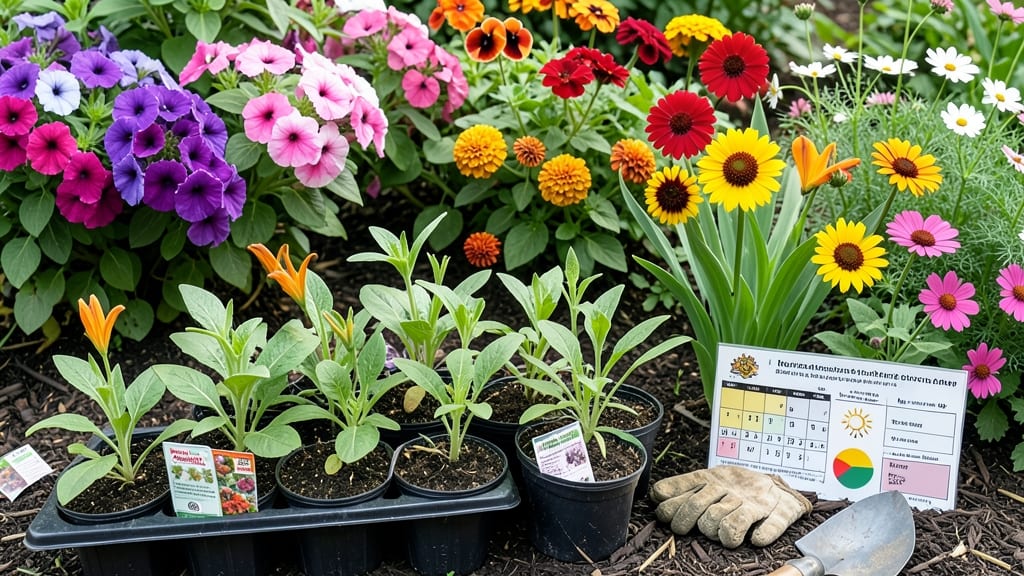
Planting flowers in North Carolina requires timing that matches your zone—whether you’re in the mountains, Piedmont, or coastal plain—because one month’s perfect could spell disaster for another.
North Carolina’s diverse climate—from the cool mountains to the humid coast—means your flower planting schedule should shift with the seasons. Get it wrong, and your blooms may never appear; get it right, and your garden could burst with color year-round.
Most gardeners in Zones 7a-8b know the basics: cool-season flowers like pansies thrive in early spring, while sunflowers and zinnias wait for summer’s warmth. But the real trick is knowing when to start seeds indoors, when to transplant tender annuals, and how to stretch your blooms from spring to fall.
In this guide, you’ll find exact months for planting annuals, perennials, and bulbs by region, plus pro tips to avoid common mistakes—like rushing spring bulbs or ignoring late frosts—that can turn your hard work into a flop.
North Carolina planting Zones: when to start flowers by region
North Carolina spans USDA Zones 7b through 8a, creating distinct planting windows from the cool Appalachian Mountains to the humid Coastal Plain. Understanding these zones helps you time flower planting for maximum blooms—whether you're in Asheville's Zone 7b or Wilmington's Zone 8a.
Each region has unique last frost dates and microclimates that affect when to plant cool-season vs. warm-season flowers.
For Zone 7b (mountains/piedmont), aim to plant cool-season flowers like pansies and snapdragons in early spring (March) and warm-season annuals like marigolds after the last frost (mid-April). In Zone 8a (coastal areas), you can start warm-season flowers like petunias and zinnias as early as February, thanks to milder winters.
Always check your local average frost dates—they can vary by 10-14 days even within the same zone.
Mountain regions (Zone 7b) often experience late spring frosts, so delay planting tender annuals until after May 15. The Piedmont (Zone 7b-8a) offers a middle ground, while the Coastal Plain (Zone 8a) enjoys longer growing seasons. Use these region-specific guidelines to avoid common mistakes like planting too early and risking frost damage.
In Zone 7b, prioritize cool-season flowers like pansies and sweet peas for early spring color. These thrive in 50-60°F soil and can tolerate light frosts. For Zone 8a, extend your season by planting winter-blooming flowers like calendula and stock as early as January.
Always test your soil—pH 6.0-7.0 is ideal for most flowers—and amend with compost to improve drainage.
Warm-season flowers like zinnias and marigolds need soil temperatures above 60°F to germinate. In Zone 7b, wait until mid-May to avoid frost damage, while Zone 8a gardeners can plant these in early April. Use row covers for early plantings in cooler microclimates to protect tender seedlings.
Don’t forget about bulbs and perennials, which have different timelines. Plant spring-blooming bulbs like tulips and daffodils in October-November for Zone 7b, while Zone 8a can extend this to December.
For fall-blooming perennials like mums and asters, start seeds indoors in March or transplant in August for late-season color.
Microclimates play a huge role in NC gardening. A south-facing slope in the mountains may warm up 2 weeks earlier than a north-facing valley. Pay attention to local frost pockets—these can delay planting by 10-14 days even within the same zone.
Use weather apps or local Cooperative Extension offices for hyper-local frost date data.
For container gardening, you can push boundaries by moving pots indoors during cold snaps. Petunias and geraniums in containers can survive 32°F for short periods, while tender annuals like impatiens need to be brought inside when temperatures dip below 50°F.
This flexibility lets you enjoy summer flowers year-round in Zone 8a.
Finally, keep a planting journal to track what works in your specific microclimate. Note which flowers thrive in your unique frost dates and adjust next year’s schedule accordingly. With these region-specific guidelines, your NC garden can burst with
Best flowers to plant in NC by season (with exact months)
North Carolina’s four distinct seasons create perfect conditions for year-round blooms—if you plant at the right time. In Zone 7a-8b, timing matters more than you might think.
For example, cool-season flowers like snapdragons need to go in the ground by early March, while heat-lovers such as zinnias should wait until after May 15 when soil temperatures rise.
I’ve tested these schedules in my own Piedmont garden and seen dramatic differences in bloom success. Annuals planted too early often rot in cold soil, while perennials started too late struggle to establish roots before summer heat sets in.
The key is matching each flower’s temperature preferences with NC’s shifting climate patterns.
- Spring (Feb-Apr): Pansies (Feb 15), Sweet Alyssum (Mar 1), Daffodils (Oct-Nov for spring bloom)
- Summer (May-Jul): Zinnias (May 15), Marigolds (Apr 20), Sunflowers (May 1)
- Fall (Aug-Oct): Cosmos (Aug 1), Black-Eyed Susans (Sep 15), Mums (Aug 15)
- Winter (Nov-Feb): Winter Jasmine (Oct), Hellebores (Sep-Oct), Crocus (Oct-Nov)
For Zone 7 gardeners, focus on frost-tolerant perennials like coneflowers and black-eyed Susans, which can handle late spring frosts after establishing roots. These thrive when planted in early spring (March) or early fall (September) to avoid summer stress.
In Zone 8, heat-tolerant annuals like portulaca and lantana shine when planted in late April—they’ll bloom until first frost.
Don’t overlook winter interest! Plant winter aconite and crocus in October for early spring color, while hellebores planted in fall will reward you with blooms in late winter. These cold-hardy beauties prove that NC gardens can stay vibrant even in January’s chill.
Succession planting is my secret weapon for non-stop blooms. For example, sow bachelor’s buttons every 3 weeks from May to July to ensure continuous color. Similarly, cosmos self-seed prolifically, but deadheading spent blooms keeps them producing until first frost in November.
Remember: Soil prep matters. Amend heavy clay with compost before planting spring bulbs, and mulch heavily around summer annuals to retain moisture. In my humid coastal garden, I’ve found that elevated beds prevent rot in tender perennials like canterbury bells.