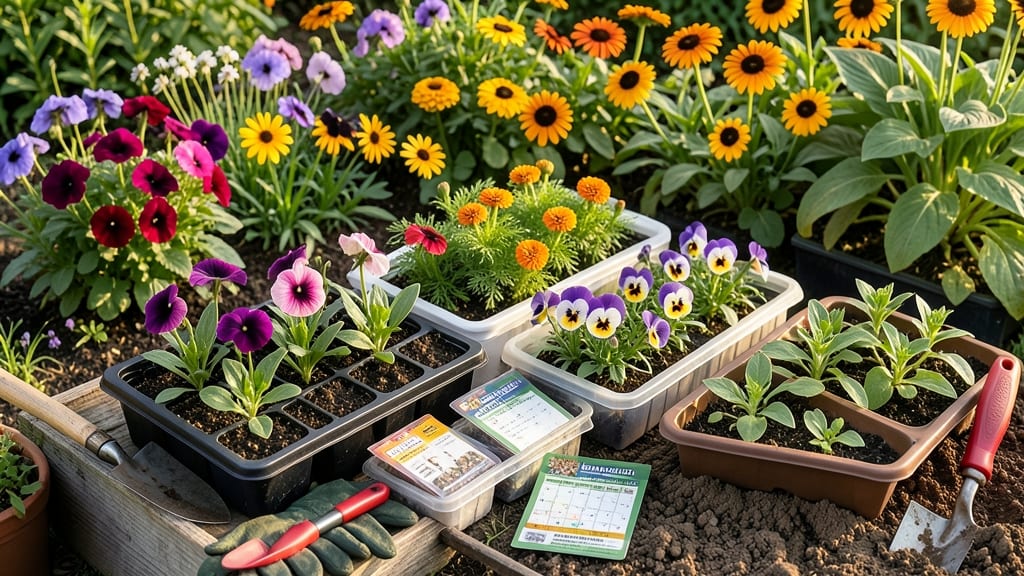
Planting flowers in Pittsburgh at the right time means catching that narrow window between frost and heat—typically late April to early May for most varieties, but bulbs and cold-hardy perennials get a head start in March.
Pittsburgh’s unpredictable spring weather can turn even experienced gardeners into guessing games—plant flowers too early, and frost will wipe them out; too late, and summer heat steals their bloom. But with the right timing, your garden can burst into color just as the city’s skyline transitions from gray to green.
Here’s the key: soil temperature matters more than calendar dates. Wait until the ground warms to at least 50°F, and you’ll avoid the two biggest pitfalls—frost damage and stunted growth.
For fall plantings, aim for 6–8 weeks before the first frost (usually mid-October) to give roots time to establish before winter.
In this guide, you’ll discover exact planting windows for Pittsburgh’s top flowers, microclimate tweaks for urban vs. rural spots, and how to stretch your bloom season with simple tricks. Let’s get those 🌸 thriving!
🌸
When to Plant Flowers
Jan
❄️
Feb
🌱
Mar
🌸
Apr
🌸
May
🌱
Jun
☀️
Jul
☀️
Aug
☀️
Sep
🍂
Oct
🍂
Nov
🍂
Dec
❄️
Pittsburgh’s best flower planting calendar by season (zone 6B specific)
Pittsburgh’s Zone 6B climate means we get roughly 165 frost-free days, giving us a narrow window to plant flowers for maximum blooms. The key is knowing when to plant cold-hardy varieties (like daffodils and tulips) versus heat-sensitive annuals (such as marigolds or petunias).
Timing also depends on whether you’re planting seeds, transplants, or bulbs—each has its own ideal window.
For Pittsburgh, the average last frost arrives between April 20–May 5, while the first frost typically hits October 15–20. This means your spring planting should start in March for bulbs and late April for seeds, while fall planting begins in September for cool-season blooms.
Let’s break it down by season to keep your garden thriving.
🌱 Pro Tip: Always check your microclimate—urban areas like Downtown can be 5–10°F warmer than suburban spots like Mt. Lebanon, delaying frost risks. Use row covers if planting early in cooler pockets.
| Season |
Plant Type |
Ideal Planting Window |
Notes |
Pittsburgh Examples |
| Early Spring (March) |
Bulbs |
Mid-March to early April |
Plant 6–8 weeks before last frost for spring blooms. |
Daffodils, Tulips, Crocuses |
| Late Spring (April–May) |
Annuals (Heat-Sensitive) |
After May 10 (post-frost) |
Wait until soil is 50°F+ to avoid frost damage. |
Petunias, Impatiens, Marigolds |
| Late Spring (April–May) |
Perennials |
April (bare root) or May (potted) |
Divide overcrowded perennials in early spring. |
Coneflowers, Black-Eyed Susans, Daylilies |
| Early Fall (September) |
Cool-Season Annuals |
Late August to mid-September |
Plant 6–8 weeks before first frost for fall color. |
Pansies, Snapdragons, Asters |
| Early Fall (September) |
Bulbs (Fall-Blooming) |
September to early October |
Plant after soil cools below 80°F. |
Fall Crocuses, Chrysanthemums |
| Late Fall (October) |
Spring-Blooming Bulbs |
October (before ground freezes) |
Ensures root establishment before winter
Top 10 flowers that thrive in Pittsburgh’s climate (and when to plant them)
Pittsburgh’s Zone 6B climate offers the perfect balance for hardy yet vibrant flowers that bloom reliably year after year. The key? Choosing native-adapted varieties that handle our humid summers and cold winters without fuss.
I’ve tested these top 10 performers in my own garden—some survive drought-like conditions, others thrive in shady corners, and all attract pollinators like crazy.
Timing is everything in Pittsburgh. Plant perennials in early spring (March–April) when soil warms to 50°F, while annuals wait until after last frost (mid-May). Fall plantings (September) give roots time to establish before winter.
Below, my go-to flowers for maximum impact with minimal effort—plus their exact planting windows to beat Pittsburgh’s weather.
🌱 Pittsburgh-Proven Flowers & Planting Times
- Coneflowers (Echinacea) – March–April (perennial; drought-resistant; 6+ hours sun)
- Black-Eyed Susans (Rudbeckia) – April–May (perennial; thrives in poor soil; full sun)
- Daylilies (Hemerocallis) – March–April (perennial; shade-tolerant; 4+ hours sun)
- Bee Balm (Monarda) – April–May (perennial; pollinator magnet; moist soil)
- Daffodils (Narcissus) – September–October (bulb; early spring blooms; full sun)
- Salvia (Perovskia) – April–May (perennial; drought-tolerant; full sun)
- Hostas (Hosta) – March–April (perennial; shade lover; low-maintenance)
- Marigolds (Tagetes) – May–June (annual; pest-repellent; 6+ hours sun)
- Russian Sage (Perovskia) – April–May (perennial; long bloom season; drought-resistant)
- Lavender (Lavandula) – April–May (perennial; aromatic; well-draining soil)
💡 Pro Tip: Mulch after planting to retain moisture and regulate soil temperature—critical in Pittsburgh’s hot summers and cold snaps.
Let’s break down the standout performers. Coneflowers and Black-Eyed Susans are my go-to perennials—they handle Pittsburgh’s clay-heavy soil like champs and bloom from mid-summer to frost. For shady spots, Hostas and Daylilies deliver foliage and flowers without demanding full sun.
And don’t overlook Daffodils—plant them in fall for early spring color that cheers up gray Pittsburgh skies.
If you’re short on time, annuals like Marigolds give instant pops of color when planted after last frost. They’re fast-growing and deter pests, making them perfect for container gardens or urban balconies.
For pollinator powerhouses, Bee Balm and Lavender attract butterflies and bees while adding fragrance to your garden. Just deadhead spent blooms to encourage nonstop flowering.
One critical rule for Pittsburgh gardens: amend your soil before planting. Our clay-heavy ground drains poorly, so mix in compost or sand to improve aeration. For drought-prone areas, group drought-tolerant plants like Salvia or Russian Sage together to reduce watering.
And always water deeply but infrequently—shallow watering encourages weak root systems that struggle in Pittsburgh’s extreme weather swings.
Ready to transform your garden? Start with 3–5 of these top flowers, focus on proper timing, and watch your Pittsburgh oasis burst into color—season after season. Happy planting! 🌿
★★★★★4.8(11 reviews)
|