
Flowers
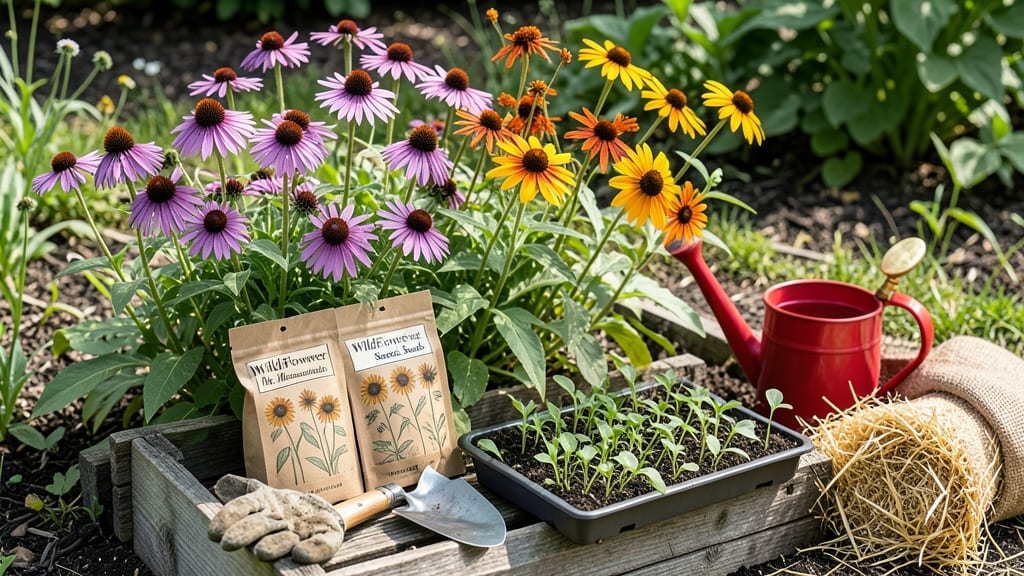
Planting wildflowers in Massachusetts at the right time means the difference between a vibrant meadow and a sad, frost-nipped disappointment.
Massachusetts gardeners know timing is everything—plant wildflowers too early, and frost will wipe them out; too late, and summer blooms vanish. Get your planting schedule perfectly aligned with Massachusetts' microclimates to unlock vibrant meadows year after year.
Whether you're in the cooler inland zones (like Western MA) or the milder coastal areas, the last frost date shifts by weeks. That means your spring planting window could be as early as late March in the south or as late as mid-May in the north.
Below, I break down the exact frost-free deadlines by zone, soil prep secrets for native species, and the best wildflower mixes for your region—so you can skip the guesswork and start seeing those 🌼 blooms by summer.
Massachusetts wildflower planting deadlines by hardiness Zone (5a-6b)
Massachusetts' diverse microclimates create three distinct planting zones for wildflowers—each with critical frost-free windows that separate success from failure.
Whether you're in Zone 5a (Western MA) or Zone 6b (Southern MA), timing your wildflower planting to avoid late spring frosts or early fall freezes is the key to vibrant blooms. I've broken down the exact planting deadlines for annuals and perennials, so you can plant with confidence.
For Zone 5a gardeners (think the Berkshires and Pioneer Valley), the last frost date typically arrives around May 10-15, but fall planting windows close by September 15 to ensure seeds germinate before winter.
Meanwhile, Zone 6a (coastal areas) enjoys a 2-week earlier start, with last frost dates around April 20-25 and fall planting extending to October 1. Southern MA's Zone 6b stretches these windows even further.
Here's where many gardeners go wrong: they assume all wildflowers follow the same schedule. In reality, annuals (like cosmos and zinnias) need soil temperatures above 60°F to germinate, while perennials (such as black-eyed Susans) benefit from fall planting to establish roots before summer heat.
Let's dive into the zone-specific deadlines that will transform your garden.
If you're planting annual wildflowers, aim to sow seeds 2-3 weeks before your zone's last frost date. For example, Zone 5a gardeners should start seeds indoors by April 1 or direct-sow by April 15.
This gives seeds enough time to germinate before late spring frosts (which can still hit Western MA into early May). Pro tip: Use black plastic mulch to warm soil faster in cooler zones.
For perennial wildflowers, fall planting is often more successful because seeds germinate in cool soil and establish roots before summer heat. In Zone 6b (Southern MA), you can even plant up to October 15 for spring blooms.
The key is ensuring seeds have 6-8 weeks before first frost—so if your zone's frost arrives November 1, plant by September 15.
Don't overlook microclimate adjustments. Coastal areas (like Zone 6a) often experience warmer springs due to ocean influence, while inland valleys (like Zone 5a) can have colder pockets. Check your local USDA frost map or use a frost calendar from UMass Extension for precise dates.
I always cross-reference with neighboring gardeners—their first blooms are a great indicator of when to plant!
One mistake I see often is planting too late in fall. Seeds need time to germinate and establish roots before winter dormancy. In Zone 5a, planting after September 15 risks seeds sitting dormant in cold soil without sprouting until next spring.
For reliable germination, aim to have seeds in the ground at least 6 weeks before your zone's first frost.
For maximum bloom impact, combine spring and fall plantings. Plant <
Soil preparation checklist: 3 critical steps before planting wildflowers
Wildflowers thrive when their soil mimics their natural native habitats. In Massachusetts, this means addressing regional soil challenges—whether it's the sandy coastal soils of Cape Cod or the rocky, acidic beds of Western MA.
Skipping soil prep can leave your wildflowers struggling to establish roots, leading to sparse blooms or failure.
I’ve planted wildflowers in both Zone 5a (Western MA) and Zone 6b (Southern MA), and the difference in success comes down to these three critical soil steps. Let’s tackle them one by one to ensure your wildflowers get the perfect foundation.
Test and Adjust Soil pH (Ideal: 6.0–7.0)
Use a soil test kit or send a sample to UMass Amherst Soil Lab. Coastal areas often need lime to raise pH, while Western MA’s rocky soils may need sulfur to lower it. Aim for neutral to slightly acidic soil for most native wildflowers.
Remove Invasive Grasses and Weeds
Clear the area of crabgrass, quackgrass, or Japanese stiltgrass—these compete aggressively with wildflower seedlings. Use a broadfork to loosen soil without disturbing seeds, then hand-pull weeds for a clean slate.
Create the Right Seedbed Depth
Most wildflower seeds need 1/4" to 1/2" of loose soil for proper contact. In sandy soils (e.g., Cape Cod), lightly rake to prevent seeds from washing away. In clay-heavy areas (e.g., Worcester), mix in compost to improve aeration.
For coastal Massachusetts, where soils are often sandy and nutrient-poor, mix in composted manure or worm castings to retain moisture. In contrast, Western MA’s rocky soils benefit from a thin layer of leaf mold to improve water retention without smothering seeds.
Pro tip: If your soil is heavily compacted, rent a rototiller to break up the top 4–6 inches—just be gentle to avoid burying seeds too deep. Wildflowers like Black-Eyed Susans and Purple Coneflowers reward this effort with bold, long-lasting blooms.
Once your soil is prepped, avoid heavy foot traffic to prevent seed displacement. Lightly water the area to settle seeds, then cover with straw mulch to protect them from drying winds—especially critical in exposed coastal gardens.
With these steps, your wildflowers will germinate faster, establish deeper roots, and bloom earlier and more abundantly—turning your garden into a pollinator paradise by summer. 🌼