
Planting
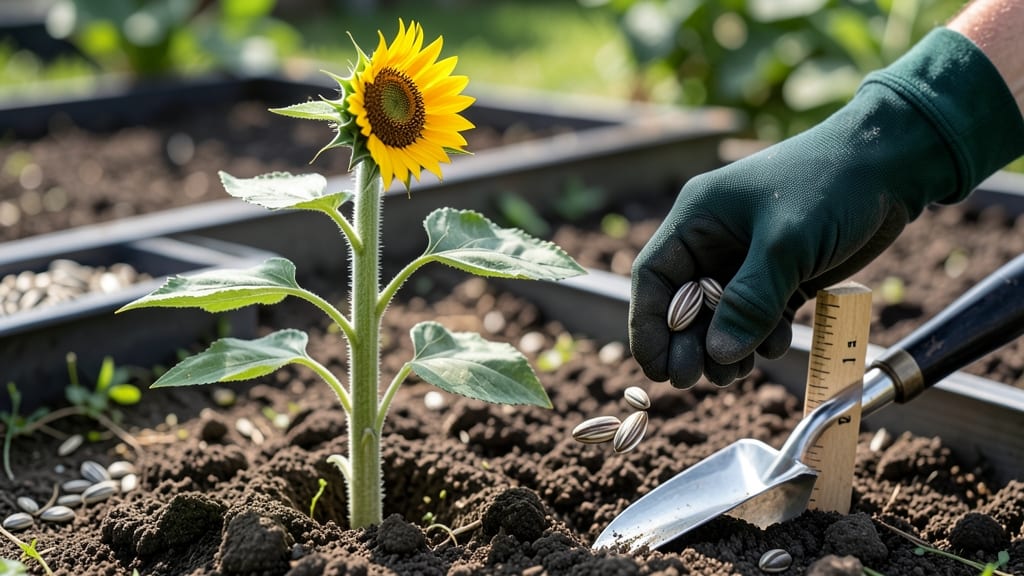
Planting sunflower seeds the right way means placing the pointy end up and the flat side down—this tiny detail makes all the difference between a towering 🌻 and a sad, stunted sprout.
Struggling to plant sunflower seeds the right way? Get it wrong, and you might end up with stunted growth—or worse, no flowers at all. The secret lies in understanding the seed’s orientation, and we’re breaking it down so you never guess again.
Sunflowers thrive in full sun and well-drained soil, but even the best conditions won’t help if the seed is planted upside down. A quick check before covering it with 1–2 inches of soil ensures strong roots and a sturdy stem.
In this guide, I’ll show you how to spot the pointy end, the perfect depth, and spacing tips to give your sunflowers the best start in USDA Zone 6a or warmer.


How to identify sunflower seed orientation: flat side down vs. pointy side up
Planting sunflower seeds the right way starts with understanding their unique anatomy. Most seeds have a pointy end and a flat side, but sunflower seeds are no exception.
The pointy end must face upward—this is where the radicle (root) emerges first. Planting them upside down can stunt growth or even kill the seed entirely.
Sunflower seeds have a distinctive oval shape with one side noticeably flatter than the other. The pointy end is often slightly tapered, while the flat side is smoother and wider.
Think of it like a tiny acorn—you’d never plant it with the flat side up, right? The same rule applies here.
Here’s the key: the pointy end contains the embryo root, which needs to grow downward into the soil. The flat side should rest against the soil to stabilize the seed.
If you’re still unsure, hold the seed between your fingers—the pointy end will naturally feel like it’s pointing upward when you mimic planting it.
Why orientation matters: Sunflowers rely on proper seed placement for efficient water absorption and root development. Planting them upside down forces the radicle to grow upward, leading to weak roots and poor nutrient uptake. This can result in stunted seedlings or even failed germination.
| Seed Feature | Correct Orientation | What Happens If Wrong? |
|---|---|---|
| Pointy End | Upward | Roots grow downward; healthy germination |
| Flat Side | Against soil | Seed stabilizes; prevents tipping |
| Incorrect Pointy End | Downward | Roots grow upward; weak or no germination |
| Incorrect Flat Side | Upward | Seed tips over; poor root penetration |
If you’re planting multiple seeds, use a small marker or toothpick to gently tap the soil around each seed. This helps keep them upright while the soil settles. For larger batches, try planting seeds in a shallow tray first to ensure they’re all oriented correctly before transferring to the garden.
A common mistake is assuming the smoothest side should face up. While the flat side is smoother, it’s not the pointy end.
To double-check, compare your seed to a reference image or hold it up to a light—you’ll see the pointy end is slightly darker due to the embryo’s location inside.
Sunflower seeds also have a natural curve when held correctly. The pointy end will feel slightly rounded at the tip, while the flat side is more straight-edged. This subtle difference is your best clue when seeds look identical at first glance.
Once you’ve mastered seed orientation, focus on soil depth. Plant sunflower seeds 1 inch deep with the pointy end facing up. Press the soil gently around the seed to secure it without compacting too tightly.
This ensures the seed stays in place while allowing room for the radicle to grow downward.
Remember, sunflowers are fast growers, and proper planting sets the stage for strong stems and vibrant blooms. Take the extra second to orient each seed correctly—your future sunflowers will thank you with taller stems and bigger flowers.
For extra confidence, practice with a few seeds in a small pot before planting in your garden. This hands-on approach helps you recognize the pointy end and flat side more easily, so you’ll be a pro by the time you’re ready to plant your full sunflower patch.
Step-by-step planting process for sunflowers: depth, spacing, and soil tips
Now that you’ve identified the pointy end of your sunflower seed, it’s time to plant it correctly. The right depth and spacing ensure strong roots and room to grow. I’ve planted sunflowers in everything from raised beds to containers, and these steps work every time.
Sunflowers need well-draining soil rich in organic matter. Before planting, mix in compost or aged manure to give your seeds a nutrient boost. The soil temperature should be at least 50°F—cold soil can delay germination for weeks.
How to Plant Sunflower Seeds Correctly
- Step 1: Place the seed in the hole with the pointy end up and the flat side down. This ensures the root grows downward naturally.
- Step 2: Cover the seed with 1–2 inches of soil. Press gently to remove air pockets but avoid compacting the soil too much.
- Step 3: Space seeds 6–12 inches apart in rows 18–24 inches apart for dwarf varieties or 24–36 inches apart for standard sunflowers.
- Step 4: Water gently but thoroughly to settle the soil around the seed. Keep the soil moist but not soggy—overwatering can cause rot.
- Step 5: Place a mulch layer (straw or shredded leaves) around the base to retain moisture and suppress weeds.
After planting, maintain consistent moisture until germination, which typically takes 7–14 days in warm soil. Thin seedlings to the strongest one per spot if they grow too close—this prevents competition for nutrients.
Sunflowers thrive in full sun, so choose a location with at least 6–8 hours of sunlight daily. If your garden gets partial shade, opt for shorter varieties like ‘Teddy Bear’ or ‘Moulin Rouge’ to avoid leggy growth.
Once your sunflowers sprout, watch for yellowing leaves or wilting—signs of overwatering or poor drainage. Adjust your watering schedule to deep soaks once or twice a week once established.