
Flowers
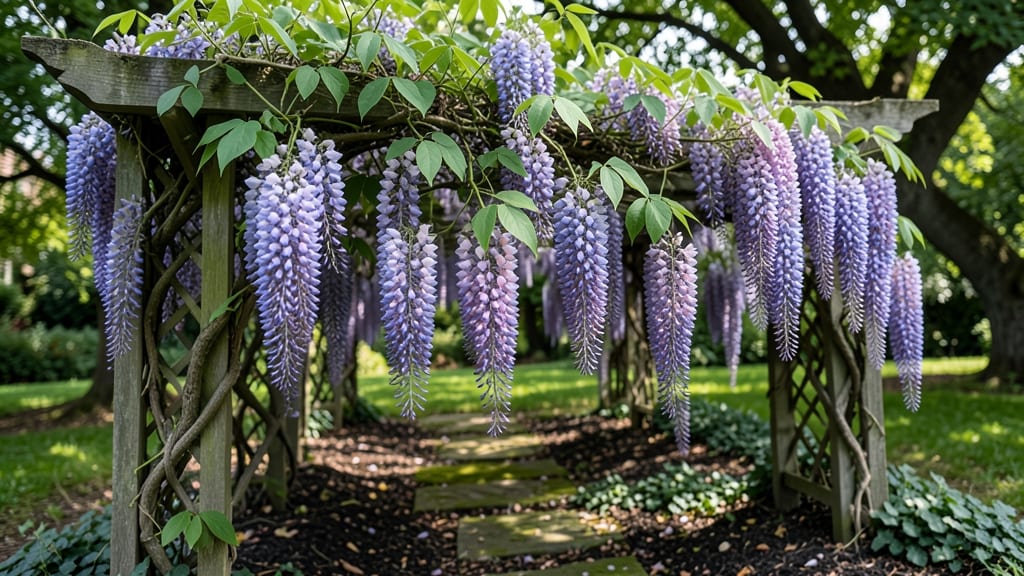
The wisteria flower time you’ve been waiting for arrives with stunning precision in late spring to early summer 🌸 — but the exact month depends on your zone, variety, and a few key care tricks.
Picture this: your wisteria’s fragrant cascades transforming your yard into a dreamy springtime scene. Yet, if you’re in Zone 6a, those blooms might peek out in early May, while southern gardeners could see them as early as April. The difference? Climate, sunlight, and even last year’s pruning choices.
Below, I’ll break down the exact months wisteria flowers by region, how to predict your plant’s personal bloom schedule, and the simple adjustments that extend those vibrant clusters for weeks longer.
Whether you’re dealing with a late starter or a wisteria that refuses to bloom at all, you’ll leave here knowing how to coax out the most dramatic display possible — and when to expect it.
Wisteria flower time by USDA hardiness zone: exact months for peak blooms
Wisteria’s dramatic fragrant blooms transform any garden into a dreamy springtime scene—but their timing varies wildly by USDA zone and variety.
Whether you’re growing Japanese wisteria (Wisteria floribunda), Chinese wisteria (Wisteria sinensis), or the native American wisteria (Wisteria frutescens), understanding your local bloom window helps you plan pruning, fertilizing, and even companion plantings for maximum impact.
Climate plays a huge role: Southern zones (8-9) often see blooms as early as March, while northern zones (5-6) may wait until May or June. Even within the same zone, microclimates—like urban heat islands or coastal breezes—can shift bloom times by weeks.
Let’s break down the exact months for each zone, plus how to adjust care for earlier or more abundant flowers.