
Watering
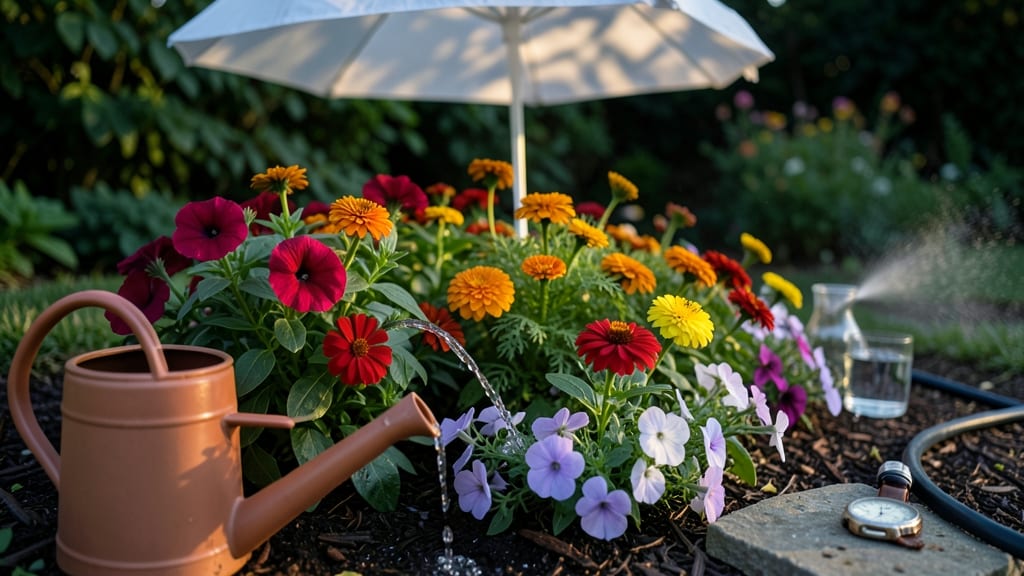
The best time to water outdoor flowers is early morning—and it could be the game-changer your garden has been missing.
Struggling to keep your 🌸 thriving despite your best efforts? The secret to lush, vibrant blooms might be as simple as adjusting your watering schedule. Science shows that morning watering reduces evaporation and fungal risks, giving your plants the perfect start to the day.
You might think evening watering is better, but that’s when moisture lingers on leaves, inviting disease. Plus, midday heat just wastes water before it even reaches the roots. Timing isn’t just about when you water—it’s about how your flowers absorb and use that moisture.
In this guide, I’ll break down the ideal morning schedule, how to adjust for drought or rain, and why this small shift can transform your garden’s health—without extra effort.
Why early morning watering maximizes flower health and growth
If you’ve ever wondered why your roses or petunias look droopy by midday despite regular watering, the answer might lie in your watering schedule. Science shows that early morning watering (between 6 AM and 10 AM) gives your flowers the competitive edge they need to thrive.
This timing isn’t just a gardening myth—it’s rooted in how plants absorb moisture, how sunlight interacts with water, and how humidity affects fungal growth. Let’s break down why this simple habit can transform your garden’s health overnight.
First, consider evaporation rates. Watering in the early morning means moisture has 6-8 hours to soak into the soil before the sun peaks. This reduces water waste by up to 30% compared to midday or evening watering.
For example, a sunflower planted in USDA Zone 6a will absorb water more efficiently when hydrated before the heat of the day kicks in. The same logic applies to hydrangeas or lavender, which both benefit from deep hydration before their leaves dry out.
Next, think about photosynthesis. When you water in the morning, the moisture in the soil aligns perfectly with the plant’s natural transpiration cycle. As the sun rises, roots actively draw up water, which the plant then uses to fuel leaf expansion and flower production.
This process is far more efficient than watering at night, when plants are less active and moisture lingers on foliage, creating a fungal risk. Even succulents, which need less water, benefit from morning hydration because their thick leaves store moisture better when hydrated early.
Another critical factor is disease prevention. Wet foliage at night creates the perfect conditions for powdery mildew and black spot in flowers like peonies or geraniums. Early morning watering ensures leaves dry quickly, reducing humidity around the plant.
In humid climates, this can cut fungal issues by 50%. Meanwhile, in arid regions, morning watering helps soil retain moisture longer, reducing the need for frequent irrigation.
| Factor | Early Morning Watering Benefit | Climate Adjustment |
|---|---|---|
| Evaporation Loss | Reduces by 30% vs. midday | Arid: Water 1 hour before sunrise |
| Photosynthesis Efficiency | Maximizes root absorption for blooms | Humid: Add mulch to retain moisture |
| Fungal Prevention | Leaves dry 4-6 hours faster | Rainy: Water 2 hours after rain |
| Root Hydration | Encourages deep root growth | Cold: Water after frost if needed |
| Pest Deterrence | Reduces slug/snail activity at night | Wind: Water before breeze to avoid drift |
Let’s talk about root development. When you water in the morning, the soil stays moist long enough for roots to extend deeper into the earth. This is especially vital for perennial flowers like daylilies or coneflowers, which need strong root systems to survive multiple seasons.
Shallow watering—like sprinkling in the evening—often leads to surface roots, making plants more vulnerable to drought and temperature fluctuations.
Climate plays a huge role in fine-tuning your morning watering routine.
In arid regions, like USDA Zone 7b, watering before 7 AM ensures minimal evaporation, while in humid zones, like Zone 8a, you might need to water slightly later (around 8 AM) to avoid prolonged soil saturation.
For tropical flowers, such as hibiscus or orchids, morning watering combined with daily misting in the afternoon mimics their natural rainfall patterns.
Don’t overlook the role of mulch in this process. Applying a 2-3 inch layer of organic mulch (like shredded bark or straw) after morning watering can boost moisture retention by 40%.
This is particularly useful for annual flowers like marigolds or zinnias, which thrive with consistent soil moisture. Mulch also regulates soil temperature, protecting roots from extreme heat or cold.
For container-grown flowers, such as pansies or geraniums, early morning watering is even more critical. Pots dry out 3x faster than in-ground soil, so watering before 9 AM ensures roots stay hydrated.
Use self-watering containers if you’re away during the day, but always start with a morning soak to kickstart the day’s hydration cycle.
One common mistake is assuming all flowers need the same amount of water. For instance, succulents like echeveria only need morning watering once every 10-14 days, while water-loving flowers like canna lilies may require daily hydration in summer. Adjust your schedule based on the plant’s natural habitat
Step-by-step early morning watering schedule for different flower types
Not all flowers have the same thirst—some crave hydration like a desert traveler, while others sip water like a tea lover. Early morning watering between 6 AM and 9 AM gives your plants the perfect start, but the frequency and depth depend entirely on the flower type.
Annuals like petunias need daily drinks, while succulents barely need a sip every 2-3 weeks. Let’s break down the ideal schedule so you can water like a pro.
Seasonal shifts matter too! Summer heat demands more frequent watering, while winter slows everything down. Moisture-loving flowers (think tropical hibiscus) need consistent dampness, while drought-tolerant varieties (like lavender) thrive on neglect.
Below, we’ll map out the perfect routine for your garden’s VIPs—annuals, perennials, succulents, and tropicals—so you can keep them blooming all season.
For annuals, the key is consistency—think of them like thirsty children who need a drink before school every day. Water them deeply in the morning so roots absorb moisture before the sun turns your garden into a sauna. Perennials, on the other hand, are more resilient.
A weekly deep soak in summer keeps them happy, while winter’s chill means you can ease up to bi-weekly watering.
Now, let’s talk about the succulent rebels. These plants store water like tiny desert camels, so overwatering is their kryptonite.
Stick to the soak-and-dry method: water them thoroughly, then wait until the soil is bone-dry before repeating. Tropical flowers, like hibiscus, love humidity almost as much as they love water. Misting their leaves in the morning mimics their native rainforest environment and keeps them lush and vibrant.
Pro tip: Use a moisture meter or the finger test (stick your finger 1-2 inches into the soil) to check moisture levels. If the top inch feels dry, it’s time to water. Seasonal tweaks are non-negotiable—adjust your schedule based on temperature, rainfall, and humidity.
For example, if your area gets consistent afternoon rains, you might skip morning watering entirely on those days.
Remember, the goal is to mimic natural rainfall patterns while keeping your flowers’ roots happy and healthy. With this schedule, you’ll see longer blooms, fewer wilting leaves, and plants that practically sing with gratitude. Happy watering!