
Flowers
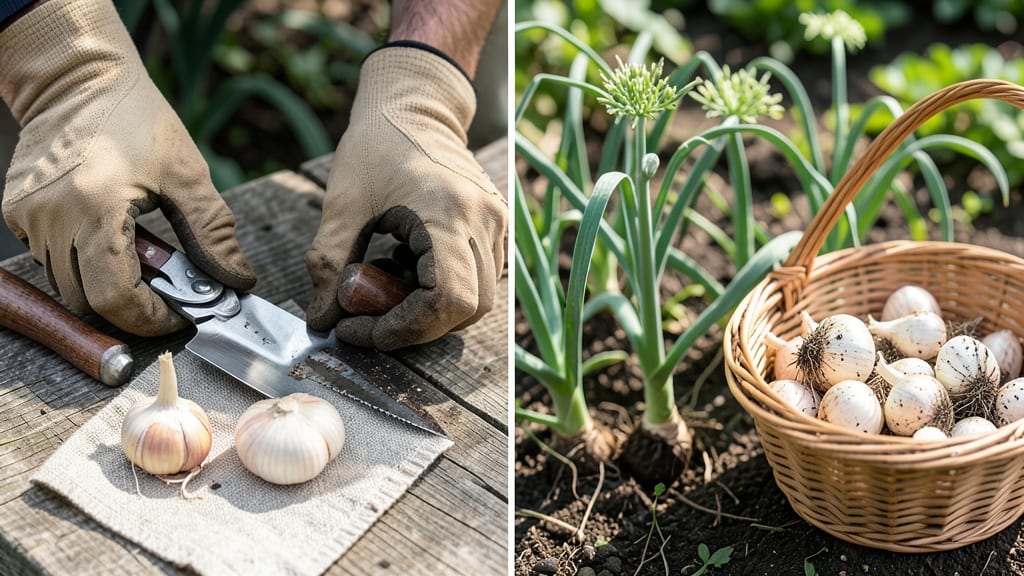
Harvesting garlic before or after it flowers determines whether you end up with small, split bulbs or large, flavorful harvests—and the choice depends on your garlic type and climate.
Picture this: You’ve spent months nurturing your 🧄 plants, only to watch them bolt with those dramatic flower stalks (scapes). Do you snip them off and wait, or dig up the bulbs right then?
The answer isn’t one-size-fits-all, and getting it wrong can mean wasted effort—or worse, a harvest that falls short of your goals.
For most gardeners, the ideal timing hinges on whether you’re growing hardneck or softneck varieties. Hardnecks often reward patience with bigger bulbs if you let them flower first, while softnecks may need early intervention to prevent splitting.
Then there’s climate: In warmer zones like the South, the rush to harvest before heat stress sets in changes everything.
In this guide, I’ll break down the exact visual cues to watch for—leaf browning, scape growth, and bulb firmness—plus regional adjustments so you can decide with confidence whether to harvest before or after flowering for the best results.
When to harvest garlic before flowering for maximum bulb size
Harvesting garlic at the right stage is the key to large, flavorful bulbs. Most gardeners aim to harvest before flowering—typically between 70 and 90 days after planting—when the plant has built enough energy into the bulb.
This window ensures maximum bulb size while preventing the plant from diverting energy to flower production, which can lead to smaller, split bulbs.
The ideal harvest time occurs when the lower 1/3 of leaves turn brown but the tops remain mostly green. This signals the bulb has reached peak development without over-maturing. For hardneck varieties, this usually happens in late spring to early summer, while softneck varieties may take slightly longer.
Paying attention to these visual cues prevents common mistakes like harvesting too early (underdeveloped bulbs) or too late (splitting or poor storage life).
Why timing matters: Harvesting too late forces the plant to produce flowers, which reduces bulb size and can cause splitting. Conversely, harvesting too early results in small, immature bulbs that lack flavor and storage potential. The 70-90 day window strikes the perfect balance for most climates, but regional adjustments may be needed.
Visual cues to watch for:
- Lower leaves turn brown (but not fully crispy)
- Upper leaves remain green (50-60% still vibrant)
- Bulbs feel firm when gently squeezed
- Papery skins begin forming around cloves
| Harvest Stage | Key Indicators | Bulb Condition | Best For |
|---|---|---|---|
| Before Flowering (70-90 days) | Lower 1/3 leaves brown, tops green | Large, firm bulbs | Maximum size & storage |
| At Flowering (Hardneck Only) | Scape appears, 50% leaves brown | Medium-sized, flavorful | Fresh use, not storage |
| After Flowering (Risky) | Most leaves brown, bulbs soft | Small, split bulbs | Avoid unless desperate |
For hardneck varieties, you’ll notice a scape (flower stalk) emerging in spring. If you pinch off the scape early (when it’s 4-6 inches tall), you redirect energy back to the bulb, ensuring larger size.
However, if you wait too long, the plant will focus on flowering, reducing bulb development. Softnecks rarely produce scapes, so focus on leaf color as your primary indicator.
Regional adjustments are crucial: In warmer climates (Zones 8-10), garlic may flower earlier, so harvest as soon as 60-70 days to avoid heat stress. In cooler climates (Zones 3-6), the 70-90 day window works well, but monitor leaf browning closely.
Overly wet springs can delay browning, while dry conditions may speed it up—always prioritize visual cues over strict timelines.
Harvesting at the right time also preserves flavor and storage life. Bulbs harvested too early lack mature sweetness, while those harvested too late may split or rot during storage.
Aim for firm, well-formed bulbs with dry papery skins—these store best for 6-12 months in a cool, dry place. If you’re unsure, dig up one bulb to check its readiness without risking the whole crop.
Pro tip: Use a sharp garden fork to loosen soil around the bulb before lifting it gently by the stems. Avoid cutting the stems—this helps the bulb cure properly and prevents disease.
After harvesting, let the bulbs dry in a shady, well-ventilated area for 2-3 weeks before braiding or storing. This curing process is essential for long-term storage and flavor development.
Remember, consistency is key. Track your garlic’s growth each season to refine your harvest timing. Over time, you’ll develop an eye for the perfect moment—when your garlic bulbs are large, firm, and packed with flavor.
With practice, you’ll achieve harvests that rival commercial sizes while enjoying the satisfaction of homegrown garlic at its peak.
What happens if you harvest garlic after it flowers?
Harvesting garlic after it flowers isn’t always a mistake—it’s a strategic choice that can work for hardneck varieties like Rocambole or Purple Stripe. When left to flower, these types often produce larger bulbs because the plant redirects energy from the scape (flower stalk) into bulb development.
However, the trade-off is shorter storage life and slightly milder flavor compared to early-harvested garlic.
The key is understanding your garlic type. Hardnecks thrive with post-flowering harvests, while softnecks (like Silverskin) often split or develop smaller bulbs if you wait. For hardnecks, harvest when 50% of leaves turn brown—usually 2-3 weeks after flowering. This balance maximizes bulb size without sacrificing quality.
One critical mistake is harvesting too late. If you wait until all leaves brown or the bulbs soften, you risk shriveled, pungent garlic that stores poorly. Overripe garlic loses moisture, becomes spongy, and may even rot in storage. Always check bulb firmness—it should feel solid, not hollow.
Flavor also shifts post-flowering. Early-harvested garlic tends to be milder and sweeter, ideal for fresh use. Late-harvested bulbs develop stronger, spicier notes, perfect for long-term storage or cooking. The choice depends on your goals: bulk storage or immediate culinary use.
Harvesting Garlic After Flowering
✅ Pros
- Larger bulbs (hardnecks only)
- Stronger flavor for storage
- Reduced splitting in hardnecks
❌ Cons
- Shorter storage life (3-6 months)
- Milder taste than early harvests
- Risk of soft bulbs if overripe
🌱 Best for: Hardneck varieties in cooler climates
Climate plays a huge role. In hotter zones (USDA 8+), waiting to harvest after flowering can stress the plant, leading to smaller, weak bulbs. Conversely, in cooler regions (USDA 5-7), post-flowering harvests often yield the best results.
Always monitor leaf color and bulb firmness—these are your best indicators, not the scape alone.
For hardnecks, removing the scape (a practice called "topping") can redirect energy to the bulb, but it doesn’t guarantee larger harvests. If you choose to let it flower, time your harvest carefully: wait 2-3 weeks post-flowering for optimal bulb development.
This window ensures the plant has finished redirecting nutrients without overripening.
Remember, there’s no universal rule. Experiment with a few plants—harvest some before flowering and others after—to see what works best in your garden. Document your results, and you’ll refine your approach year after year for consistently perfect garlic.