
Planting
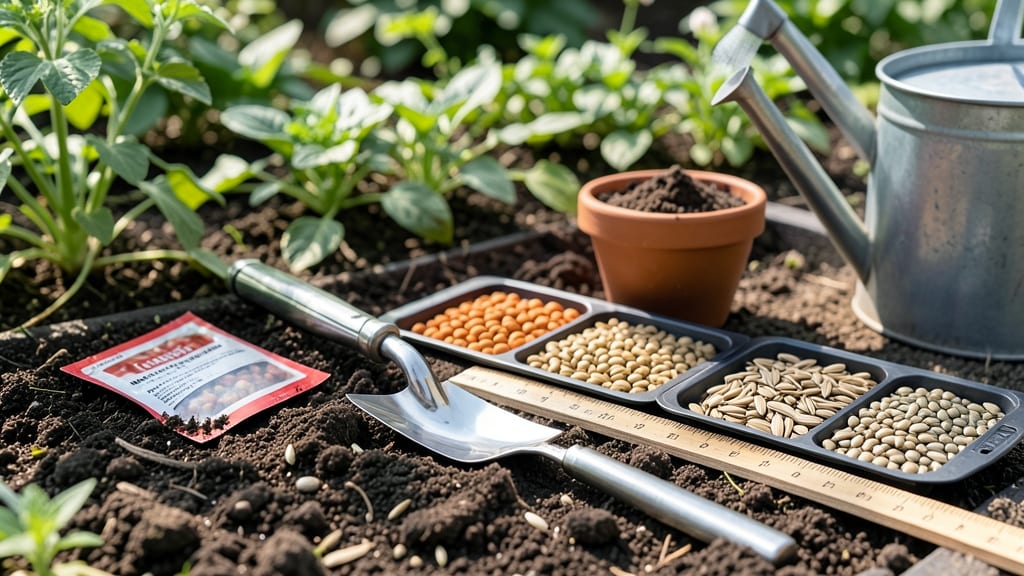
Planting flower seeds at the right depth is the secret to strong, healthy starts—most gardeners bury them too deep or too shallow, which can mean the difference between a blooming garden and a wasted packet.
Here’s the truth: tiny petunia seeds need barely a sprinkle of soil, while sunflower seeds should go twice as deep as their width. Get this wrong, and you’ll spend weeks waiting for sprouts that never come—or worse, watch seedlings struggle to break through the surface.
The good news? There’s a simple rule (and a few easy adjustments) that works for nearly every type of flower seed.
Below, I break down the exact planting depths for 20+ common flowers, including how soil type and seed size change the formula. You’ll also learn my go-to tricks for perfect depth every time—no guesswork required.
Ready to turn your seed packets into thriving plants? Let’s dig in—literally. You’ll discover how to use a simple finger test, why pre-soaking certain seeds saves time, and when to ignore the packet’s instructions entirely.


Exact flower seed planting depths by seed type for optimal germination
Getting the planting depth right for flower seeds is like finding the Goldilocks zone—not too shallow, not too deep, but just right. Tiny seeds like petunias need barely a whisper of soil cover, while sunflowers can handle being buried deeper.
The general rule? Plant seeds at a depth 2-3 times their diameter, but some varieties break this rule entirely. Let's dive into the science-backed details so you can boost your germination rates from guesswork to guaranteed growth.
Most seed packets include planting instructions, but they often focus on common varieties. For heirloom or less popular flowers, you might need to dig deeper (pun intended) for precise data.
Factors like seed size, moisture retention in your soil, and even the type of seed coating can change the ideal depth. For example, marigolds (medium seeds) need a light dusting, while larkspur (tiny seeds) should barely peek under the soil surface.
Let's explore the exact depths for popular flowers, plus some surprising exceptions.
Here’s a quick reference guide to help you visualize planting depths. Use a ruler or your fingertip as a guide—your index finger is roughly 1/4 inch deep, while your middle finger is about 1/2 inch. For seeds smaller than a pinhead, a light press into the soil is often enough.
Larger seeds, like beans or sunflowers, can handle being buried up to 1 inch deep. The key is ensuring the seed has enough darkness to germinate but not so much that it suffocates or dries out.
For heirloom varieties, always check the seed packet for specific instructions—some, like Black-Eyed Susans, prefer being planted just below the soil surface, while others, like Delphiniums, need a slightly deeper burial.
If you're planting in sandy soil, seeds may need to be planted slightly deeper to retain moisture, whereas clay soil can be planted shallower since it holds water better. Pro tip: Use a toothpick or skewer to create precise planting holes for tiny seeds—it’s a game-changer for accuracy.
Light exposure plays a crucial role after planting. Seeds buried too deep may not receive enough light to break through the soil, while those planted too shallow can dry out.
For example, cosmos seeds need just a light dusting of soil, whereas sunflower seeds can handle being buried up to 1.5 inches deep. If you're unsure, err on the side of shallower—most seeds will forgive a little extra depth, but they won’t survive if buried too deep.
Always water gently after planting to settle the soil without disturbing the seeds.
Another critical factor is seed coating. Many commercial seeds come pre-coated with nutrients or protective layers, which can affect planting depth. Coated seeds often require shallower planting—sometimes just pressing them into the soil surface—since the coating may break down if buried too deeply.
Always read the packet instructions for coated seeds, as they’re designed to dissolve in moisture and may not germinate properly if planted too deep. For organic seeds without coatings, stick to the standard depth guidelines.
If you're planting in containers or raised beds, consider using a seed-starting mix that’s lighter and drains better than garden soil. This allows you to plant seeds slightly shallower, as the mix retains moisture without becoming waterlogged.
For container gardening, use a spray bottle to water seeds gently, avoiding the force of a hose or watering can that could dislodge them. Group seeds by their planting depth to streamline your process—ded
How soil type and seed size affect planting depth (and what to adjust)
While the general rule of thumb is to plant flower seeds at a depth of 2-3 times their diameter, your soil type and seed characteristics often require adjustments. Sandy soil drains too quickly for deeper planting, while clay soil can suffocate seeds if buried too deeply.
Even seed coatings—like those on pelletized seeds—change the equation entirely.
I’ve learned the hard way that ignoring these factors leads to seeds either drying out before sprouting or rotting before they ever see light. The key is understanding how each variable interacts, then making small but critical adjustments to your planting routine.
⚠️ ⚠️ WARNING: Common Mistakes That Kill Flower Seeds ⚠️
⚠️ Planting Too Deep in Sandy Soil
Seeds in sandy soil need shallower depths—often just 1x their diameter—because moisture evaporates too fast. Marigolds and zinnia seeds planted at standard depths may never sprout if the soil dries out before germination.
⚠️ Ignoring Seed Coatings
Pelletized or coated seeds (like petunia or geranium) should never be planted deeper than ½ their diameter. The coating traps moisture, increasing rot risk if buried too deeply.
⚠️ Overcompensating in Clay Soil
In clay soil, seeds need deeper planting (3-4x diameter) to escape surface crusting. However, large seeds like sunflowers can rot if planted too deep—even in clay. Test by pressing seeds into the soil until only the top half is covered.
For small seeds (like snapdragons or cosmos), I adjust depths based on soil texture: 1/8-inch deep in sandy soil vs. ¼-inch in loam. Use a toothpick to mark your target depth—it’s a game-changer for consistency.
Pro tip: Pre-soak seeds in clay soil to speed up germination, then plant just deep enough to anchor them.
If your seeds refuse to sprout despite "correct" depth, check for moisture retention issues. In sandy soil, add a light mulch layer (like coconut coir) to slow evaporation.
For clay soil, mix in compost or perlite to improve aeration. Always water gently after planting—forceful streams can bury seeds deeper than intended.
Remember, seed size isn’t the only factor. Delicate annuals like impatiens need barely covered soil, while hardy perennials like coneflowers can handle slightly deeper planting.
When in doubt, err on the side of shallower—most seeds need light to germinate, and depth adjustments are easier to fix than rot or desiccation.
🌱 Start with these adjustments, and watch your germination rates climb—no more guesswork, just science-backed planting!